
In the lush, humid lowlands of Asia, where rice paddies stretch as far as the eye can see, a silent enemy lurks beneath the water’s surface: iron toxicity. Excessive iron (Fe²⁺) in the soil can wreak havoc on lowland rice crops, slashing yields by 12% to a devastating 100%, depending on the rice variety and the severity of the stress. But a glimmer of hope has emerged from the fields of Odisha, India, where researchers have uncovered a powerful combination that could revolutionize rice farming in iron-toxic regions.
A two-year field experiment conducted by Jevelin Swain and colleagues from the Odisha University of Agriculture & Technology has revealed that a synergistic blend of potassium (K) fertilizer and kinetin, a plant growth regulator, can significantly mitigate iron toxicity and boost rice yields. The study, published in *Scientific Reports*, found that while potassium alone improved yields by up to 72.85%, the real magic happened when kinetin was added to the mix. With the combined treatment, yields soared by up to 113.36%, a testament to the potent duo’s effectiveness.
The researchers discovered that kinetin played a crucial role in enhancing the rice plants’ sink capacity—the ability of the plant to utilize photosynthates (the products of photosynthesis) for grain filling. “Kinetin promoted efficient translocation of photosynthates into filled grains, improving grain weight per panicle,” explained Swain. This meant that the rice plants were not only better equipped to handle the iron stress but also more efficient at producing and filling grains.
The combined treatment also worked wonders on the plants’ morphological traits, photosynthetic pigments, and the translocation of proteins and carbohydrates from the leaves (source) to the grains (sink). Moreover, it helped alleviate iron toxicity by limiting iron uptake, reducing the levels of reactive oxygen species (ROS), malondialdehyde (MDA), proline, and phenolics, and regulating antioxidant enzyme activity.
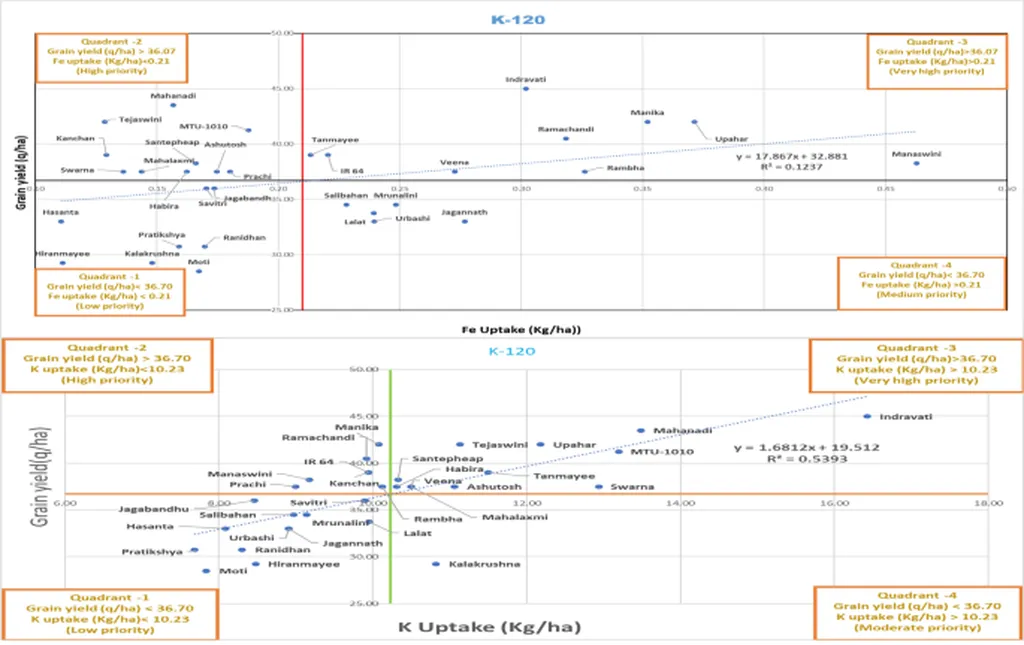
One rice genotype, Tejaswini, stood out from the rest, achieving the highest yield gains of 110–113% when treated with 100–120 kg K₂O/ha and two kinetin sprays. This remarkable performance opens up exciting possibilities for sustainable rice production in iron-toxic lowlands.
The commercial implications of this research are substantial. For farmers grappling with iron toxicity, this K-kinetin combination could be a game-changer, offering a practical and effective solution to a longstanding problem. Moreover, the enhanced nutrient use efficiency and improved yield potential could translate into significant economic gains for the agriculture sector.
Looking ahead, this research could pave the way for further developments in plant biotechnology and nutrient management strategies. As Swain and his team continue to unravel the intricate interplay between potassium, kinetin, and iron toxicity, the future of rice farming in iron-toxic regions is looking increasingly bright.