
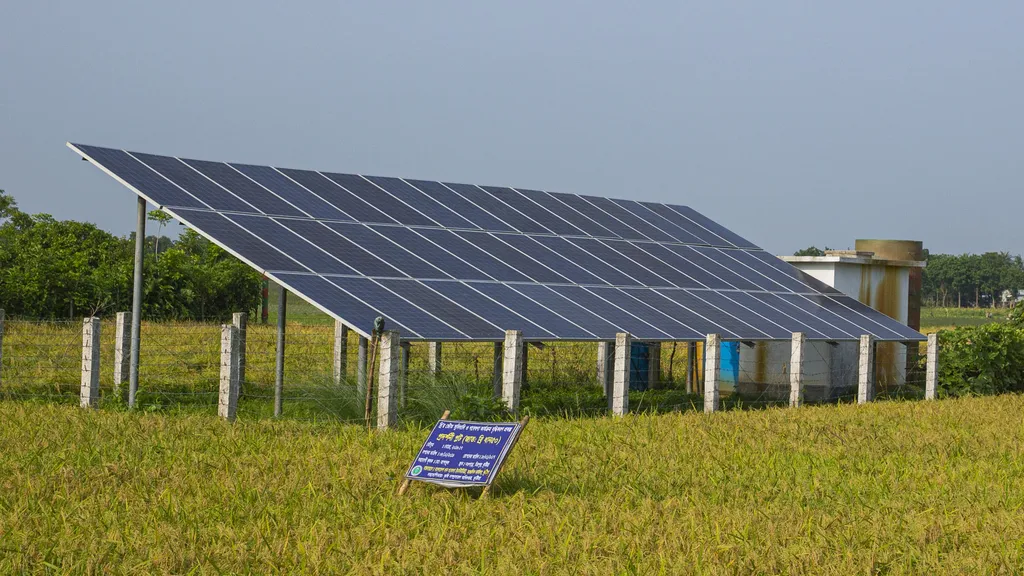
In the heart of Bangladesh’s off-grid haor areas, a technological innovation is sprouting hope for farmers battling the challenges of dry season rice cultivation. A recent study, published in *Climate Smart Agriculture*, has demonstrated the potential of submersible solar irrigation pumps (SIPs) to revolutionize rice farming in these regions.
Traditionally, farmers in these areas rely on diesel irrigation pumps (DIPs) and shallow tube wells (STWs) for irrigation. However, as groundwater levels drop below the practical suction limit of 5–7 meters, these traditional methods often fall short, leaving fields parched and yields compromised. “The falling groundwater levels have been a significant challenge for us,” says Mohammed M. Rahman, lead author of the study and a researcher at the Department of Irrigation and Water Management, Bangladesh Agricultural University. “Farmers were struggling to irrigate their fields effectively, especially during the dry season.”
The study, led by Rahman, investigated the technical suitability of a submersible SIP with a capacity of 3.80 kW. The pump was designed and installed in a northeast rice-cultivated haor area. The researchers conducted a baseline survey of 115 farmers to understand the existing irrigation conditions and collected real-time data on solar irradiance, groundwater levels, and hourly pump discharge.
The results were promising. The SIP could potentially irrigate 3.45 hectares of rice field without any risk of dry running throughout the growing season. This is a significant improvement over DIPs, which typically have a command area of 2.5 hectares or less. “The SIP not only performed better technically but also proved to be more economical and environmentally friendly,” Rahman explains. “When used annually for multiple crop seasons, the SIP becomes a more attractive option compared to DIPs.”
The commercial implications of this research are substantial. With the growing global emphasis on sustainable and climate-smart agriculture, the adoption of SIPs could open new avenues for farmers in off-grid areas. The technology could also mitigate the environmental impact of diesel pumps, reducing carbon emissions and noise pollution.
The study’s findings could shape future developments in the field of agritech, particularly in regions facing similar challenges. As Rahman notes, “This technology has the potential to be replicated in other areas with similar conditions, not just in Bangladesh but globally.” The research underscores the importance of investing in innovative, sustainable technologies to ensure food security and environmental sustainability.
In the quest for climate-smart agriculture, submersible solar irrigation pumps are emerging as a beacon of hope, promising to transform the way farmers cultivate rice in off-grid areas. As the world grapples with the challenges of climate change, such innovations could pave the way for a more sustainable and resilient future for agriculture.