
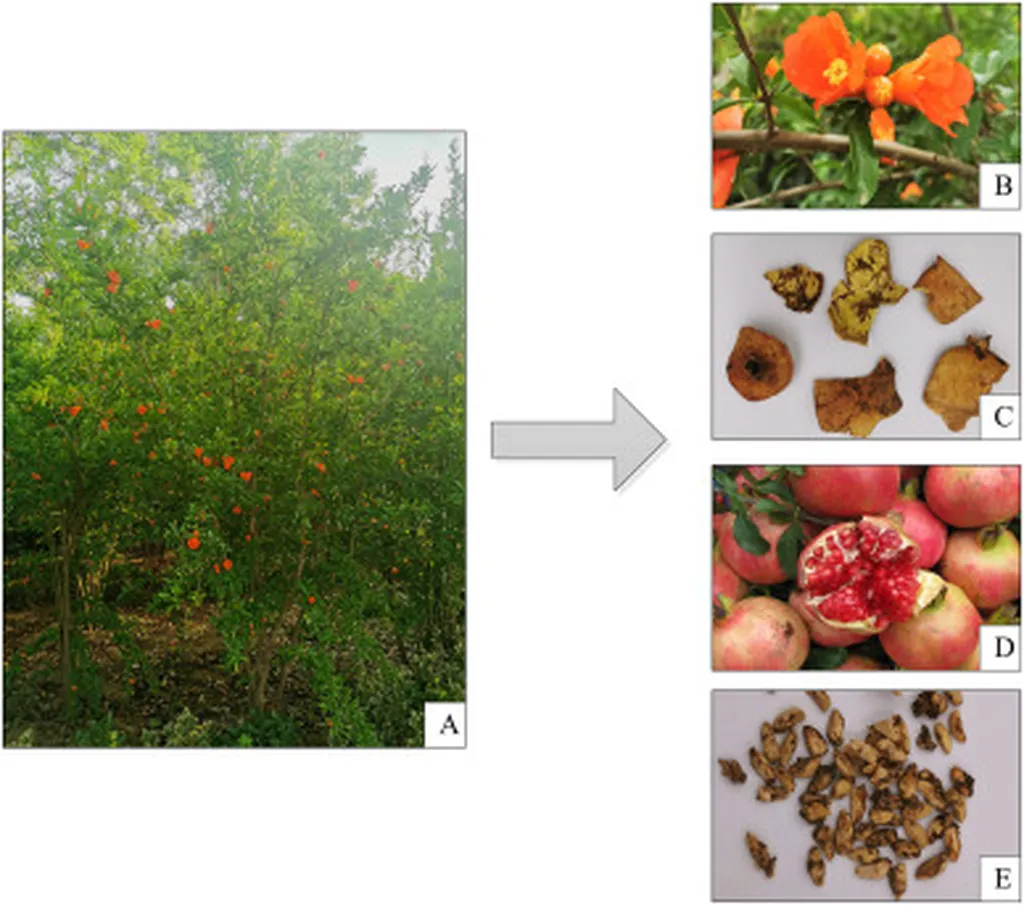
In the arid landscapes of Xinjiang, China, a unique agricultural product thrives: the sour pomegranate. Known for its distinctive tart and astringent taste, this fruit has long faced an uphill battle in the processing industry due to its low processing rate. However, a recent study published in the journal *Foods* might just turn the tide for this underutilized fruit, offering a promising path for its high-value utilization.
Researchers, led by Yuting Yang from the Xinjiang Key Laboratory of Biological Resources and Genetic Engineering at Xinjiang University, have developed a mixed-strain fermentation process that could revolutionize the way we think about sour pomegranate. The study screened three strains of lactic acid bacteria—*Lactobacillus fermentum*, *Lactobacillus plantarum*, and *Lactobacillus acidophilus*—to create an optimal fermentation blend.
Through a series of experiments, the team determined the ideal mixed-strain ratio of *L. fermentum*:*L. plantarum*:*L. acidophilus* to be 45%:31%:28%. They also established the optimal inoculation amount and fermentation time to be 2% and 11 hours, respectively. This precise combination was found to significantly enhance the flavor profile of the sour pomegranate.
Using advanced analytical techniques such as electronic nose, electronic tongue, gas chromatography–ion mobility spectrometry, and non-targeted metabolomics, the researchers conducted comparative analyses of the flavors and metabolites before and after fermentation. The results were striking. Post-fermentation, the umami flavor increased by 32%, richness was enhanced by 6%, and the positive aftertaste was significantly extended.
“This mixed-strain fermentation process not only improves the sensory qualities of sour pomegranate but also enriches its metabolic profile,” said Yang. “The increased complexity of aroma and flavor compounds opens up new possibilities for its use in various food products.”
The study found that mixed-strain fermentation facilitated the enrichment of alkanes, alcohols, aldehydes, and terpene volatile compounds. Notably, the content of hexanal, which imparts a fresh fruity aroma, and limonene, which contributes a citrus aroma, increased by 1.95 times and 1.45 times, respectively. This augmentation in aroma complexity could make sour pomegranate a more attractive ingredient for food manufacturers.
Furthermore, the fermentation process significantly upregulated terpenes, amino acids and their derivatives, steroids and their derivatives, and alkaloid metabolites. These findings suggest that the process could enhance the nutritional value of the fruit, making it a more viable option for commercial use.
The implications for the agriculture sector are substantial. By developing a process that enhances the flavor and nutritional profile of sour pomegranate, this research could open up new markets and increase the demand for this underutilized agricultural product. It also sets a precedent for the use of mixed-strain fermentation in improving the quality and value of other low-processing-rate fruits and agricultural products.
As the global food industry continues to seek innovative ways to enhance product quality and meet consumer demands for healthier and more flavorful options, this research offers a promising avenue for exploration. The findings could inspire further studies and applications in the field of agricultural biotechnology, ultimately contributing to the sustainable utilization of agricultural resources.
In the words of Yang, “This research is just the beginning. The potential applications of mixed-strain fermentation in the food industry are vast, and we are excited to explore how this technology can be applied to other agricultural products to create high-value, nutritious, and flavorful food products.”
With the growing interest in functional foods and the increasing demand for natural and healthy ingredients, the future of sour pomegranate—and other underutilized agricultural products—looks brighter than ever. This research not only provides a technical foundation for the high-value utilization of sour pomegranate but also paves the way for future innovations in the field of agricultural biotechnology.