
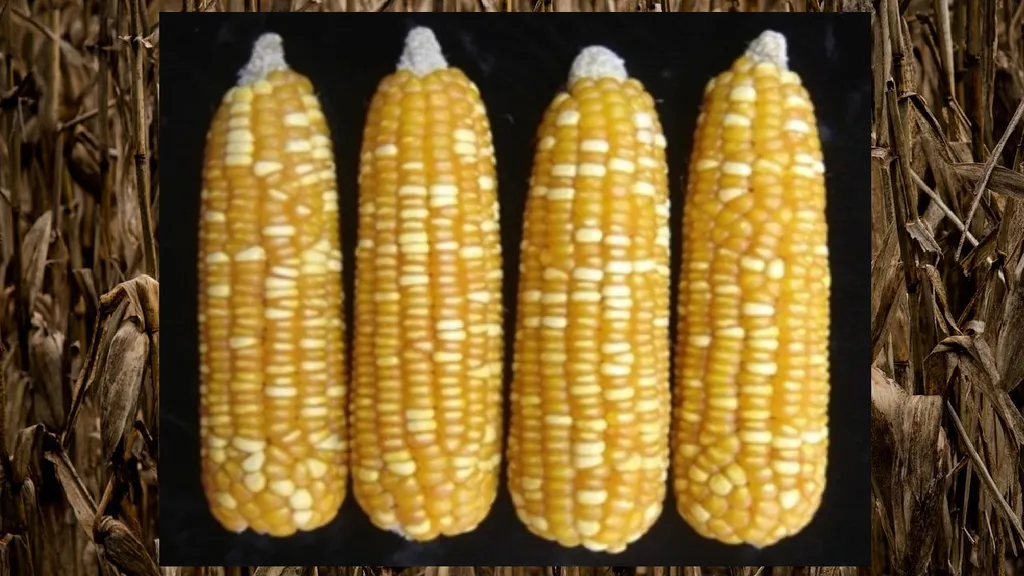
In the quest for sustainable and resilient agricultural practices, a groundbreaking study published in *Frontiers in Sustainable Food Systems* offers promising insights into the potential of dual-purpose baby corn hybrids. Led by Santosh Kumar of the ICAR-Indian Agricultural Research Institute in Hazaribagh, Jharkhand, the research evaluates the performance and yield stability of 61 baby corn hybrids across four diverse agro-climatic zones in India. The findings could revolutionize rainfed agricultural systems, particularly in regions facing climate variability and resource constraints.
Baby corn, harvested before silking, presents a unique opportunity for farmers to diversify their income streams. It provides early-market fresh cobs and tender green biomass suitable for ruminant forage, making it a climate-smart crop. The study aimed to identify high-yielding and stable hybrids that could enhance resilience and sustainability in rainfed systems.
The research team analyzed key traits such as days to first picking, baby corn weight without husk (BCWoH), total green husk weight (TGHW), and fodder weight (FW). They employed advanced multivariate analyses, including AMMI and GGE biplots, to assess genotype × environment interaction (GEI) and identify the most promising hybrids.
Significant GEI was observed for BCWoH, indicating that environmental factors play a crucial role in yield performance. However, biomass traits were largely determined by location-specific factors. Among the hybrids evaluated, CR71, CR82, and CR70 stood out as both high-yielding and phenotypically stable across different environments for BCWoH and FW. These hybrids outperformed the standard checks, AH7043 and CMVLBC-2, demonstrating their potential for commercial cultivation.
“These dual-purpose hybrids not only offer economic benefits but also contribute to sustainable intensification in peri-urban and resource-constrained systems,” said lead author Santosh Kumar. “Their ability to thrive under low-input, rainfed conditions makes them an attractive option for farmers looking to enhance productivity and resilience.”
The study also identified genotypes CR7, CR44, and CR50 as consistent performers in terms of forage yields, supporting their role in crop-livestock integrated systems. The positive correlation between cob yield and fodder traits highlights opportunities for multi-trait selection, which could improve land and input-use efficiency.
The implications of this research are far-reaching. By developing and promoting dual-purpose baby corn hybrids, farmers can achieve higher yields while minimizing environmental impact. This aligns with several Sustainable Development Goals, including Zero Hunger (SDG 2), Responsible Consumption and Production (SDG 12), and Climate Action (SDG 13).
The promising parental inbred lines identified in the study offer a foundation for developing next-generation resilient hybrids through genomic and combining ability-based strategies. This could pave the way for more innovative and sustainable agricultural practices in the future.
As the agriculture sector continues to grapple with the challenges posed by climate change and resource scarcity, the findings of this study provide a beacon of hope. By embracing dual-purpose crops like baby corn, farmers can enhance their resilience, improve their livelihoods, and contribute to a more sustainable food system.
The research, published in *Frontiers in Sustainable Food Systems* and led by Santosh Kumar of the ICAR-Indian Agricultural Research Institute in Hazaribagh, Jharkhand, underscores the importance of investing in agricultural innovation. It offers a roadmap for achieving sustainable intensification and climate-smart agriculture, ultimately benefiting farmers, consumers, and the environment alike.