
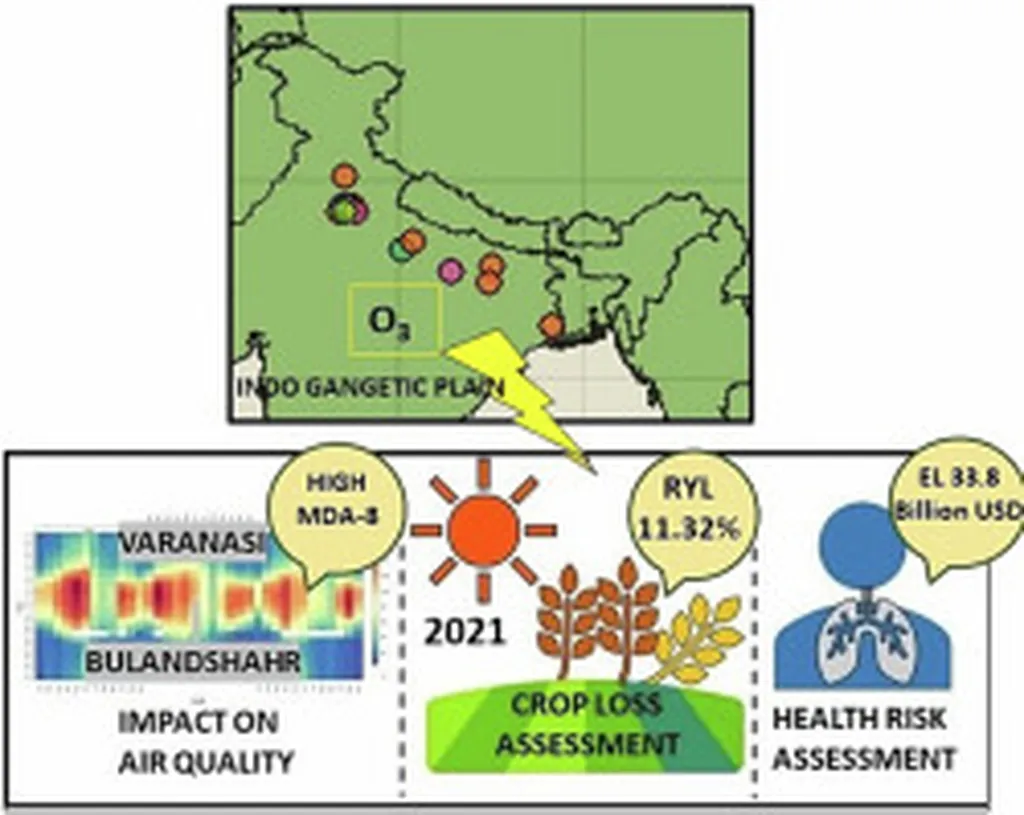
In a groundbreaking study published in *Atmospheric Chemistry and Physics*, researchers have systematically compared six global ground-level ozone datasets, revealing significant discrepancies that could profoundly impact health assessments and agricultural practices. Led by H. Wang from the Department of Environmental Sciences and Engineering at the University of North Carolina at Chapel Hill, the research underscores the critical need for accurate ozone measurements to mitigate risks to human health and crop yields.
Ground-level ozone, a pervasive air pollutant, poses severe threats to both human health and agricultural productivity. The study intercompared datasets derived from chemical reanalyses, machine learning, and geostatistical methods, focusing on the ozone season daily maximum 8-hour average mixing ratio from 2006 to 2016. The findings highlight substantial variations among the datasets, with some overestimating ozone concentrations, particularly at lower observed levels.
“Most datasets overestimate ozone, particularly at lower observed concentrations,” noted Wang. “This discrepancy is concerning because it can lead to inaccurate assessments of health impacts and agricultural risks.”
The study found that in 2016, the grid-to-grid correlation coefficient (R²) ranged from 0.50 to 0.75, and the root mean square error (RMSE) varied from 4.25 to 12.22 parts per billion (ppb). The agreement with observed distributions diminished at ozone concentrations above 50 ppb, indicating significant variability in the datasets’ accuracy.
One of the most striking findings was the difference in global average ozone concentrations among the datasets, which varied by as much as 5–10 ppb. This variation is particularly alarming for the agricultural sector, where ozone exposure can lead to reduced crop yields and economic losses. For instance, in Europe, two chemical reanalyses showed an increasing trend in ozone levels, while other datasets indicated no such increase.
The study also revealed substantial differences in the estimated population exposure to ozone levels above 50 ppb. In East Asia, the share of the population exposed to these levels varied from 61% to 99%, while in North America, it ranged from 17% to 88%. In Europe, the exposure rates spanned from 9% to 76%. These discrepancies highlight the importance of continued research on global ozone distributions and the need for more accurate and reliable data.
“These discrepancies are large enough to impact assessments of health impacts and other applications,” Wang emphasized. “It’s crucial that we improve our methods and data to better understand and mitigate the risks associated with ground-level ozone.”
The findings of this study have significant implications for the agricultural sector, where accurate ozone measurements are essential for developing effective strategies to protect crops and ensure food security. As the global population continues to grow, the demand for food will increase, making it more important than ever to address the challenges posed by air pollution.
This research not only sheds light on the current state of ozone data but also paves the way for future advancements in the field. By identifying the limitations of existing datasets, scientists can work towards developing more accurate and reliable methods for measuring and predicting ground-level ozone concentrations. This, in turn, will enable better-informed decisions to protect both human health and agricultural productivity.
As the world grapples with the impacts of climate change and air pollution, the need for precise and reliable data has never been greater. This study serves as a call to action for continued research and innovation in the field of atmospheric chemistry, ensuring that we have the tools and knowledge necessary to safeguard our health and our food supply.