
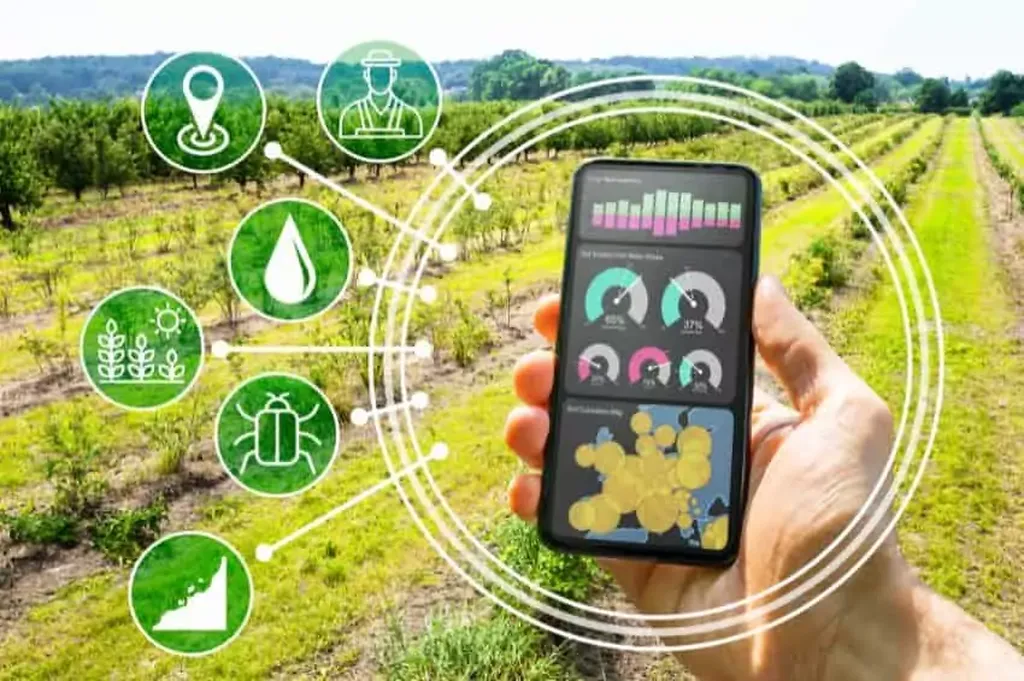
In the heart of Indonesia, researchers are tackling a critical issue facing farmers worldwide: declining soil quality and its impact on agricultural productivity. A recent study published in the *Journal of Applied Informatics and Computing* introduces an innovative Internet of Things (IoT)-based system designed to monitor and control soil nutrient levels, with a particular focus on clay soils used for chili cultivation. The research, led by Andi Wahyunita Hakis from Universitas Handayani Makassar, offers a promising solution for precision agriculture, combining multi-modal sensors and fuzzy logic algorithms to automate decision-making processes.
The system, built around the ESP32 microcontroller, integrates various sensors to collect real-time data on soil and environmental conditions. This data is then processed using the Mamdani fuzzy algorithm, which enables the system to make adaptive decisions regarding irrigation and nutrient application. “The key advantage of our system is its ability to handle continuous and uncertain sensor data effectively,” explains Hakis. “This allows for more accurate and timely interventions, ultimately improving crop yields and resource efficiency.”
One of the standout features of this research is its impressive performance metrics. The system achieved an 84% classification accuracy and an average F1-score of 88.5%, demonstrating its reliability in interpreting complex data. Moreover, the fuzzy logic component showed a 75.8% success rate in irrigation control and a remarkable 99.8% accuracy in nutrient delivery. These results highlight the system’s potential to revolutionize agricultural practices by providing precise, data-driven insights.
The commercial implications of this research are substantial. As the agriculture sector increasingly embraces technology-driven solutions, systems like this could become integral to sustainable farming practices. By automating irrigation and fertilization processes, farmers can reduce labor costs, minimize resource waste, and enhance overall productivity. “This technology has the potential to be a game-changer for small-scale farmers, who often lack the resources for extensive monitoring and manual interventions,” says Hakis.
The integration of IoT, multi-modal sensors, and fuzzy logic represents a significant step forward in precision agriculture. As the technology continues to evolve, we can expect to see more sophisticated systems that offer even greater accuracy and efficiency. This research not only addresses the immediate challenges faced by farmers but also paves the way for future innovations in sustainable agriculture.
The study, led by Andi Wahyunita Hakis from Universitas Handayani Makassar, was published in the *Journal of Applied Informatics and Computing*, underscoring the growing intersection of technology and agriculture. As the world seeks sustainable solutions to feed a growing population, such advancements are crucial in shaping the future of farming.