
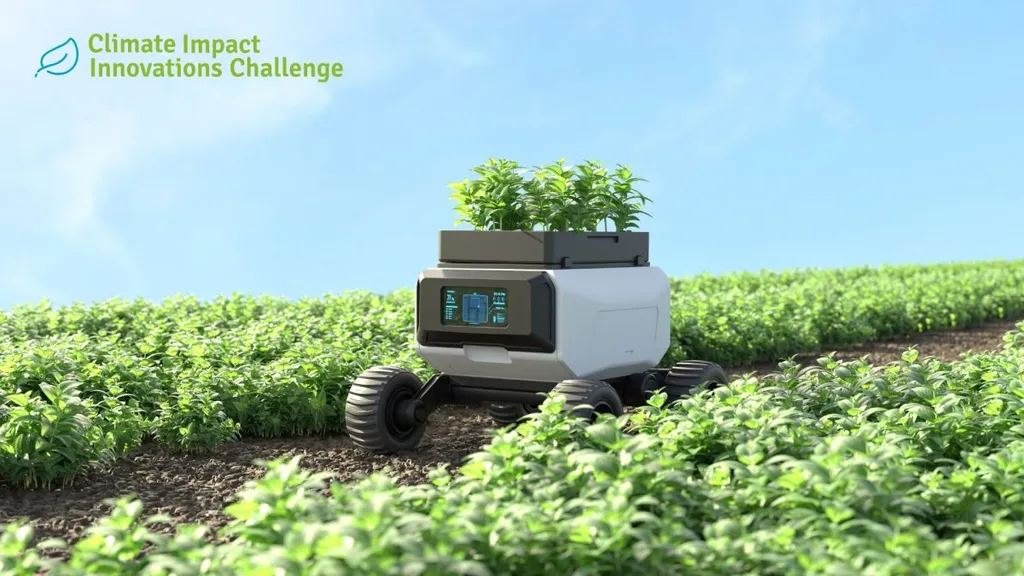
In the heart of Indonesia, researchers are harnessing the power of machine learning and IoT to revolutionize crop irrigation, offering a glimpse into the future of precision agriculture. A recent study, led by Rizki Agam Syahputra from Universitas Teuku Umar and published in the *Journal of Applied Informatics and Computing*, presents a predictive model that could transform how farmers manage water resources.
The model, built using Long Short-Term Memory (LSTM) neural networks, leverages real-time environmental data collected from IoT sensors. These sensors monitor temperature, humidity, and soil moisture, providing the necessary inputs for the model to predict future soil moisture levels. “This isn’t just about monitoring; it’s about anticipating,” Syahputra explains. “By predicting soil moisture levels, we can recommend irrigation schedules that are both timely and efficient.”
The implications for the agriculture sector are substantial. Traditional irrigation systems often rely on reactive measures, leading to water waste and potential harm to crops. This predictive model, however, offers a proactive approach. It ensures that water is supplied only when necessary, enhancing water resource management and reducing manual intervention. “This technology can significantly improve crop health and yield,” Syahputra notes, “while also promoting sustainable water use.”
The model’s accuracy is impressive, with a Mean Absolute Error (MAE) of 2.5% and an R-squared (R2) value of 0.92. These metrics indicate a high level of predictive accuracy, suggesting that the model could be a game-changer for farmers. By integrating such technology into their operations, farmers can move towards data-driven decision-making, a cornerstone of precision agriculture.
The commercial impacts of this research are far-reaching. For instance, in regions where water scarcity is a pressing issue, this technology can help farmers maximize their water usage, leading to more sustainable and profitable farming practices. Moreover, the reduction in manual intervention can free up farmers’ time, allowing them to focus on other aspects of their operations.
Looking ahead, this research could shape future developments in the field of precision agriculture. As Syahputra puts it, “This is just the beginning. With further refinement and wider adoption, we can expect to see even more sophisticated models that integrate additional environmental factors and crop-specific data.” Such advancements could pave the way for fully automated, precision irrigation systems, further enhancing the efficiency and sustainability of agriculture.
In conclusion, this study represents a significant step forward in the integration of machine learning and IoT in agriculture. By providing a predictive model for optimal irrigation scheduling, it offers a powerful tool for farmers seeking to improve their operations and contribute to more sustainable farming practices. As the technology continues to evolve, we can expect to see even greater benefits for the agriculture sector and beyond.