
In the ever-evolving landscape of precision agriculture, a groundbreaking study published in *Scientific Reports* is set to revolutionize how farmers and agritech companies approach plant monitoring and classification. The research, led by Zainab Fatima from the Department of Robotics and Mechatronics Engineering at Kennesaw State University, introduces an adversarial unsupervised domain adaptation framework for 3D point cloud classification. This innovation addresses a critical gap in agricultural technology: the domain shift between controlled and real-world datasets, which has historically hindered the robust application of 3D sensing technologies.
Traditionally, domain adaptation in agriculture has been confined to 2D imagery, leaving a significant void in the utilization of 3D data. Fatima’s research bridges this gap by leveraging a PointNet-based feature extractor, a domain discriminator trained with a Gradient Reversal Layer (GRL), and an entropy minimization objective. This combination ensures confident predictions on unlabeled target domains, even when faced with significant sensor and environmental differences.
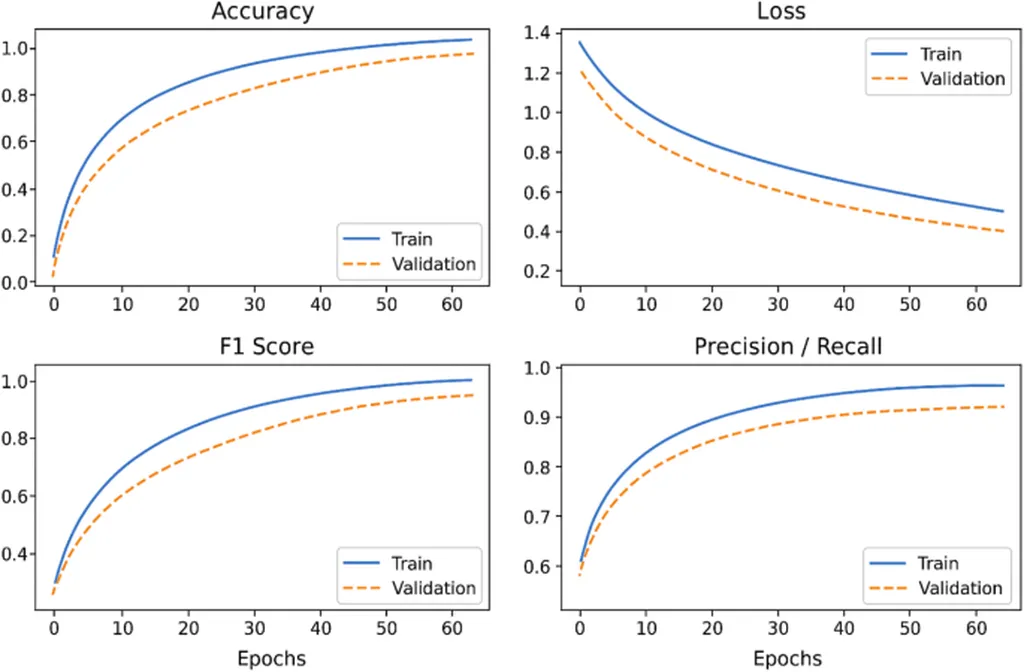
The implications for the agriculture sector are profound. “Our method achieves a classification accuracy of 97% on the target domain, with strong per-class F1 scores,” Fatima explains. This level of precision could transform how farmers monitor crop health, optimize yields, and manage resources more efficiently. The ability to deploy these models on edge devices further enhances their practicality, making real-time decision-making a tangible reality for agricultural operations.
The study’s focus on real-time scenarios and deployment feasibility underscores its commercial potential. As agritech companies increasingly adopt 3D sensing technologies, this research provides a robust framework for developing more generalizable plant phenotyping models. The ability to adapt to diverse environmental conditions and sensor types could significantly reduce the costs and complexities associated with scaling these technologies across different farming contexts.
Looking ahead, this research paves the way for more sophisticated and adaptable agricultural technologies. “This work highlights the potential of 3D domain adaptation in precision agriculture,” Fatima notes. By addressing the domain shift between controlled and real-world datasets, the study not only enhances the accuracy of plant monitoring but also sets a new standard for the integration of 3D sensing technologies in the field.
As the agriculture sector continues to embrace digital transformation, innovations like Fatima’s are crucial. They offer a glimpse into a future where technology and agriculture converge to create more sustainable, efficient, and productive farming practices. The study’s findings, published in *Scientific Reports*, mark a significant step forward in this journey, promising to shape the future of precision agriculture and beyond.