
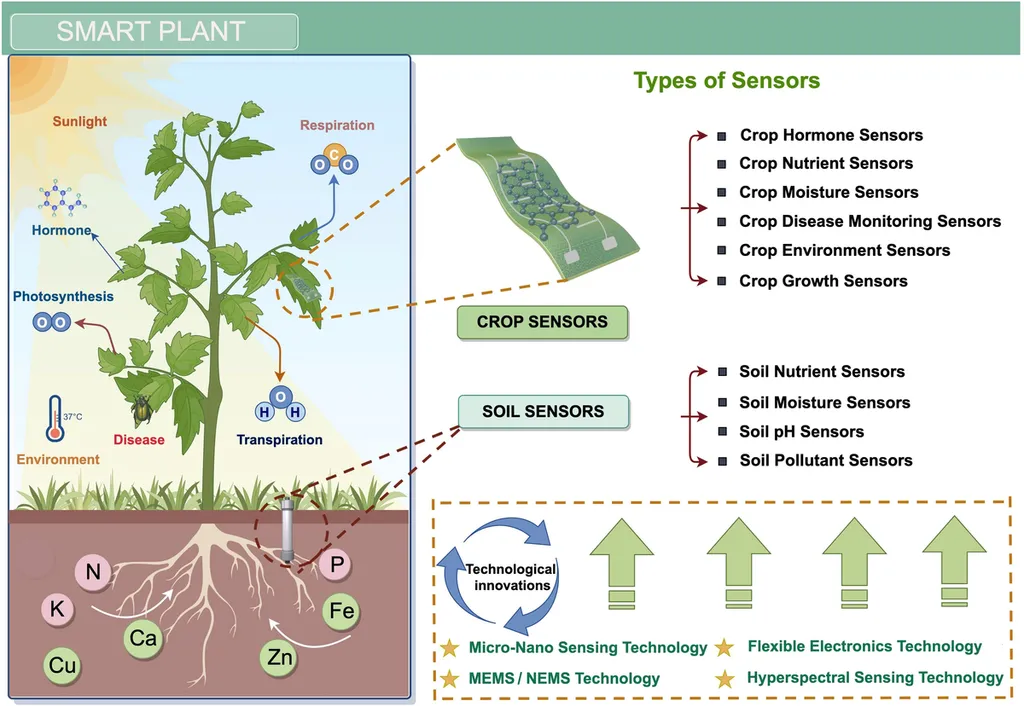
In the quest to optimize soybean cultivation, a recent study published in *BMC Plant Biology* has unveiled promising insights into how sensor-based technologies can revolutionize fertilizer management. Led by Süreyya Betül Rufaioğlu from the Department of Soil Science and Plant Nutrition at Harran University, the research explores the intricate relationships between different fertilization strategies and their impacts on soybean growth, using a multi-sensor approach.
The study, conducted under controlled greenhouse conditions, evaluated the effects of individual and combined applications of urea, zinc (Zn), and microbial inoculants on soybean plants. By monitoring optical parameters such as SPAD (Soil Plant Analysis Development) and NDVI (Normalized Difference Vegetation Index), along with plant height and thermal imaging, the researchers were able to establish a comprehensive understanding of how these treatments influence physiological, morphological, and biomass-related traits.
One of the most significant findings was the marked improvement in SPAD values, which increased by 18–27%, and NDVI, which saw a rise of up to 22%. These improvements were particularly pronounced in combined treatments, such as Urea + Microbial and Zn + Microbial. “The combined treatments not only enhanced the physiological parameters but also significantly improved the overall biomass accumulation,” noted Rufaioğlu. For instance, the Urea + Microbial treatment increased plant height by 15% and fresh biomass by 28% compared to the control.
Thermal imaging provided additional insights, revealing a 1.8–2.5 °C reduction in canopy temperature under combined treatments. This reduction indicates enhanced stomatal regulation and water-use efficiency, which are crucial for sustainable agriculture. “The thermal imaging data was particularly revealing,” Rufaioğlu explained. “It showed that the plants under combined treatments were better equipped to manage water stress, which is a critical factor in soybean cultivation.”
The study also established strong positive correlations (r = 0.71–0.84) between SPAD/NDVI and post-harvest biomass, confirming the reliability of early-stage sensor measurements for predicting yield-related traits. This finding is particularly significant for the agriculture sector, as it opens the door to more precise and automated fertilization strategies.
The integration of microbial inoculants with mineral fertilizers emerged as a key factor in enhancing both physiological resilience and water-use efficiency. The identification of tentative threshold values for SPAD (~ 35) and NDVI (~ 0.60) provides practical benchmarks for farmers and agronomists, enabling them to make more informed decisions about fertilization.
The commercial implications of this research are substantial. By leveraging sensor-based technologies, farmers can optimize nutrient application, reduce input costs, and enhance crop yields. This approach not only supports sustainable agricultural production but also aligns with the growing demand for precision agriculture.
As the agriculture sector continues to evolve, the integration of optical and thermal sensing with morphological and biomass assessments is likely to play a pivotal role. The findings of this study provide a robust foundation for future research and development in this area, paving the way for more efficient and sustainable soybean cultivation practices.
In the words of Rufaioğlu, “This research underscores the potential of sensor-based approaches to improve nutrient efficiency and support sustainable agricultural production. It’s an exciting time for agritech, and we’re just scratching the surface of what’s possible.”