
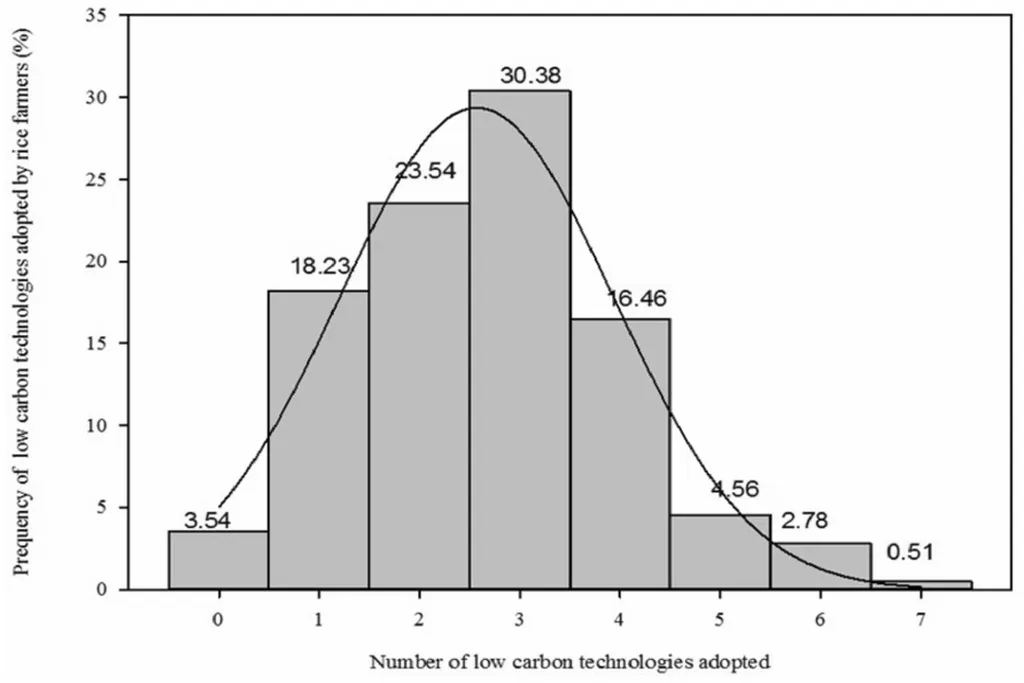
In the heart of Shandong Province, a critical question is being asked: how can farmers adopt low-carbon technologies that not only reduce greenhouse gas emissions but also boost their bottom line? A recent study published in *Scientific Reports* offers some compelling insights, suggesting that the answer lies in a farmer’s capital endowment—the resources they have at their disposal.
The study, led by Yanmei Yuan of the College of Economics and Management at Shandong Agricultural University, surveyed 1,008 grain farmers to understand how different types of capital influence the adoption of low-carbon fertilization technologies (LCFTs). The findings reveal a complex interplay between resources, beliefs, and behavior, with significant implications for the agriculture sector.
Capital endowment, the study finds, plays a pivotal role in driving the adoption of LCFTs. “Natural capital, such as land and soil quality, promotes the use of organic fertilizers, while human capital, like education and farming experience, facilitates soil testing and formula fertilization,” explains Yuan. This is a significant finding, as it highlights the need for targeted policies that consider the diverse resources farmers have at their disposal.
But capital alone isn’t enough. The study also underscores the importance of value cognition—the beliefs and attitudes farmers hold about the environment and their role in protecting it. “Ecological value is a crucial mediating path,” says Yuan. “Farmers who prioritize environmental stewardship are more likely to adopt LCFTs, even if they have limited capital.”
Environmental regulations also play a significant role, acting as a catalyst that strengthens the effects of capital and value cognition. “Guidance and incentive-based instruments, such as subsidies and training programs, can significantly boost adoption rates,” Yuan notes. This is particularly true for large-scale farmers and those in central and eastern Shandong, where environmental regulations have a stronger moderating effect.
The study also introduces a novel dimension: information capital. “Digital literacy is increasingly important in today’s agriculture sector,” says Yuan. “Farmers who are comfortable using digital tools are more likely to adopt LCFTs, as these technologies often rely on data and analytics.”
So, what does this mean for the future of agriculture? The study suggests that a multi-pronged approach is needed, one that considers the diverse resources farmers have, their beliefs and attitudes, and the regulatory environment. It also highlights the need for investments in digital literacy, as information capital becomes increasingly important.
For the agriculture sector, the implications are significant. Adopting LCFTs can reduce greenhouse gas emissions, improve soil health, and boost yields—all of which can enhance the sector’s competitiveness and sustainability. But to realize these benefits, farmers need support. They need access to resources, education, and training, as well as policies that incentivize and guide them towards low-carbon practices.
As the world grapples with climate change, the agriculture sector is on the front lines. But with the right support, farmers can be part of the solution, not just the problem. This study offers a roadmap for how that can be achieved, one farmer, one field, one region at a time.