
In the relentless pursuit of sustainable agriculture, early and accurate disease detection in crops stands as a critical challenge. A novel deep learning model, OptiNet-B3, developed by researchers led by Kothakota Naveen from the School of Computer Science and Engineering at Vellore Institute of Technology, is making waves in the agritech community. Published in *Scientific Reports*, this research presents a lightweight, explainable AI model designed to revolutionize the way we diagnose and manage plant diseases.
OptiNet-B3 is tailored for multiclass classification of fruit and leaf diseases in apples, bananas, and oranges. The model leverages a combination of advanced techniques, including Mish activation, Convolutional Block Attention Module (CBAM), Group Normalization, and knowledge distillation, to optimize learning with minimal computational resources. This efficiency is a game-changer for real-time, in-field diagnosis on mobile and edge devices, making it accessible to farmers and agronomists worldwide.
The model’s performance is nothing short of impressive. On two comprehensive datasets—one for fruit images and another for leaf images—OptiNet-B3 achieved accuracies of 98.12% and 99.23%, respectively. These results outperform state-of-the-art models like DenseNet121, ResNet50, MobileNetV3, and InceptionV3, setting a new benchmark in the field.
“The integration of CBAM and Mish activation has significantly enhanced the model’s ability to focus on relevant features and improve generalization,” explains Naveen. This attention to detail in preprocessing and data augmentation ensures that OptiNet-B3 can handle the complexities of real-world agricultural scenarios.
The commercial implications of this research are profound. By enabling early and accurate disease detection, OptiNet-B3 can help farmers mitigate crop losses, reduce the use of pesticides, and enhance overall agricultural productivity. The model’s lightweight architecture makes it feasible for deployment in resource-constrained environments, ensuring that even small-scale farmers can benefit from advanced AI technologies.
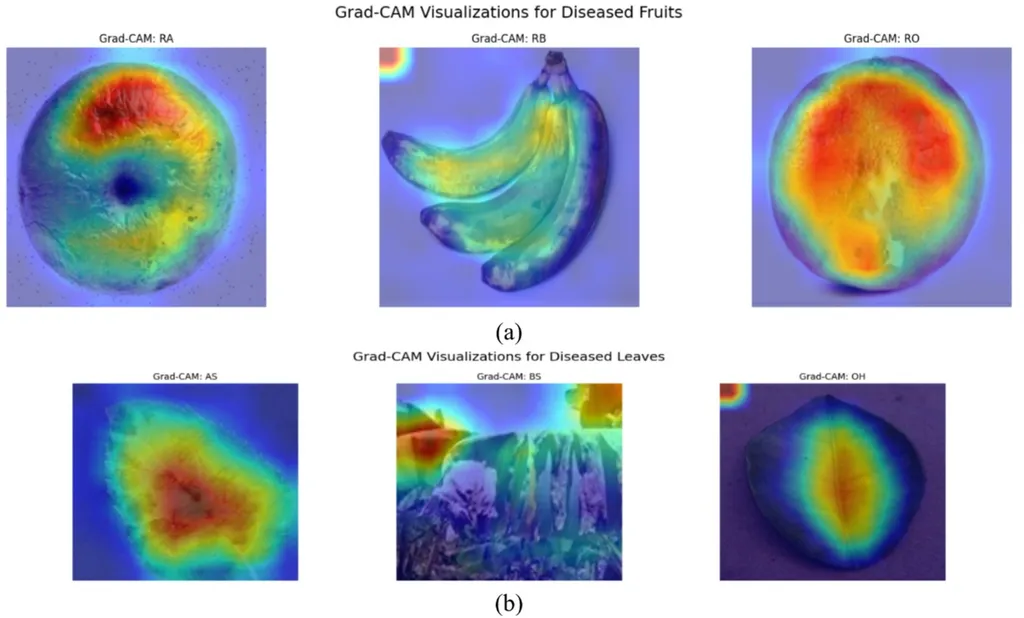
Moreover, the explainable nature of OptiNet-B3 allows for better decision-making and trust in AI-driven diagnostics. “Explainable AI is crucial for adoption in the agricultural sector,” Naveen emphasizes. “Farmers need to understand why a particular diagnosis is made to take appropriate actions.”
Looking ahead, the success of OptiNet-B3 paves the way for further advancements in AI-driven plant disease management. Future research could explore the integration of additional data sources, such as environmental sensors and weather data, to provide a more holistic approach to crop health monitoring. The potential for AI to transform agriculture is vast, and OptiNet-B3 is a significant step forward in this journey.
As the agritech sector continues to evolve, models like OptiNet-B3 will play a pivotal role in shaping the future of sustainable and efficient agriculture. The research underscores the importance of interdisciplinary collaboration, combining the expertise of computer scientists and agronomists to address real-world challenges. With continued innovation, the dream of smart, sustainable agriculture is becoming increasingly attainable.