
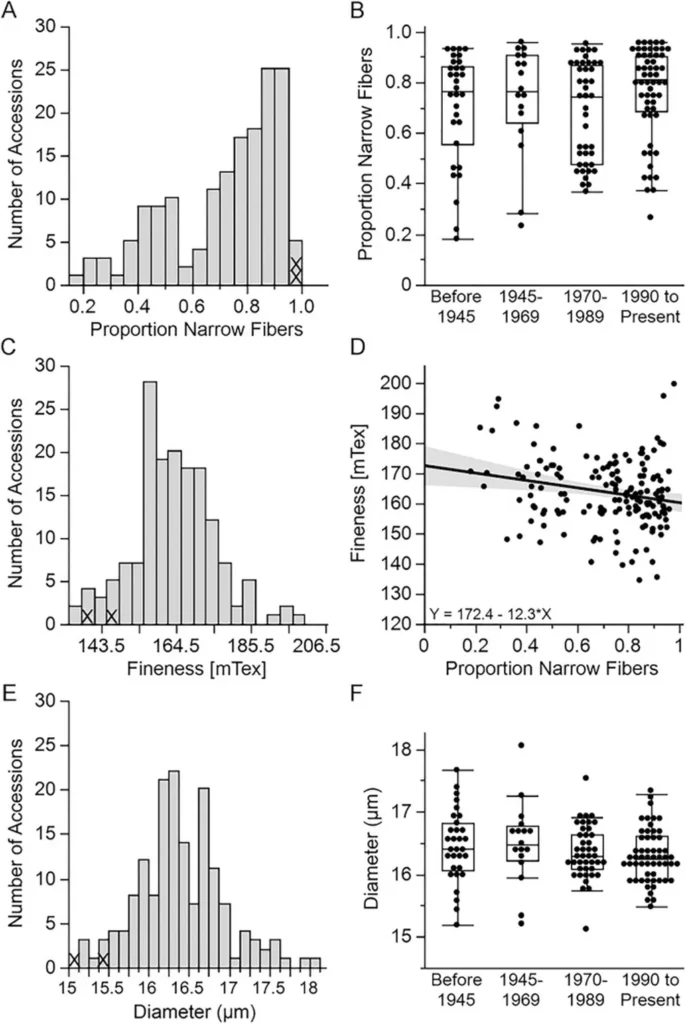
In the ever-evolving world of textiles, cotton remains a staple, but its natural qualities must continually adapt to compete with synthetic alternatives. A recent study published in *Industrial Crops and Products* offers a promising breakthrough in improving cotton fiber quality, potentially reshaping the agricultural and textile industries. Led by Benjamin P. Graham from North Carolina State University, the research reveals that the proportion of narrow fibers during early development can predict the fineness and other quality traits of mature cotton fiber.
Cotton fiber, an outgrowth of the seed epidermis, is renowned for its strength and length, making it the world’s most important textile material. However, to stay competitive with synthetic fibers, the quality of cotton—particularly from *Gossypium hirsutum* L., the most widely cultivated species—needs enhancement. One key quality metric is fineness, or linear density, where lower values are preferred for high-quality textiles.
The study analyzed 161 historical *G. hirsutum* accessions grown in the field, along with two accessions of *G. barbadense* L., known for producing the highest quality fiber. Using computer vision technology, the researchers estimated the proportion of narrow fibers three days after flowering. Mature fiber from the same field plots was then analyzed using the High Volume Instrument (HVI) and the Automated Fiber Information System (AFIS).
The results were compelling. Linear regression analysis showed that a higher average proportion of young, narrow fibers was correlated with several improved qualities of mature fibers, including lower average fineness and diameter. “This finding suggests that by focusing on the early stages of fiber development, we can predict and potentially enhance the quality of mature cotton fiber,” Graham explained.
The study also demonstrated that there is genetic control over the proportion of narrow fibers, opening doors for breeding programs aimed at improving cotton quality. “Understanding the genetic basis of this trait allows us to develop cultivars with consistently higher proportions of narrow fibers, ultimately improving the overall quality of the cotton crop,” Graham added.
While the research highlights the potential of genetic control, the influence of environmental and other factors on fiber shape proportions remains an area for further exploration. Nonetheless, the findings offer a clear path forward for breeders and agronomists to focus on early fiber development as a predictor of mature fiber quality.
The commercial implications of this research are significant. By improving the quality of cotton fiber, the agricultural sector can enhance the competitiveness of natural fibers against synthetics, potentially increasing market value and demand. This could lead to more sustainable farming practices and greater economic benefits for cotton producers.
As the textile industry continues to evolve, innovations like this are crucial. The study not only provides a scientific foundation for improving cotton quality but also sets the stage for future developments in agritech and breeding programs. With continued research and application, the cotton industry can look forward to a future where quality and sustainability go hand in hand.
The research was led by Benjamin P. Graham from the Dept. of Crop and Soil Sciences and the Dept. of Plant and Microbial Biology at North Carolina State University, and published in *Industrial Crops and Products*.