
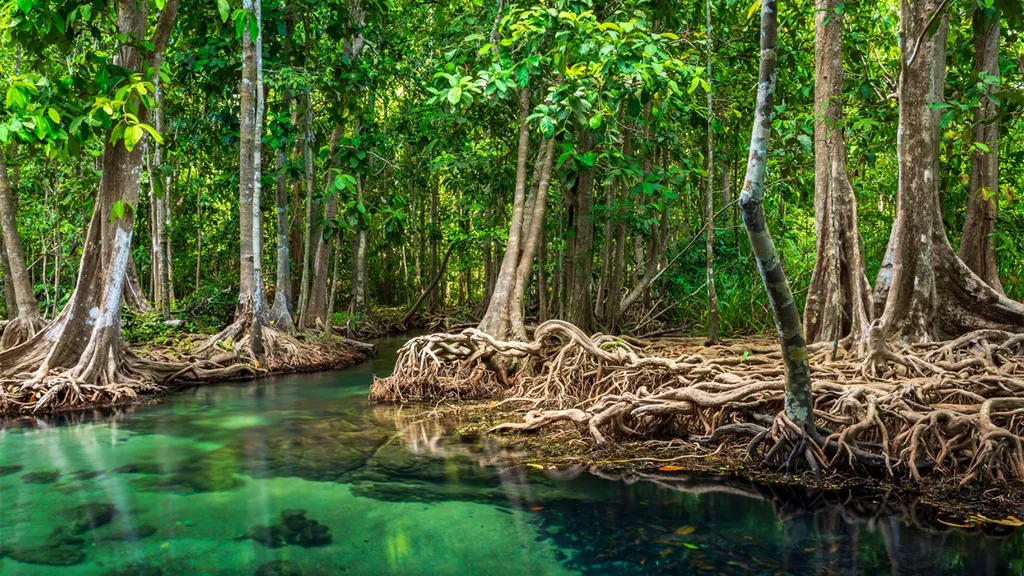
In the sun-scorched coastal fringes of the Middle East, where the arid landscape meets the sea, a silent sentinel stands guard: the mangrove. These hardy trees, pushed to their limits by harsh conditions, play a crucial role in protecting coastlines, supporting fisheries, and storing carbon. Yet, their resilience is often misunderstood, leading to misguided restoration efforts and overestimated carbon offset potentials. A comprehensive review published in *Frontiers in Marine Science* sheds new light on these unique ecosystems, offering insights that could reshape mangrove conservation and restoration strategies in the region.
The study, led by Gowhar Meraj from the American University of Sharjah, synthesizes data from the Red Sea, Arabian/Persian Gulf, and adjoining shores to paint a detailed picture of Middle Eastern mangroves. These mangroves, primarily composed of the species Avicennia marina, are dwarfed versions of their tropical counterparts, growing to just 2–4 meters tall. They thrive in hypersaline conditions, allocating most of their resources to below-ground growth on nutrient-poor substrates.
“Global generalizations tend to overestimate their functional capacity,” Meraj explains. “This can risk context-mismatched restoration and overestimated offset potential.” The review highlights four primary controls governing the distribution and function of these mangroves: freshwater inputs, hypersalinity, heat, and sheltering geomorphology. Vertical accretion is modest, at around 1–3 mm per year, and organic carbon burial is low, at 10–15 g C m⁻² yr⁻¹, with soil stocks of about 43 ± 5 Mg C ha⁻¹—far less than in the humid tropics.
The study also underscores the significant socio-economic benefits of these mangroves, including nursery support for fisheries, shoreline defense, and cultural amenities. However, enforcement, monitoring, reporting, and verification (MRV), and co-management remain uneven across the region. Sea-level rise, projected to increase by 39.1 cm by 2100, combined with thermal and salinity extremes, dust burial, and oiling, raises the risk to these ecosystems. Yet, undisturbed soils confer high carbon permanence, offering a glimmer of hope.
The research emphasizes the need for a region-specific framework to safeguard these vital ecosystems. Priorities include protecting groundwater-fed refugia, securing retreat corridors, reducing local stressors, and implementing stress-matched restoration that replicates resilient features such as space, sediment, seepage, and shelter. Grounding mitigation in arid-zone MRV and avoided-loss accounting is also crucial.
For the agriculture sector, the findings hold significant implications. Mangroves act as natural barriers, protecting coastal farmlands from erosion and storm surges. Their role in carbon sequestration is also vital, as it helps mitigate climate change, which in turn affects agricultural productivity. By understanding the specific needs and constraints of Middle Eastern mangroves, policymakers and farmers can work together to implement more effective conservation and restoration strategies.
The study provides a resilience–threat typology and an integrated governance framework linking legal protection, climate-linked restoration, regional coordination, and inclusive co-management. These insights could shape future developments in the field, ensuring that mangrove conservation efforts are tailored to the unique conditions of the arid Middle East.
As the world grapples with the impacts of climate change, the lessons from this review are more relevant than ever. By embracing a nuanced understanding of these resilient ecosystems, we can pave the way for more effective and sustainable conservation strategies, benefiting both the environment and the communities that depend on it.