
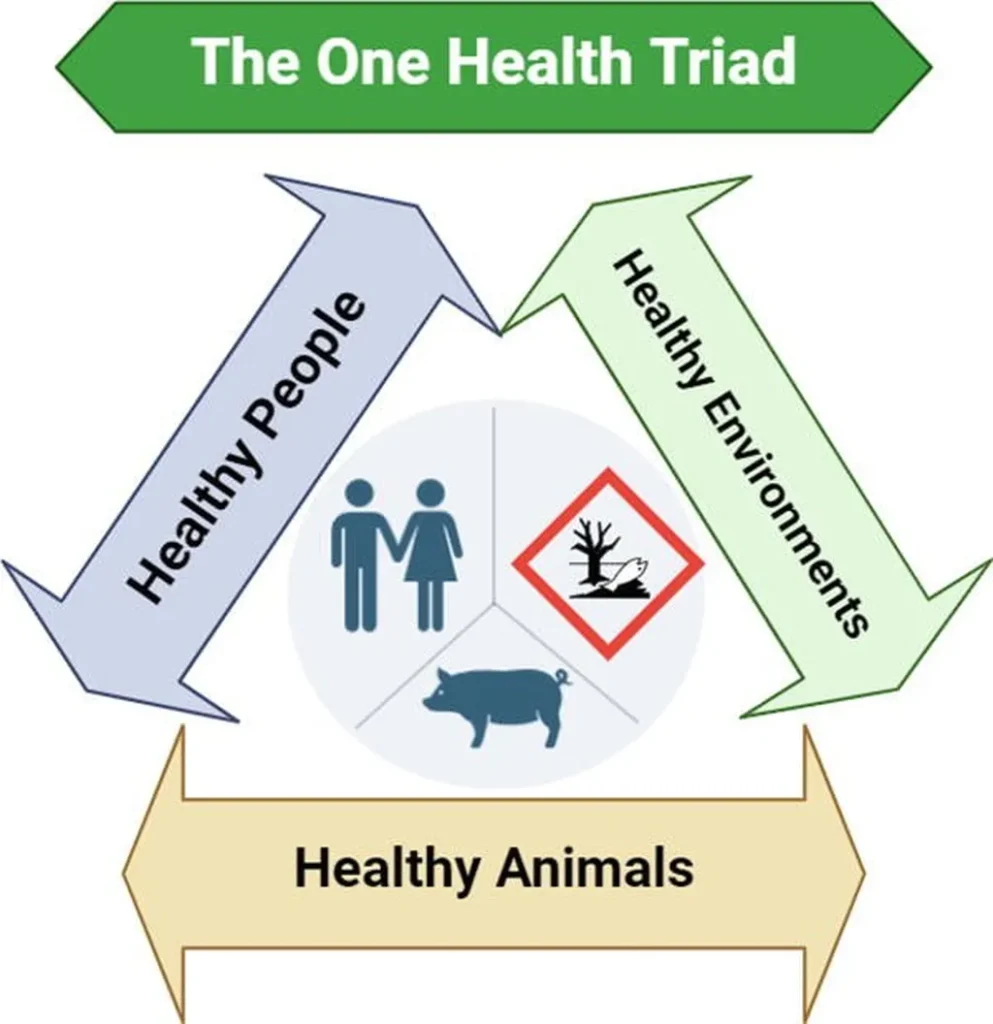
In the ever-evolving landscape of agricultural challenges, a recent study published in *Frontiers in Microbiology* sheds light on a comprehensive approach to tackling Porcine Reproductive and Respiratory Syndrome Virus (PRRSV), a significant threat to global swine production. The research, led by Hongbo Chen from the College of Life Sciences at Longyan University in China, advocates for a One Health approach, integrating virological, ecological, immunological, and agricultural dimensions to combat PRRSV effectively.
PRRSV is notorious for causing substantial economic losses and raising serious animal welfare concerns. While it is not considered a zoonotic agent, its control is a prime example of the necessity for a holistic approach. The virus’s impact extends beyond porcine populations, contributing to the emergence of antimicrobial resistance (AMR) through secondary bacterial infections and the consequent misuse of antibiotics. This interconnectedness underscores the need for a multifaceted strategy that addresses not just the virus itself but also its broader implications.
The study highlights the environmental persistence of PRRSV and its potential for indirect transmission, raising critical ecological questions that remain unresolved. By synthesizing current evidence, the research delineates the complex interrelationships among PRRSV outbreaks, patterns of antimicrobial use, and environmental contamination. This integrated perspective is crucial for developing effective surveillance and control measures.
“PRRSV is not just a problem for swine producers; it’s a challenge that spans multiple sectors,” says lead author Hongbo Chen. “By adopting a One Health approach, we can better understand and mitigate the impacts of this virus, ultimately protecting animal welfare and supporting sustainable agriculture.”
The proposed integrated One Health framework emphasizes the implementation of genomic tools, systematic environmental monitoring, and enhanced collaboration among public health, veterinary, and environmental sectors. This collaborative effort is essential for alleviating the multidimensional challenges posed by PRRSV.
For the agriculture sector, the implications are significant. Effective PRRSV control can lead to reduced economic losses, improved animal welfare, and more sustainable farming practices. The study’s findings could shape future developments in the field, encouraging a more holistic and collaborative approach to agricultural challenges.
As the agricultural industry continues to evolve, the insights provided by this research offer a promising path forward. By embracing a One Health approach, stakeholders can work together to address the complex issues surrounding PRRSV and other agricultural threats, ultimately fostering a more resilient and sustainable future for swine production and beyond.