
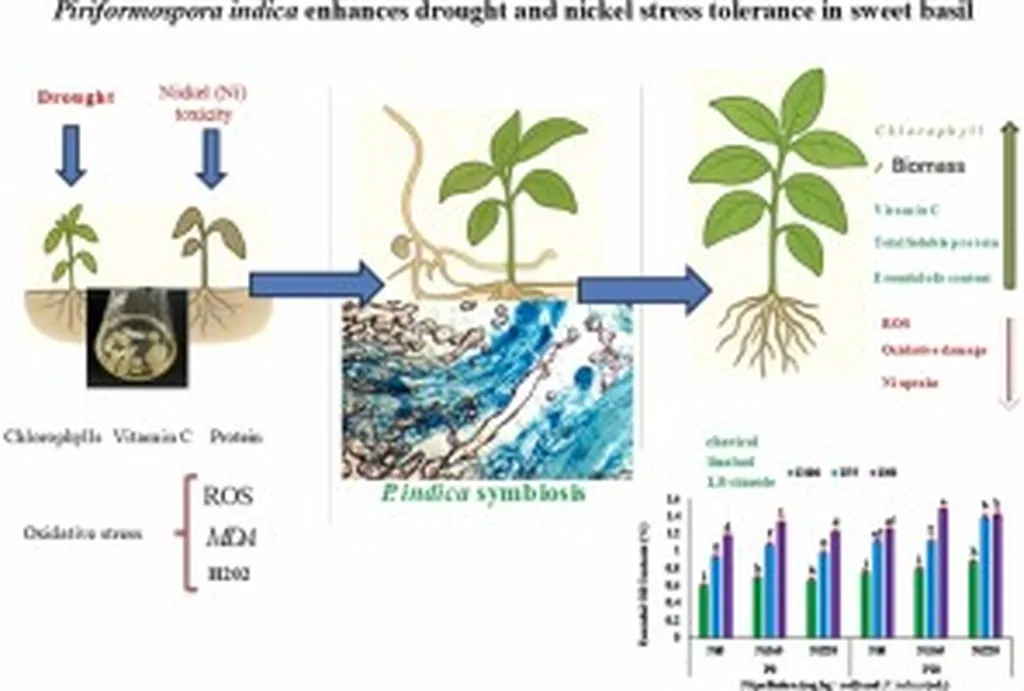
In the face of climate change and environmental degradation, farmers are grappling with increasingly harsh growing conditions. A recent study published in *Industrial Crops and Products* offers a glimmer of hope, demonstrating how a root endophyte could bolster crop resilience and productivity under combined drought and heavy metal stress.
The research, led by Farzad Rasouli from the Department of Horticulture at the University of Maragheh in Iran, focuses on sweet basil (Ocimum basilicum L.), a commercially valuable crop prized for its essential oils and culinary uses. The study explores the combined effects of drought and nickel (Ni) stress on basil’s physiological and biochemical responses and investigates the potential mitigation provided by the root endophyte *Piriformospora indica*.
The findings are promising. Under stress conditions, basil plants inoculated with *P. indica* showed enhanced shoot biomass, preserved pigment levels, and improved photosystem II efficiency. “The endophyte notably reduced oxidative and osmotic markers, indicating a significant alleviation of stress intensity,” Rasouli explains. This translates to healthier plants with higher yields, even in challenging environments.
The implications for the agriculture sector are substantial. With water scarcity and heavy metal contamination posing significant threats to crop productivity, farmers are in dire need of sustainable and effective solutions. *P. indica* presents a promising biological agent that could enhance crop resilience and productivity under combined abiotic stresses.
Moreover, the study found that *P. indica* inoculation significantly enhanced essential oil content and modulated the relative abundance of key constituents such as methyl chavicol, linalool, and 1,8-cineole. This could lead to higher-quality basil crops, benefiting farmers and the essential oil industry alike.
The research also sheds light on the mechanisms behind *P. indica*’s stress-mitigating effects. The endophyte modulated both enzymatic and non-enzymatic antioxidant responses, reducing oxidative damage and promoting plant growth. This holistic approach to stress mitigation could pave the way for developing more resilient crop varieties and sustainable farming practices.
As the agriculture sector continues to grapple with the impacts of climate change, research like this offers a beacon of hope. By harnessing the power of beneficial microorganisms, farmers can enhance crop resilience, improve yields, and contribute to more sustainable and productive agroecosystems. The study, published in *Industrial Crops and Products* and led by Rasouli from the University of Maragheh, underscores the potential of *P. indica* as a valuable tool in the quest for sustainable agriculture.
In the words of Rasouli, “Our findings suggest that *P. indica* is a promising biological agent for boosting basil resilience and productivity under combined drought and heavy metal stress.” This research could shape future developments in the field, offering sustainable options for crop management in challenging agroecosystems and contributing to a more resilient and productive agriculture sector.