
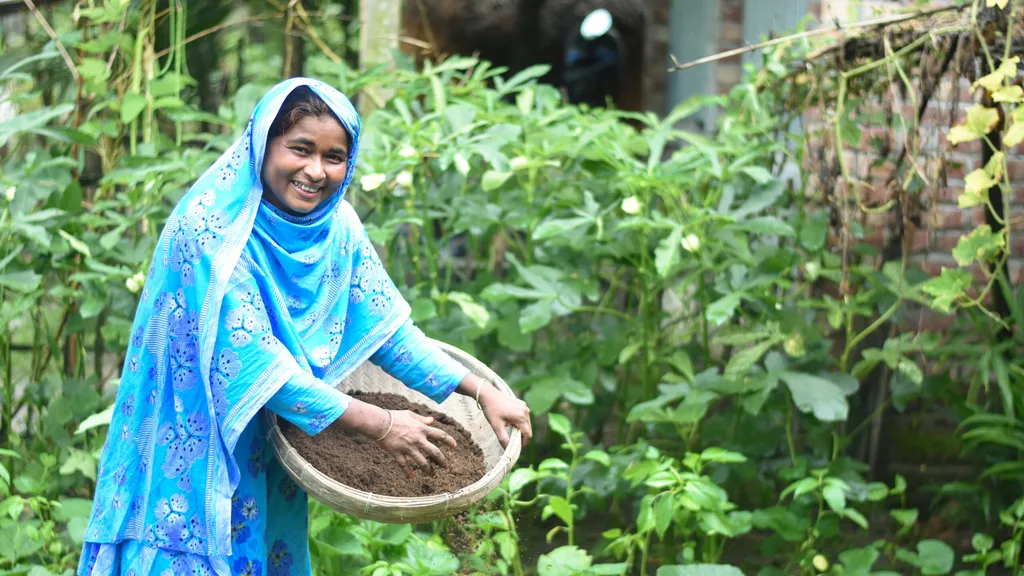
In the heart of Bangladesh, a groundbreaking study is reshaping our understanding of organic farming and its potential to revolutionize vegetable cultivation. Researchers at Sher-e-Bangla Agricultural University have uncovered the transformative power of vermicompost, offering a promising path towards sustainable agriculture and improved soil health.
The study, led by Masud AAC from the Department of Agronomy, focused on the impact of organic amendments on okra (Abelmoschus esculentus) cultivation. The research team compared the effects of three organic manures—cowdung, compost, and vermicompost—on three okra varieties: BARI Dherosh-1, BARI Dherosh-2, and Pusha. The results, published in the Journal of Agriculture, Food and Environment, are nothing short of remarkable.
Vermicompost, a product of composting organic materials with specific worms, emerged as the clear winner. “The application of vermicompost dramatically improved seed germination parameters and seedling indices,” Masud AAC explained. This organic amendment not only enhanced plant growth but also significantly boosted yield attributes such as green pod number per plant, green pod weight per plant, seeds per pod, and total seed yield.
The commercial implications of this research are substantial. As the global demand for organic produce continues to rise, farmers are seeking sustainable and cost-effective solutions to meet this growing market. Vermicompost, with its proven benefits, offers a viable alternative to traditional chemical fertilizers. “Vermicompost promotes growth and yield attributes of okra,” Masud AAC noted, highlighting the potential for increased productivity and profitability in the agriculture sector.
Moreover, the study underscores the importance of soil health and microbial activity in plant nutrition. By enhancing soil fertility and structure, vermicompost contributes to long-term sustainability and environmental stewardship. This aligns with the broader trends in agriculture, where there is a growing emphasis on regenerative practices that promote biodiversity and reduce environmental impact.
The findings of this research have far-reaching implications for the future of agriculture. As we grapple with the challenges of climate change and resource depletion, the shift towards organic and sustainable farming practices becomes increasingly urgent. Vermicompost, with its ability to improve soil health and boost crop yields, represents a crucial step in this direction.
In the words of Masud AAC, “Considering the experimental outcomes, we may conclude that vermicompost promotes growth and yield attributes of okra.” This conclusion not only validates the efficacy of vermicompost but also paves the way for further research and innovation in the field of organic farming. As we look to the future, the integration of vermicompost into mainstream agricultural practices could very well be the key to achieving sustainable and profitable vegetable cultivation.