
In the ever-evolving landscape of agricultural technology, a groundbreaking review published in *Frontiers in Plant Science* is set to redefine plant protection strategies against bacterial diseases. Led by Muhammad Anwar from the School of Tropical Agriculture and Forestry at Hainan University, China, the research delves into the intricate world of quorum sensing (QS) and CRISPR technologies, offering a beacon of hope for sustainable agriculture.
Quorum sensing, a system of bacterial cell-to-cell communication, plays a pivotal role in the virulence and biofilm formation of plant pathogens. The review meticulously dissects the mechanisms underlying QS in prominent pathogens such as *Pseudomonas syringae*, *Erwinia amylovora*, and *Xanthomonas campestris*. By understanding these processes, researchers can develop targeted strategies to inhibit QS, thereby reducing the virulence of these pathogens.
“The interplay between QS and CRISPR technologies holds immense potential for enhancing plant disease resistance,” Anwar explains. “By combining these technologies, we can create disease-resistant plant varieties that are not only more resilient but also more productive.”
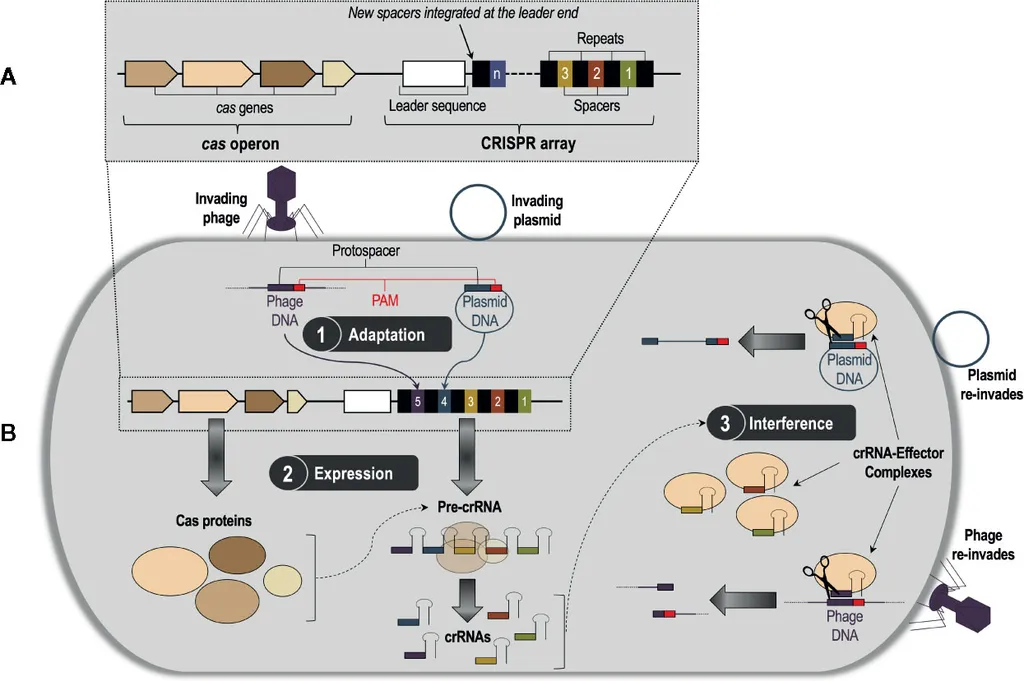
The review highlights the potential of CRISPR-Cas systems, which are already revolutionizing the field of genetic engineering. By integrating CRISPR engineering with QS inhibition strategies, researchers can develop plants that are better equipped to fend off bacterial attacks. This approach not only promises to boost crop yields but also to reduce the reliance on chemical pesticides, paving the way for more sustainable agricultural practices.
The commercial implications of this research are vast. With the global population expected to reach 9.7 billion by 2050, the demand for food is set to skyrocket. The development of disease-resistant crops could significantly enhance food security, ensuring that agricultural productivity keeps pace with demand. Moreover, the reduced need for chemical pesticides could lead to lower production costs and a smaller environmental footprint, making agriculture more sustainable and economically viable.
The review also addresses the technical limitations and the need for stringent agricultural laws to facilitate the widespread adoption of these technologies. It emphasizes the importance of cost-effectiveness and the potential for enhanced crop production and yield, which are critical for the global agriculture sector.
Looking ahead, the research suggests that the integration of artificial intelligence (AI) and machine learning could further augment these approaches. “The future of plant protection lies in the synergy of modern molecular biological techniques and advanced technologies like AI and machine learning,” Anwar notes. “This combination could lead to unprecedented advancements in sustainable agriculture.”
As we stand on the brink of a new era in agricultural technology, this review serves as a critical guide for researchers and policymakers alike. By prioritizing the QS-CRISPR interplay, we can unlock new possibilities for plant health management and sustainable agriculture, ensuring a more secure and prosperous future for the global agriculture sector.