
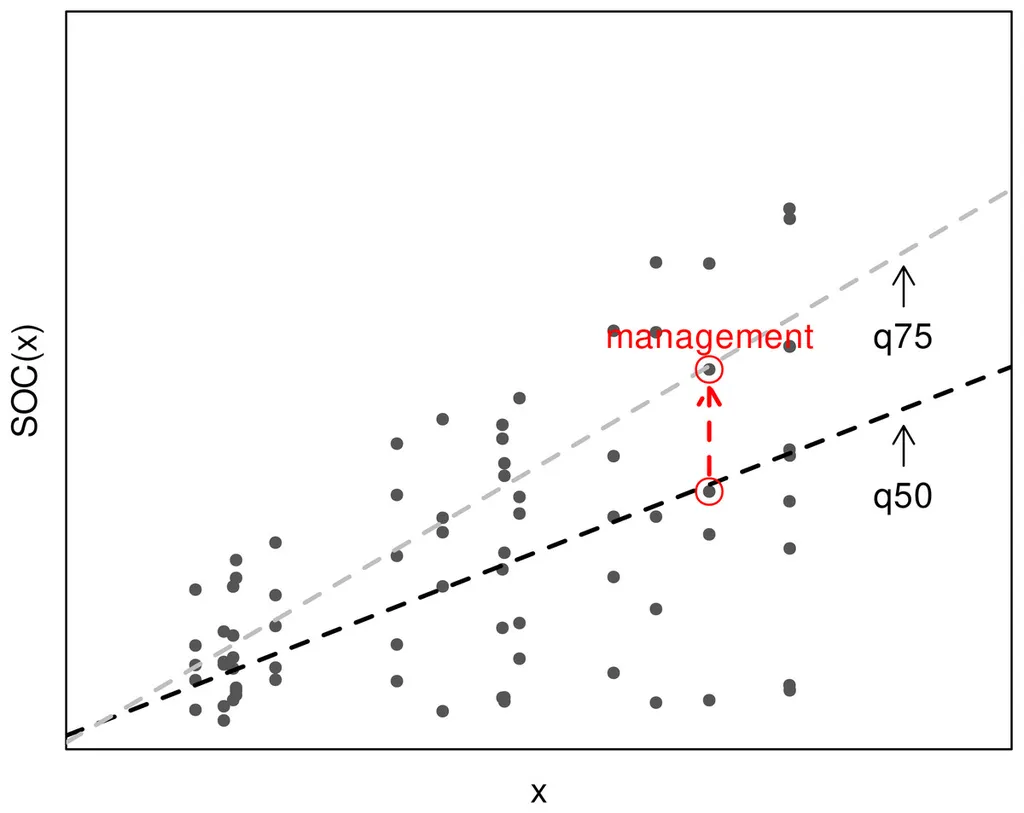
In a significant stride towards climate-change mitigation, a recent study published in *Environmental Research Letters* has quantified the carbon sequestration potential of sustainable soil management practices on arable lands across the European Union. The research, led by Raül López i Losada from the Centre for Environmental and Climate Science at Lund University, offers a data-driven perspective on how improved agricultural practices could contribute to the EU’s climate goals.
The study, which analyzed 214 independent long-term time series of soil organic carbon measurements, reveals that contemporary soil management practices on specialist crop farms are resulting in considerable carbon losses. However, the implementation of reduced tillage, organic amendments, soil cover during winter, and crop rotations could turn the tide. “Our analysis shows that improved soil management on specialist crop farms, which represent 40% of all arable land in the EU, could sequester up to 48 million tonnes of CO2 equivalents yearly,” López i Losada explains. This figure corresponds to 17% of the target for additional carbon removals in the soil and forest sinks under the Fit for 55 package, a comprehensive plan by the European Commission to reduce greenhouse gas emissions by at least 55% by 2030.
The research also highlights the spatial variability in carbon losses and sequestration potential across the EU. The annual climate-change mitigation value per unit of land with improved management shows a four-fold variation across countries, with Finland exhibiting the highest value and Cyprus the lowest. This finding underscores the need for spatially adjusted carbon payment eco-schemes to achieve cost-effective soil organic carbon sequestration.
The commercial implications for the agriculture sector are substantial. Farmers could potentially benefit from carbon payment eco-schemes, which would compensate them for adopting sustainable soil management practices. Moreover, the study provides a scientific basis for policymakers to design targeted incentives that encourage farmers to participate in carbon farming initiatives.
The research also opens up new avenues for future developments in the field. As López i Losada notes, “Our findings could guide the development of more precise and effective soil management strategies that maximize carbon sequestration while maintaining agricultural productivity.” This could lead to the creation of new markets for carbon credits and the development of innovative technologies that facilitate the adoption of sustainable soil management practices.
In conclusion, this study not only quantifies the carbon sequestration potential of sustainable soil management practices but also provides a roadmap for the agriculture sector to contribute to the EU’s climate goals. By adopting improved soil management practices, farmers could not only mitigate climate change but also secure their livelihoods in a changing world. The study is a testament to the power of data-driven research in shaping sustainable and profitable agricultural practices.