
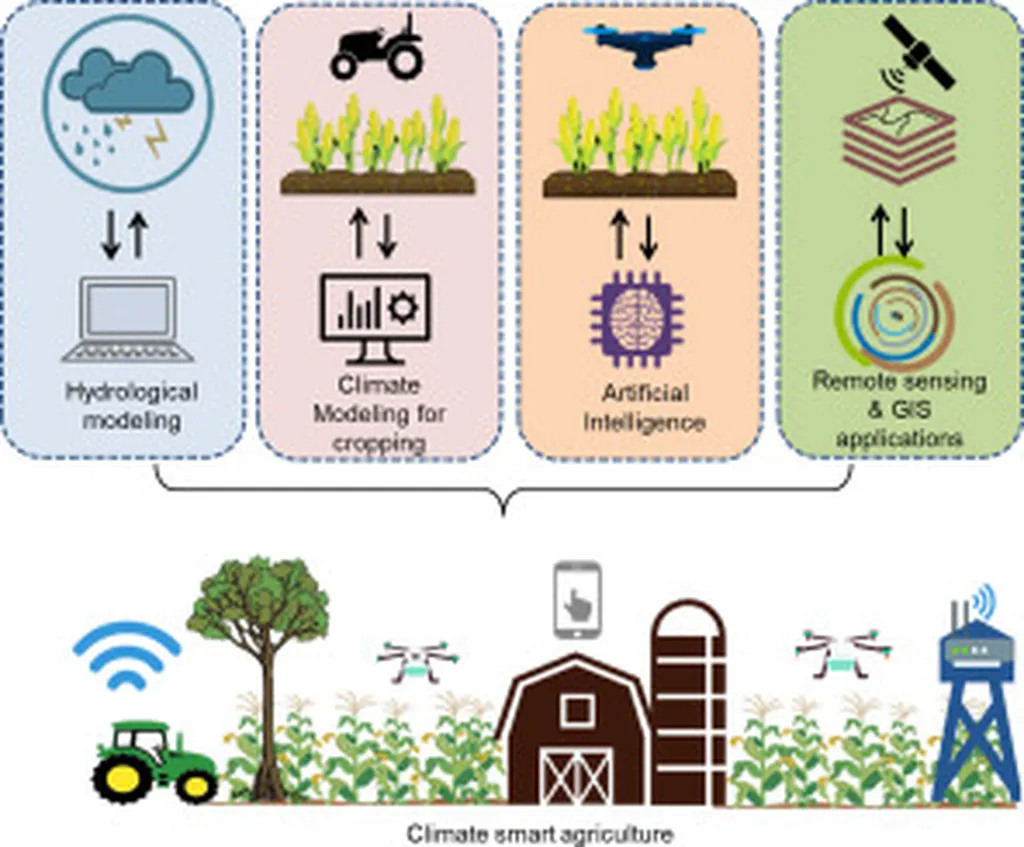
In the face of escalating climate change and its attendant disasters, flood inundation models have become indispensable tools for forecasting and managing flood risks. A recent review published in *Environmental Research Letters* offers a comprehensive look at the evolution of these models over the past five decades and charts a course for future advancements that could significantly impact sectors like agriculture.
Flooding remains one of the most devastating natural hazards, causing immense economic damage, loss of life, and ecological degradation. Over the years, flood inundation models have evolved from basic numerical simulations to sophisticated tools that integrate large-scale simulations and satellite remote sensing. However, the field is now at an inflection point, poised for even greater advancements.
The review, led by Zhi Li of the Department of Earth System Science at Stanford University, identifies eight promising research directions that could revolutionize flood modeling. One of the most ambitious involves coupling flood models with atmospheric sciences to create a two-way coupled flood-land surface-atmosphere model. This integration could provide more accurate predictions and better inform decision-making processes.
“By coupling flood models with atmospheric sciences, we can gain a more holistic understanding of how floods interact with the environment,” Li explains. “This could lead to more effective flood management strategies and better preparedness for future events.”
For the agriculture sector, the implications are profound. Floods can devastate crops, disrupt supply chains, and lead to significant financial losses. By integrating economic models with flood inundation models, researchers can develop a framework to quantify the financial harm to agricultural lands. This could help farmers and policymakers make more informed decisions about crop selection, insurance, and land use.
Another promising direction is the coupling of flood models with epidemiology to assess the health impacts of floods. This interdisciplinary approach could help identify vulnerable populations and develop targeted interventions to mitigate health risks.
The review also highlights the need for further development of models that account for groundwater flooding, glacial lake outburst flooding, and sedimentation-induced flooding. Additionally, it emphasizes the importance of investigating the joint impact of multiple compounding flood types, which could provide a more comprehensive understanding of flood risks.
The responsible advancement of AI-based flood models is another key area of focus. AI has the potential to enhance the accuracy and efficiency of flood modeling, but it must be developed and deployed ethically and transparently.
“AI can significantly improve our ability to predict and manage floods, but we must ensure that these models are developed responsibly,” Li notes. “This includes addressing issues like data privacy, bias, and transparency.”
The review also calls for greater assimilation of multiple data sources, including high-resolution satellite and drone imagery, crowdsourcing, and video data. This integrated approach could provide a more detailed and accurate picture of flood events, enabling better decision-making and response efforts.
As climate change continues to exacerbate flood risks, the need for advanced flood inundation models has never been greater. The research directions outlined in this review offer promising opportunities to address the combined challenges of escalating climate, land-use, and demographic changes. By embracing interdisciplinary approaches and leveraging cutting-edge technologies, we can build a more resilient future for all.