
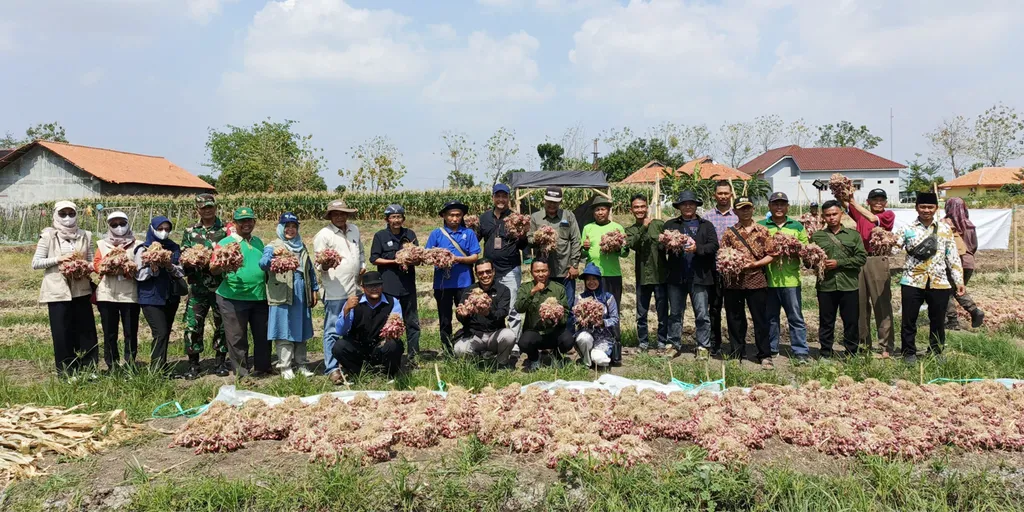
In the heart of Indonesia’s agricultural landscape, a groundbreaking study is reshaping the way farmers approach shallot cultivation. The research, published in *Jurnal Riset Perkebunan*, explores the transformative potential of a compost mixture combining sawdust and chicken manure, offering a sustainable and effective alternative to traditional chemical fertilizers.
Shallots, a high-value horticultural commodity, are in increasing demand in Indonesia. To meet this growing need, researchers led by Silvia Permata Sari from Universitas Andalas have discovered that a specific compost blend can significantly enhance both the growth and yield of shallots. The study, conducted in Nagari Koto Laweh, Tanah Datar Regency, utilized a Randomized Complete Block Design (RCBD) with five treatments and three replications. The results were compelling: a 1:3 ratio of sawdust to chicken manure emerged as the most effective, boosting plant height, leaf number, bulb count, and bulb diameter.
“Our findings indicate that this compost combination not only improves the quantity but also the quality of shallot production,” said Sari. “This is a significant step towards sustainable agriculture, as it reduces the reliance on chemical fertilizers and enhances soil fertility.”
The implications of this research extend beyond shallots. The compost mixture has shown potential for application in other crops such as oil palm, sugar palm, and cocoa. This eco-friendly approach to fertilization could revolutionize the agricultural sector, promoting sustainable practices and improving soil health.
The study also highlighted the compost’s role in integrated pest and disease management. The 1:3 sawdust-to-chicken manure ratio effectively controlled pests like Thrips tabaci and Spodoptera exigua, as well as diseases such as Fusarium oxysporum and Peronospora destuctor. This dual benefit of enhanced yield and reduced pest and disease incidence makes the compost mixture an attractive option for farmers seeking sustainable and effective solutions.
As the agricultural sector continues to evolve, research like this paves the way for innovative and environmentally friendly practices. The study’s findings could shape future developments in fertilization strategies, contributing to a more sustainable and productive agricultural landscape. With the increasing demand for high-value crops like shallots, this research offers a promising solution that benefits both farmers and the environment.
The study, led by Silvia Permata Sari from Universitas Andalas, was published in *Jurnal Riset Perkebunan*, providing a valuable resource for researchers and practitioners in the field of sustainable agriculture.