
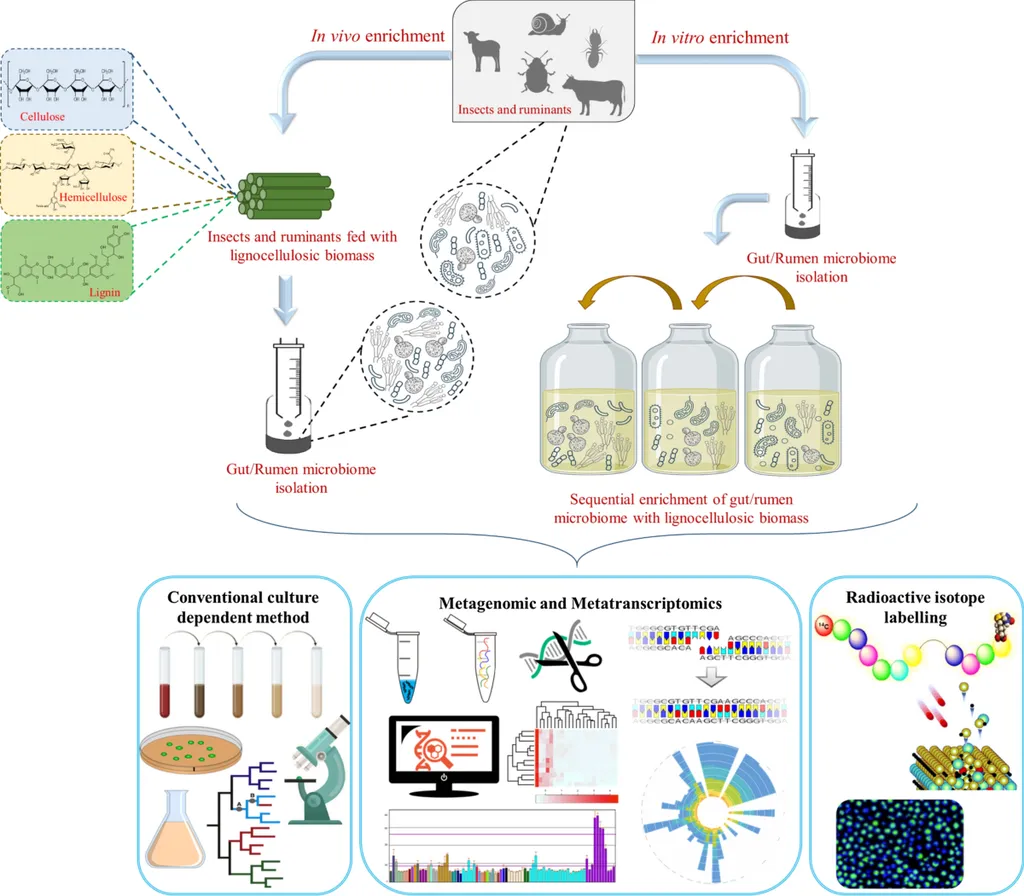
In the quest for sustainable agriculture, scientists are turning to an unusual source: the guts of insects. A recent study published in *Microbiology Spectrum* has uncovered a promising bacterial strain, *Aeromonas veronii* CMF, isolated from the gut of the chitinivorous fly *Chrysomya megacephala*. This bacterium exhibits a trifecta of beneficial traits—antifungal activity, plant growth promotion, and heavy metal bioremediation—potentially revolutionizing how we approach crop protection and soil health.
The research, led by Sandipan Banerjee from the Mycology and Plant Pathology Laboratory at Visva-Bharati in Santiniketan, India, highlights the untapped potential of insect gut symbionts. “We targeted the gut system of *Chrysomya megacephala* based on their chitin-rich diet, reasoning that such an environment might harbor microbes with unique enzymatic capabilities,” Banerjee explains. The isolated strain, *A. veronii* CMF, proved non-pathogenic and demonstrated significant antifungal enzyme production, including chitinase, protease, and β−1,3-glucanase. These enzymes are crucial for breaking down fungal cell walls, offering a natural defense mechanism against plant pathogens.
The implications for agriculture are substantial. Plant diseases caused by fungi can devastate crops, leading to significant economic losses. Traditional chemical fungicides, while effective, often have detrimental environmental impacts. The discovery of *A. veronii* CMF presents a sustainable alternative. “The in vitro and in vivo studies showed that this bacterium can effectively combat a wide range of plant pathogenic fungi,” Banerjee notes. This could translate into healthier crops and reduced reliance on harmful chemicals, benefiting both farmers and consumers.
Beyond its antifungal properties, *A. veronii* CMF also exhibits plant growth-promoting (PGP) activities. It colonizes the roots of plants like chickpeas and rice, enhancing their growth. This symbiotic relationship could lead to more robust and productive crops, addressing food security concerns in an era of climate change and population growth.
Adding another layer of utility, the bacterium shows promise in bioremediation. It can resist, remove, and bioaccumulate heavy metals, which are common pollutants in agricultural soils. This capability could help detoxify contaminated lands, making them suitable for cultivation again. “The integrated attributes of *A. veronii* CMF make it a versatile tool for sustainable agriculture,” Banerjee says. “It addresses both biotic and abiotic stresses, fulfilling several sustainable developmental goals.”
The commercial potential of this research is vast. Agricultural biotechnology companies could develop biofungicides and biofertilizers based on *A. veronii* CMF, offering farmers eco-friendly solutions to enhance crop yields and soil health. Additionally, the bioremediation aspect could attract interest from environmental cleanup industries, further broadening the bacterium’s applications.
As the world grapples with the challenges of sustainable food production and environmental conservation, innovations like *A. veronii* CMF offer a glimmer of hope. By harnessing the power of nature’s own mechanisms, we can pave the way for a greener, more resilient agricultural future. The study, led by Sandipan Banerjee and published in *Microbiology Spectrum*, underscores the importance of exploring unconventional sources for microbial resources, potentially unlocking new frontiers in agritech and beyond.