
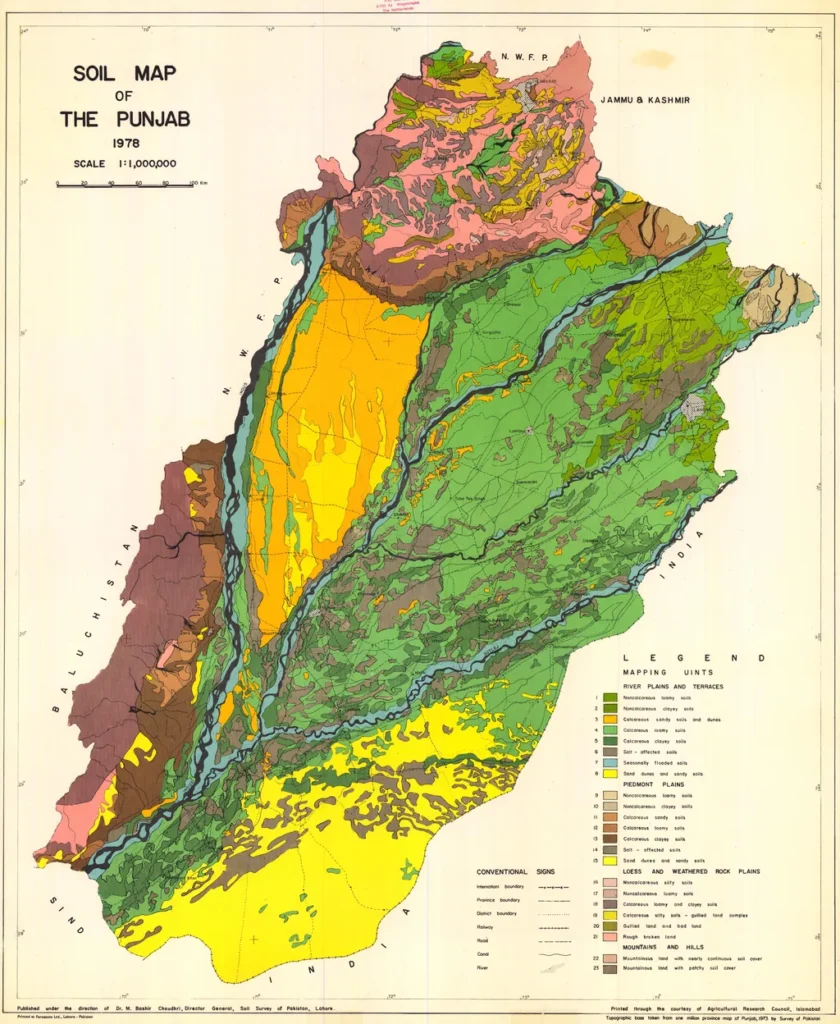
In the heart of Pakistan’s Punjab province, a groundbreaking study is reshaping how agriculturists understand and utilize soil properties for sustainable farming. The research, published in the FUUAST Journal of Biology and led by Rashidah Sultana of the Abdus Salam School of Sciences, Department of Botany, Nusrat Jahan College Rabwah, provides a comprehensive analysis of soil samples from the Chiniot district, offering valuable insights for the agriculture sector.
The study, which analyzed 46 soil samples, employed Geographic Information System (GIS) technology using the Inverse Distance Weighting (IDW) technique to map various physical and chemical properties. These properties included pH, Electrical Conductivity (EC), Total Dissolved Solids (TDS), Sieve Analysis, Alkalinity, Total Hardness, Carbonates, Chloride, Calcium, and Magnesium. The findings revealed that the majority of the soil samples were loamy sandy and sandy loamy, with elevated alkalinity observed across the area.
“Understanding the soil’s chemical and physical properties is crucial for sustainable agriculture,” said lead author Rashidah Sultana. “Our study provides a detailed map of these properties, which can guide agriculturists in selecting crops that are best suited to specific soil types.”
The research identified regions such as Chenab Nagar, Hast Khiwa, and Kanvanwala as having higher levels of hardness, carbonates, chlorides, calcium, and magnesium. Hydro-chemical facies comparison using diamond and piper diagrams revealed that the predominant compounds were Magnesium bicarbonate types (58%), where alkalis exceeded alkaline earths (100%). The prevalent cation type was Magnesium (100%), and the anion distribution showed no dominant type (52%), with an equal distribution of sulfate and bicarbonate types (48%), and none of sulfate and chlorides.
The commercial impacts of this research are significant. By providing a detailed map of soil properties, agriculturists can make informed decisions about crop selection, irrigation, and soil management practices. This can lead to increased crop yields, improved soil health, and more sustainable farming practices.
“Our findings can help agriculturists optimize their farming practices,” said Sultana. “For example, knowing the soil’s alkalinity levels can guide them in selecting crops that thrive in such conditions, leading to better yields and more efficient use of resources.”
The study also highlights the importance of using advanced technologies like GIS in agriculture. By mapping soil properties, agriculturists can identify areas that may require specific interventions, such as soil amendments or changes in irrigation practices. This can lead to more precise and effective farming practices, ultimately benefiting both the environment and the agricultural sector.
As the world grapples with the challenges of climate change and food security, studies like this one are more important than ever. By providing a detailed understanding of soil properties, this research can help shape future developments in sustainable agriculture, ensuring that our soils remain healthy and productive for generations to come.