
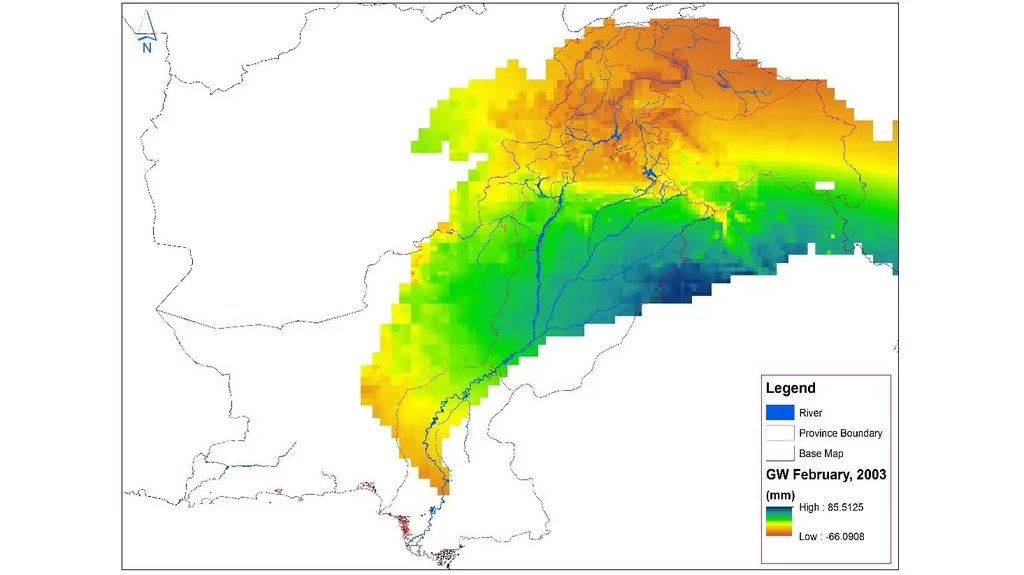
In the heart of Pakistan’s Punjab province, a critical issue is brewing beneath the surface— quite literally. As water scarcity tightens its grip on the region, farmers in District Chiniot are turning to groundwater to keep their crops alive. But this lifeline comes with a catch: the quality of this water is largely unmonitored, posing a significant risk to both the environment and the agricultural economy. A recent study published in the *FUUAST Journal of Biology* sheds light on this pressing concern, offering a roadmap for sustainable farming practices in the face of water stress.
The research, led by Mirza Naseer Ahmad from the Department of Earth Sciences at Nusrat Jahan College, Rabwah, delves into the physiochemical properties of groundwater in ten selected areas of District Chiniot. The findings reveal a complex hydrochemical landscape, with a dominance of sodium chloride type compounds and a prevalence of alkaline earth over alkalis. “Maximum cations are Sodium and Potassium type (47.22%),” Ahmad notes, highlighting the unique composition of the region’s groundwater.
The implications for agriculture are profound. The study suggests that areas with higher concentrations of sodium salts could be suitable for salt-tolerant crops like wheat, rice, sugar cane, and beans. This targeted approach to crop selection could not only save resources but also bolster the region’s agricultural output. “Selection of crops according to the quality of water will save economy, time, and other resources,” Ahmad emphasizes, underscoring the potential economic benefits of the research.
But the study’s impact extends beyond immediate agricultural practices. By establishing a database according to agricultural parameters and employing Geographic Information System (GIS) mapping, the research provides a powerful tool for monitoring water quality and identifying aquifers with good quality water. This proactive approach could help mitigate the long-term effects of water scarcity, including the lowering of water tables and the degradation of water quality.
The commercial impacts of this research are far-reaching. As water scarcity becomes an increasingly global concern, the methods and findings of this study could be applied to other regions facing similar challenges. By optimizing water usage and tailoring crop selection to water quality, farmers and agricultural businesses could enhance their resilience to water stress, securing their livelihoods and contributing to food security.
Moreover, the integration of GIS mapping into water quality monitoring offers a scalable solution for precision agriculture. As technology continues to advance, the fusion of data-driven insights and agricultural practices could revolutionize the way we approach farming, paving the way for a more sustainable and efficient future.
In the face of water scarcity, innovation and adaptability are key. This research not only highlights the current state of groundwater quality in District Chiniot but also offers a blueprint for sustainable agriculture in an era of climate change and resource depletion. As the world grapples with these challenges, the insights gleaned from this study could shape the future of farming, ensuring that our agricultural practices are as resilient as they are productive.