
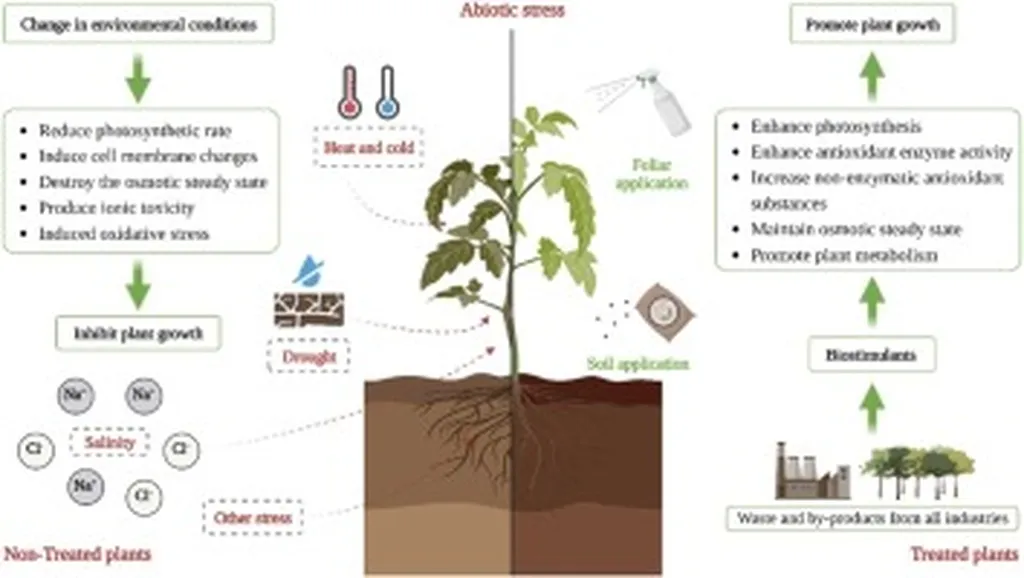
In the face of climate change and its mounting pressures on agriculture, researchers are turning to innovative solutions to bolster crop resilience and yield. A recent study published in *Frontiers in Plant Science* offers a promising avenue: tomato cell cultures as a source of plant biostimulants to enhance seed germination under salinity stress. The research, led by José Manuel Martí-Guillén, explores the potential of these biostimulants to mitigate the adverse effects of salt stress on pepper seeds, a common challenge in many agricultural regions.
The study focuses on higher plant-derived biostimulants (hPDBs), which are gaining traction for their low production costs, safety, and environmental friendliness. By eliciting tomato cell cultures with specific compounds, the researchers produced a novel biostimulant—tomato biostimulant (TB)—rich in bioactive compounds like fatty acids, phenolic compounds, and flavonoids. These compounds are known to enhance plant growth and stress tolerance, making them valuable tools in sustainable agriculture.
The results were striking. When applied as a seed priming treatment, TB significantly improved germination parameters in pepper seeds under salt stress. The mean germination time (MGT) decreased by 10%, while the germination index (GI) and vigor index (VI) increased by 25% and 47%, respectively. Moreover, TB reduced oxidative damage by decreasing hydrogen peroxide (H2O2) content by 24% and promoting peroxidase (POX) activity by 35% compared to non-primed seeds.
“These findings highlight the potential of tomato biostimulant to alleviate salt stress in pepper seeds by promoting antioxidant defenses and reducing oxidative damage,” said Martí-Guillén. The study suggests that TB could be a game-changer for farmers grappling with salinity issues, offering a sustainable and cost-effective solution to enhance crop performance.
The commercial implications of this research are substantial. As climate change continues to exacerbate environmental stresses on crops, the demand for effective and eco-friendly biostimulants is expected to rise. Tomato biostimulant, with its rich metabolic profile and proven efficacy, could become a key player in the agricultural biostimulant market. Farmers could benefit from improved seed vigor and yield, while the environment gains from reduced reliance on synthetic chemicals.
This research opens new avenues for exploring the use of plant cell cultures in producing biostimulants tailored to specific crops and stress conditions. As Martí-Guillén noted, “The distinctive metabolic profile of TB offers a blueprint for developing similar biostimulants from other plant sources, potentially revolutionizing how we approach crop protection and enhancement.”
In the broader context, the study underscores the importance of integrating biotechnological tools with traditional agricultural practices to build resilient and sustainable farming systems. As the global population grows and climate change intensifies, such innovations will be crucial in ensuring food security and environmental sustainability.
The research was published in *Frontiers in Plant Science* and was led by José Manuel Martí-Guillén, whose affiliation details are not provided. This study not only advances our understanding of plant biostimulants but also paves the way for future developments in the field, offering hope for a more resilient and productive agricultural future.