
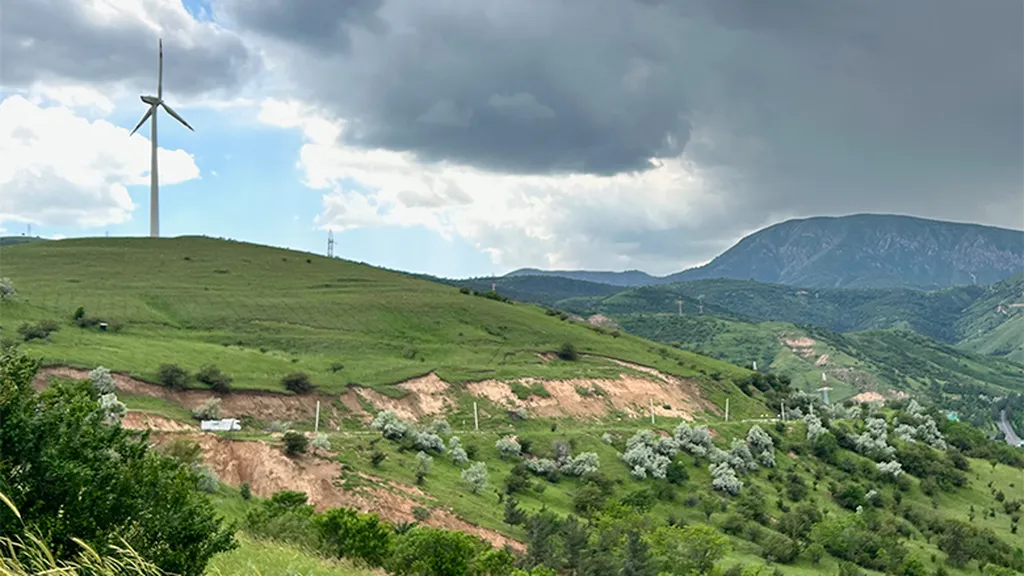
In the heart of Central Asia, Uzbekistan’s agricultural sector faces a formidable challenge: land degradation. A recent study published in *Frontiers in Sustainable Food Systems* sheds light on the severity of the issue and offers a roadmap for sustainable solutions, with significant implications for the agriculture sector.
The research, led by Sherzod Umarov from the Food and Agriculture Organization (FAO) Regional Office in Tashkent, reveals alarming statistics. Over 50 percent of Uzbekistan’s land is degraded, with soil humus content declining by 1.3–1.5 times between 1990 and 2020. Soil salinity has also surged in several regions, with increases of up to 63.6% in Jizzakh and 45.1% in Ferghana. These trends pose a substantial threat to food security and agricultural productivity.
The study employed remote sensing and GIS techniques to analyze land degradation through NDVI trends, land use dynamics, and statistical correlations. This approach enables quantitative assessments of soil degradation, facilitating evidence-based land management strategies.
The research highlights the potential of modern agricultural innovations to mitigate these challenges. Conservation agriculture (CA), which operates on three core principles—minimum soil disturbance, permanent organic soil cover, and crop rotation—has proven effective in reducing land degradation and enhancing soil fertility.
Digital technology also plays a pivotal role. AI-driven data analytics, advanced irrigation techniques, and soil monitoring systems optimize farming efficiency, while nanotechnology contributes to improved plant nutrient uptake, reduced fertilizer losses, and enhanced soil health.
“Integrating these technologies into traditional farming practices can significantly enhance productivity and sustainability,” Umarov explains. “However, challenges remain in their large-scale implementation, long-term environmental sustainability, governance, and farmer adoption.”
The commercial impacts of these findings are substantial. By adopting sustainable land management (SLM) approaches such as agroforestry, conservation agriculture, and water-saving technologies, farmers can enhance soil resilience, increase carbon sequestration, and mitigate the negative effects of climate change. This not only improves crop yields but also ensures long-term profitability and environmental stewardship.
The study underscores the urgent need for integrated, climate-smart agricultural approaches. It calls for comprehensive policy frameworks, effective governance, financial incentives, and capacity-building programs to support rural communities in transitioning to sustainable practices.
As the agriculture sector grapples with the realities of land degradation, this research offers a beacon of hope. By embracing innovative technologies and sustainable practices, Uzbekistan can restore degraded lands, enhance soil productivity, and foster a resilient food system. The journey towards sustainable agriculture is complex, but with the right strategies and support, it is achievable.
The findings published in *Frontiers in Sustainable Food Systems* by lead author Sherzod Umarov from the FAO Regional Office in Tashkent provide a crucial stepping stone in this endeavor, shaping the future of agriculture in Uzbekistan and beyond.