
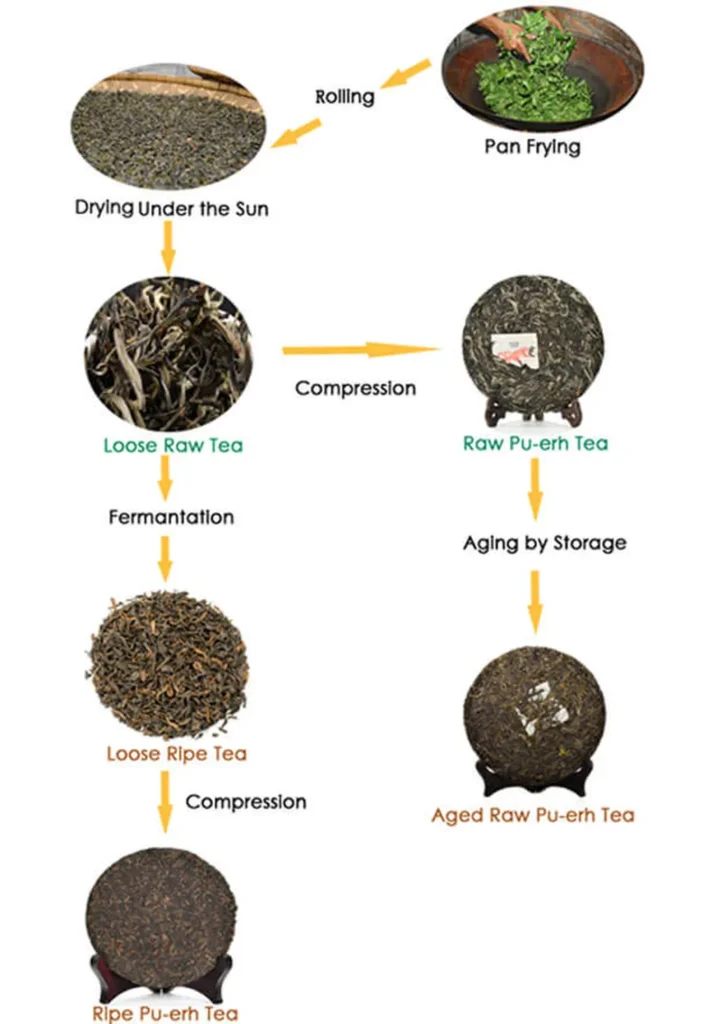
In the heart of China’s lush tea plantations, a technological revolution is brewing, quite literally. Researchers have developed a cutting-edge algorithm that promises to transform the way Pu-erh tea, one of the world’s most prized teas, is harvested. The innovation, dubbed ECS-Tea, is a bio-inspired, high-precision detection and localization algorithm designed to tackle the challenges of automated tea bud harvesting.
Pu-erh tea, known for its unique fermentation process and rich flavor, is a cornerstone of China’s agricultural economy. However, its harvesting process has remained largely manual, a labor-intensive task that requires precise identification and picking of young tea shoots. This is where ECS-Tea steps in. The algorithm, detailed in a recent study published in *Frontiers in Plant Science*, is a lightweight, efficient framework that integrates several advanced modules to achieve remarkable accuracy in detecting and localizing tea buds.
At the core of ECS-Tea is a lightweight EfficientNetV2 backbone, which efficiently represents features of the tea buds. This is complemented by a Cross-Scale Feature Fusion (CSFF) module that strengthens multi-scale contextual information, and a Spatial-Channel Synergistic Attention (SCSA) mechanism for fine-grained keypoint feature modeling. The final piece of the puzzle is an adaptive multi-frame depth fusion strategy that enhances 3D localization precision and robustness.
The results speak for themselves. ECS-Tea achieves an impressive 98.7% target detection accuracy and 95.3% keypoint detection accuracy. “Our algorithm significantly outperforms the baseline YOLOv11-Pose in keypoint detection performance,” said lead author Jianchao Wang. “It’s a robust, real-time solution that can be deployed in unstructured field environments, bridging the gap between algorithmic sophistication and practical application.”
The implications for the agriculture sector are profound. Automated harvesting systems equipped with ECS-Tea could revolutionize the Pu-erh tea industry, increasing efficiency and reducing labor costs. This could lead to more competitive pricing and greater accessibility of this premium tea. Moreover, the precision of ECS-Tea could minimize damage to the tea plants, promoting sustainable agricultural practices.
Beyond Pu-erh tea, the potential applications of ECS-Tea are vast. The algorithm’s ability to operate in complex natural environments and its high inference speed make it a promising tool for various agricultural and ecological monitoring tasks. As the world grapples with climate change and food security challenges, such technologies could play a crucial role in shaping the future of smart agriculture.
The study, led by Jianchao Wang and published in *Frontiers in Plant Science*, represents a significant step forward in the field of agricultural technology. As the world continues to innovate, ECS-Tea stands as a testament to the power of bio-inspired algorithms in driving progress and shaping the future of agriculture.