
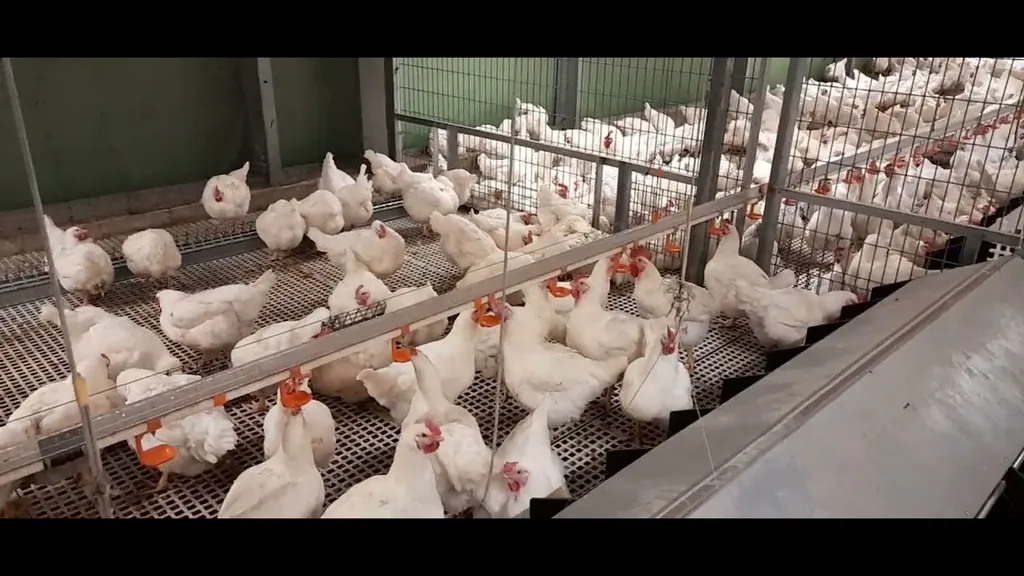
In the dynamic world of poultry production, a recent study published in the *Journal of Food Protection* has shed light on the intricate survival strategies of Escherichia coli (E. coli) in reused broiler litter. Led by Taejung Chung from the U.S. National Poultry Research Center and the SCINet Program, ARS AI Center of Excellence, the research delves into the fitness factors and siderophores that influence the bacterium’s persistence across successive flocks.
E. coli is a common inhabitant of poultry environments, capable of causing disease in both birds and humans, and often carrying antimicrobial resistance (AMR) and virulence factor (VF) genes. The study characterized 217 E. coli isolates from reused broiler litter across three flocks in four broiler houses, exploring the associations between fitness factors and various management and environmental parameters.
The findings revealed a diverse range of E. coli strains, with phylogenetic groups A and B1 being the most prevalent. Notably, certain sequence types like ST10, ST212, and ST117 were frequently observed across flocks. “The heterogeneity of these strains suggests a complex interplay of factors that allow E. coli to adapt and persist in broiler houses,” Chung remarked.
The study highlighted that isolates from the first flock harbored more fitness factors, including siderophore biosynthesis operons such as yersiniabactin, aerobactin, and salmochelin, ColV plasmids, class 1 integrase gene (intI1), and metal resistance genes. These genetic elements are likely crucial for adapting to a new environment, as suggested by their prevalence in the initial flock.
Transcriptional and proteome analyses further revealed that most ST117 strains repressed siderophore gene expression and proteins necessary for growth and stress response under acidified CuSO4 exposure. However, one strain, TE207, stood out by showing significantly enhanced fitness under these conditions. This variation underscores the adaptability and resilience of E. coli in challenging environments.
The commercial implications of this research are substantial. Understanding the fitness factors that enable E. coli to persist in reused broiler litter can inform better litter management practices, ultimately enhancing biosecurity and reducing the risk of disease transmission in poultry production. “By identifying these key factors, we can develop targeted strategies to control pathogens and improve the overall health and productivity of broiler flocks,” Chung explained.
This study not only highlights the complexity of E. coli survival mechanisms but also underscores the importance of litter management in controlling pathogens. As the agriculture sector continues to evolve, such insights will be crucial in shaping future developments in poultry production, ensuring safer and more sustainable practices. The research, led by Taejung Chung and published in the *Journal of Food Protection*, provides a foundation for further exploration into the intricate dynamics of pathogen persistence in agricultural environments.