
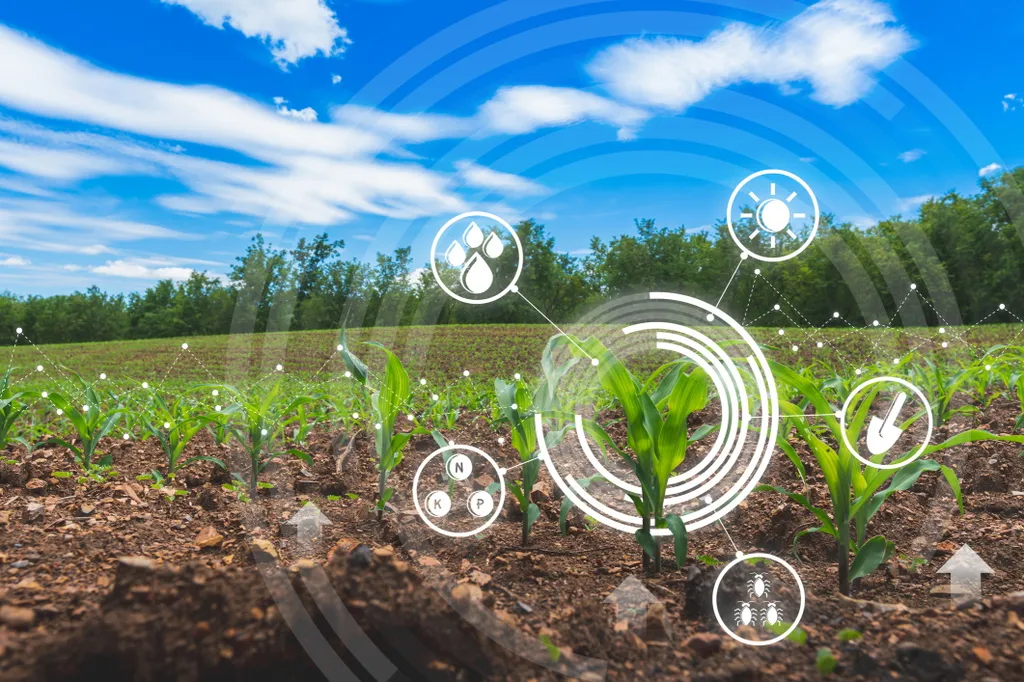
Investing in farming technology is no longer a luxury but a necessity for building financial and environmental sustainability, according to recent research from ag lender Rabobank. The report, which surveyed over 700 beef, dairy, and crop producers in 2024 and 2025, sheds light on the attitudes and practices of food producers towards tech investments and sustainability.
Rabobank’s survey ranked food producers on a scale of one to 10 based on their digital and data utilization, with one being the lowest level of tech adoption and 10 the highest. The findings revealed that dairy producers and feedlot operators were among the largest tech utilizers, with dairy producers scoring an average of 8.94 and feedlot and backgrounder segments averaging 7.14. On the other end of the spectrum, the hay, grass, forage, and cow-calf and stocker segments registered some of the lowest scores.
The survey also found a strong correlation between digital/data utilization and participation in practice-based incentive programs. Nearly all producers with a 10-score enrolled in programs like carbon or conservation initiatives, while less than 60% of one-point producers did the same. This trend highlights the potential economic benefits of tech adoption and sustainability efforts.
Size also played a significant role in tech adoption, with larger operations more likely to invest in digital and data tools. The smallest operators received the largest number of one-point ratings, while large and medium-large-sized companies accounted for over 80% of 10-point scores.
The survey also explored the motivations behind sustainability efforts. More than half of the producers (54.8%) were driven by personal or operational goals, while 24.1% aimed to tap into premiums and emerging markets, and 11.8% complied with regulations and local legislation. Additionally, many producers integrated crops and livestock into their operations, with the feedlot and backgrounder segment leading at 83.9%, followed by the cow-calf and stocker segment at 69.5%, and the hay, grass, and forage segment at 67.4%.
The implications of these findings are clear: investing in farming technology and sustainability is not just beneficial but crucial for the future of agriculture. As the industry continues to evolve, producers who embrace digital and data tools, as well as sustainable practices, will be better positioned to thrive in an increasingly competitive and environmentally conscious market. The survey’s focus on pork, poultry, fruits, vegetables, and other specialty segments in future parts will provide a more comprehensive understanding of tech adoption and sustainability efforts across the agricultural landscape.