
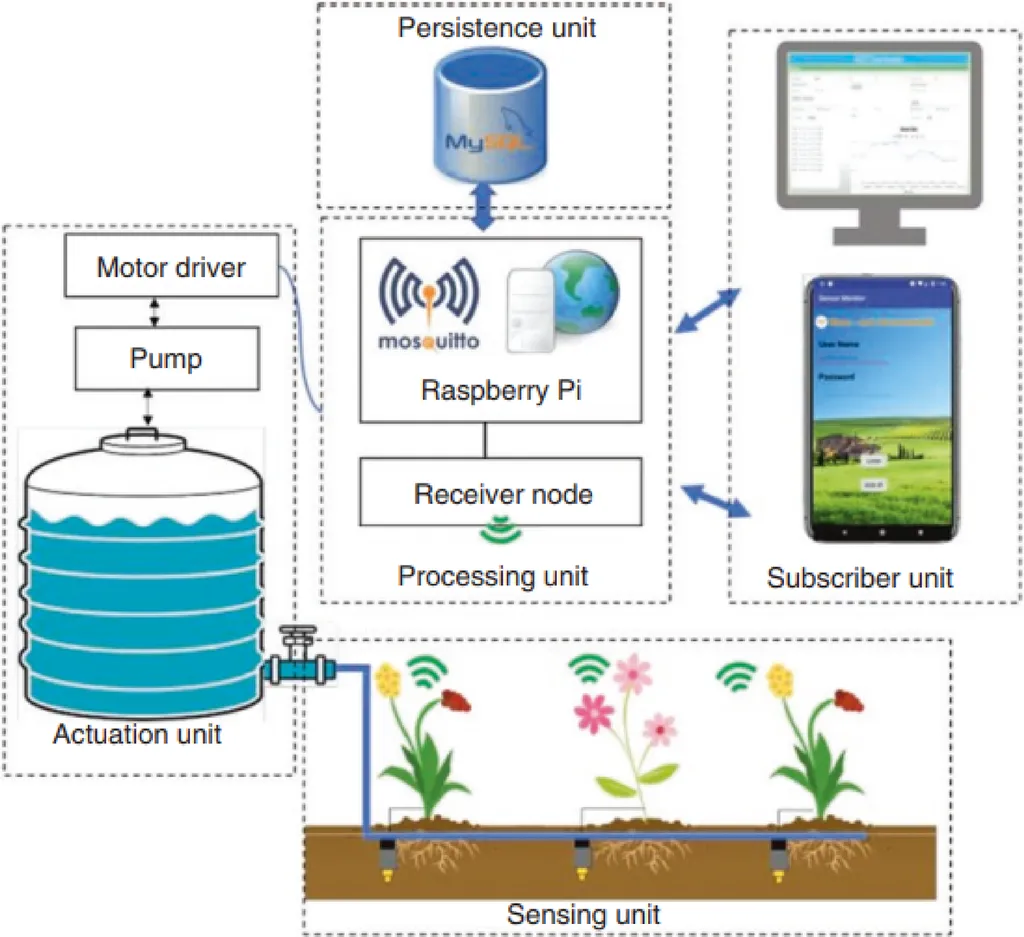
In the heart of Morocco, researchers are unlocking new ways to tackle some of agriculture’s most pressing challenges. A recent study published in *Smart Agricultural Technology* and led by Abdennabi Morchid from the LIMAS Laboratory at Sidi Mohamed Ben Abdellah University, is shedding light on how the Internet of Things (IoT) and machine learning (ML) can revolutionize irrigation management, making it more sustainable and efficient.
The agricultural sector is grappling with climate change, urbanization, and the looming threat to food security. Water management is at the core of these challenges, and the study highlights how IoT and ML technologies can offer innovative solutions. “Effective water management is now essential to address these challenges,” Morchid emphasizes. “IoT and ML-based solutions offer a promising way to support more efficient and sustainable agricultural practices.”
The study, which systematically reviewed 108 publications, reveals that IoT systems provide real-time data on environmental and soil conditions. This instantaneous information, when analyzed using ML techniques, can guide precise irrigation decisions, ultimately conserving water and boosting agricultural productivity.
The commercial implications for the agriculture sector are substantial. Smart irrigation systems can lead to significant cost savings by reducing water waste and optimizing resource use. Farmers can expect improved crop yields and better-quality produce, enhancing their market competitiveness. Moreover, as water scarcity becomes an increasingly global concern, technologies that promote sustainable water use will be invaluable.
The research also underscores the challenges that come with adopting these technologies, including system complexity and technical constraints. However, the potential benefits are too significant to ignore. “The adoption of these technologies in irrigation systems remains limited due to associated risks and system complexity,” Morchid acknowledges. “But the promise they hold for improving water conservation and irrigation efficiency is immense.”
As the agriculture sector looks to the future, the integration of IoT and ML in irrigation management could pave the way for smarter, more resilient farming practices. The study’s findings suggest that continued research and development in this area will be crucial for shaping the next generation of agricultural technologies. With the right investments and support, these innovations could transform the way we manage water resources, ensuring a more sustainable and productive future for agriculture.