
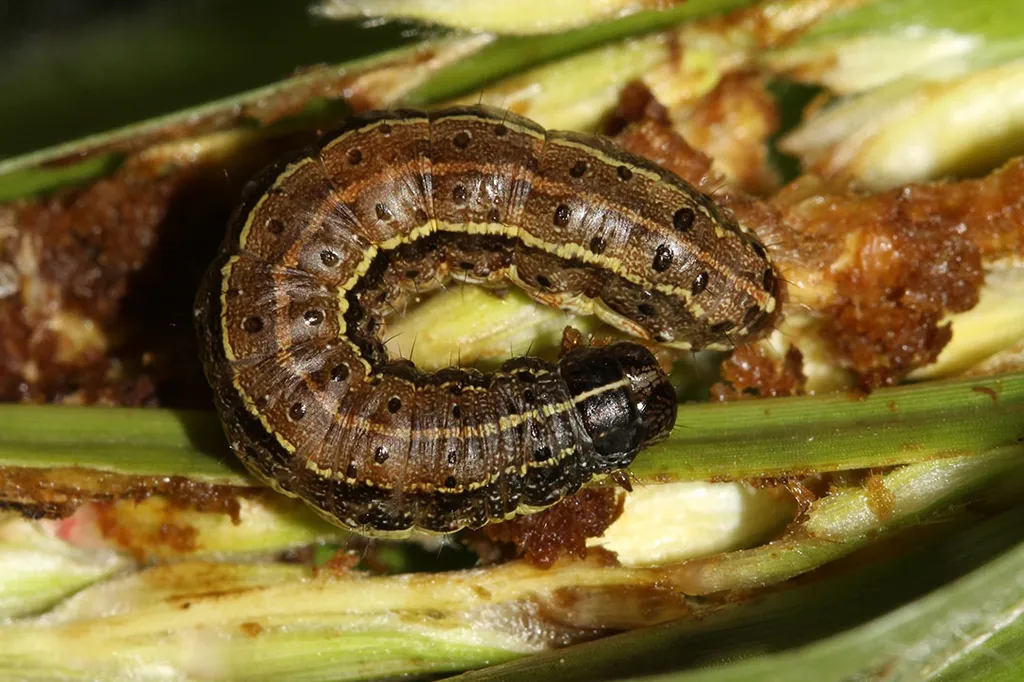
In the relentless battle against the fall armyworm (Spodoptera frugiperda), a formidable foe wreaking havoc on Africa’s maize crops, scientists have turned to nature’s own arsenal: parasitoids. A groundbreaking study published in *Biological Control* sheds light on the phenology and spatial dynamics of both native and exotic parasitoid species, offering a beacon of hope for sustainable pest management under changing climate conditions.
The fall armyworm’s insatiable appetite poses a significant threat to food security and agricultural livelihoods across the continent. Traditional pest control methods often fall short, necessitating innovative and eco-friendly solutions. Enter the parasitoids—tiny yet mighty allies in the fight against this destructive pest.
Led by Marian Adan from the Center for Development Research (ZEF) at the University of Bonn, the research team employed the Insect Life Cycle Modeling (ILCYM) software to analyze the developmental stages, mortality rates, fecundity, and life table parameters of five parasitoid species across a temperature range of 20°C to 32°C. The findings are nothing short of illuminating.
“Optimal development and minimal mortality for these parasitoids generally occur between 25°C and 30°C,” Adan explains. Native species like *Cotesia icipe* and *Chelonus bifoveolatus* demonstrated remarkable adaptability and higher reproductive rates under these conditions. Their resilience and effectiveness make them prime candidates for biological control programs.
In contrast, *Chelonus insularis*, an exotic species, exhibited a narrower temperature tolerance but showed potential for increased reproductive success under future climate scenarios. Spatial modeling revealed that *Cotesia icipe* exhibited high oviposition rates in East Africa, while *C. insularis* showed similar potential across central and southern Africa. These regions are now prime candidates for targeted biological control interventions.
However, the story doesn’t end there. Climate change projections under Representative Concentration Pathway (RCP) scenarios 2.6 and 8.5 predict significant shifts in the distribution, activity, and establishment risk of both native and exotic parasitoids by 2050 and 2070. Native species like *Cotesia icipe* and *Charops sp.* are expected to maintain or expand their effectiveness across regions, while *C. insularis* may become increasingly important in new areas as climatic conditions evolve.
The commercial implications of this research are profound. By identifying climate-resilient parasitoids, farmers and agricultural stakeholders can implement more effective and sustainable pest management strategies. This not only safeguards crop yields but also reduces the reliance on chemical pesticides, promoting healthier ecosystems and more profitable agricultural practices.
As the agricultural sector grapples with the challenges posed by climate change, this research provides a roadmap for integrating biological control into integrated pest management programs. The findings underscore the importance of selecting climate-resilient parasitoids for sustainable biological control programs across diverse African agro-ecological zones.
In the words of Adan, “This research provides critical insights into the phenology and spatial ecology of parasitoid species, emphasizing their role in integrated pest management necessary under climate change.” The journey towards sustainable agriculture is fraught with challenges, but with allies like these parasitoids, the future looks a little brighter.