
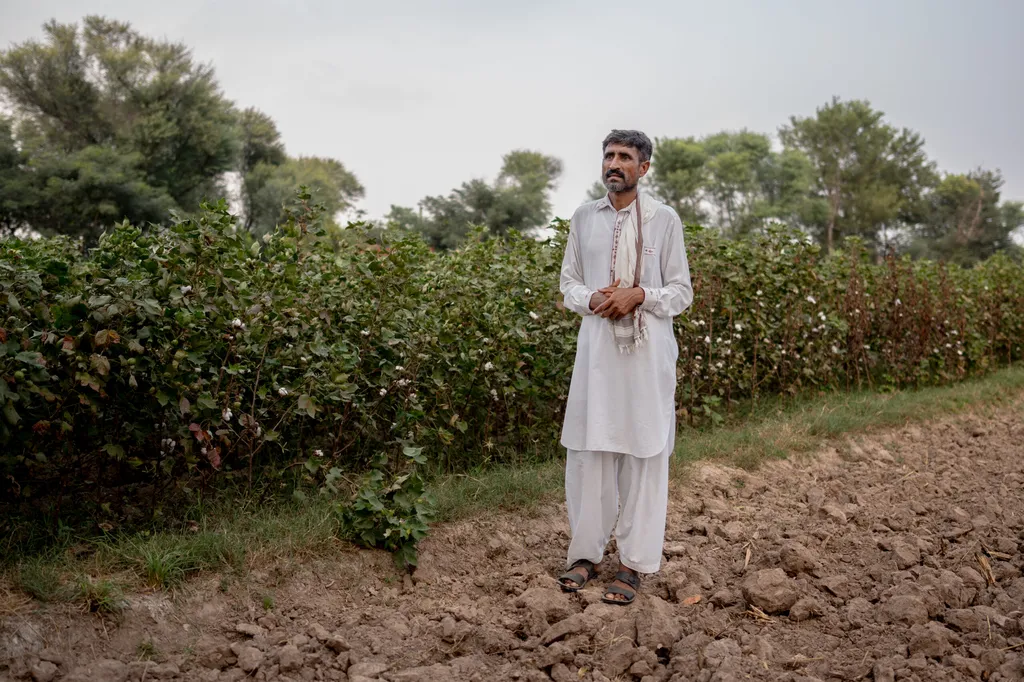
In the heart of Pakistan’s Sindh province, a groundbreaking study is weaving together the threads of technology and agriculture, promising to reshape the way we approach cotton cultivation. Led by Sajida Perveen from the University of Karachi, this research is harnessing the power of Geographical Information Systems (GIS) and multi-criteria decision-making to evaluate land suitability for cotton crops, offering a beacon of hope for farmers and the agriculture sector at large.
The study, published in the FUUAST Journal of Biology, combines agroinformatics and geo-spatial technologies to create a model that considers a myriad of factors. “We’ve integrated soil data, groundwater availability, irrigation methods, climate, land use, cropping patterns, and agro-ecological zoning into a GIS framework,” explains Perveen. This Spatial Decision Support System is designed to identify graded suitable areas for cotton crop cultivation, providing a data-driven approach to sustainable land management.
The model employs a systematic multi-criteria decision-making methodology, starting with the selection of significant factors and progressing through normalization, ranking, weight extraction, and the implementation of weighted overlays. The result is a clear identification of land suitability, categorized as suitable, less suitable, or not suitable for cotton crop cultivation.
The commercial impacts of this research are substantial. By providing a precise evaluation of land suitability, farmers can make informed decisions that optimize crop yield and minimize resource waste. “This model can significantly enhance the efficiency of cotton cultivation, benefiting both farmers and the broader agriculture sector,” says Perveen.
The study’s validation through practicing cropping patterns and associated agriculture statistics revealed a highly significant correlation (r = 0.92) between the multi-criteria cotton crop suitability and actual crop patterns in the study area. This high correlation underscores the model’s accuracy and potential for widespread application.
Looking ahead, the model’s adaptability is a game-changer. “It can be extended to local scales with various crop types and applied in other regions of the world,” Perveen notes. This flexibility opens doors to global agricultural advancements, offering a tool that can be tailored to diverse agro-ecological contexts.
As we stand on the brink of a new era in agriculture, this research serves as a testament to the transformative power of technology. By integrating GIS and multi-criteria decision-making, we are not only enhancing cotton cultivation but also paving the way for sustainable and efficient agricultural practices worldwide. The future of farming is here, and it’s data-driven.