
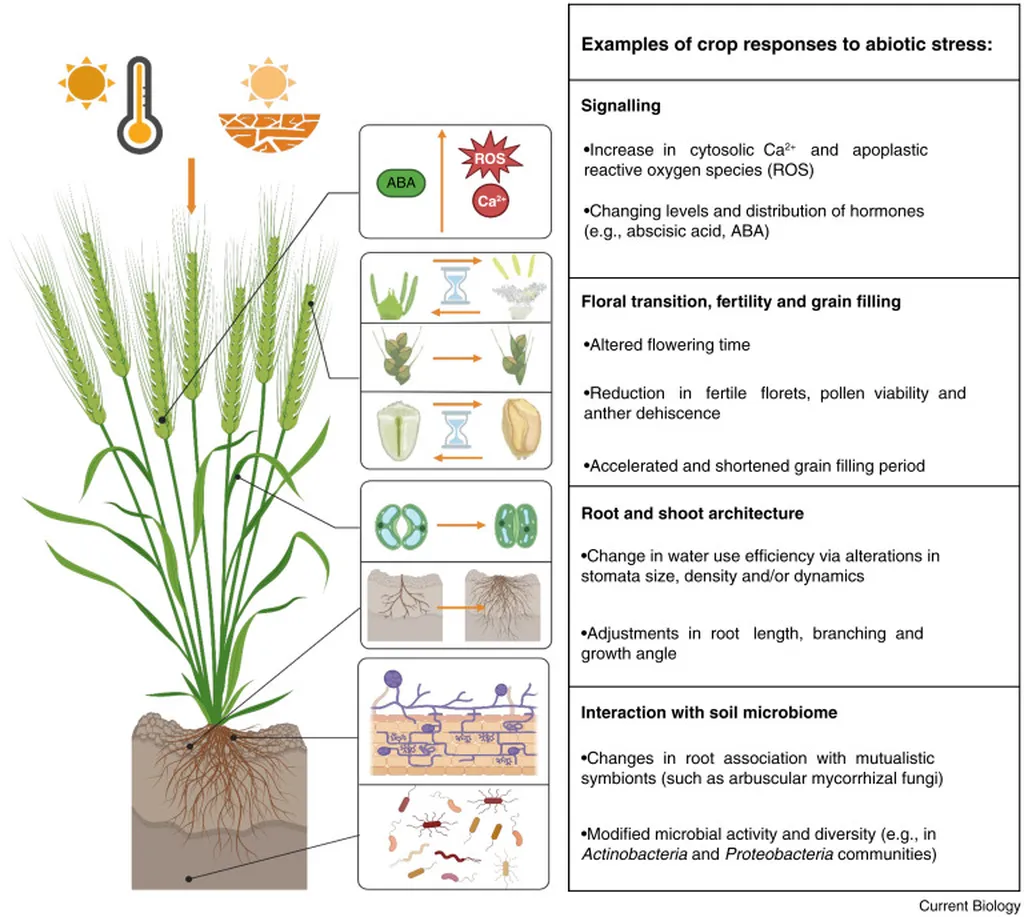
In the face of a changing climate, farmers and agronomists are constantly seeking ways to adapt and ensure food security. A recent study published in *Frontiers in Agronomy* offers promising insights into how optimizing oat cultivars can enhance the climate resilience of oat production across China. The research, led by Jianzhao Tang of the Hebei Technology Innovation Center for Geographic Information Application, provides a roadmap for cultivating climate-resilient oat varieties tailored to specific regions.
Oats, a vital grain and forage crop, play a crucial role in global food security and sustainable diets. However, climate change poses significant challenges to oat production, necessitating adaptive strategies. Using the Agricultural Production Systems Simulator (APSIM)-Oat model and the CMIP6 shared socioeconomic pathway (SSP) scenarios, the researchers investigated potential adaptation strategies through cultivar optimization across four key regions in China: Northeast China (NEC), North China Plain (NCP), Northwest China (NWC), and Southwest China (SWC).
The study reveals that under future climate scenarios, rainfed oat biomass and yield are projected to decrease in the 2030s, with improvements emerging in the cooler northern regions such as NEC by the 2060s. Meanwhile, the southern regions, including NCP, NWC, and SWC, are expected to continue experiencing declines. Similar trends are observed under irrigated conditions.
One of the most significant findings is the strong regional and water management specificity of cultivar optimization. “Early-maturing cultivars are recommended for NEC under rainfed conditions, whereas middle- and late-maturing types suit NCP, SWC, and NWC,” explains Tang. Under irrigation, early-maturing cultivars perform better across NEC, NCP, and NWC, with middle-maturing cultivars remaining preferable in SWC.
The commercial implications of this research are substantial. By adopting optimal cultivars, farmers can effectively mitigate yield losses in vulnerable regions such as SWC and enhance yield gains in other regions under both rainfed and irrigated systems. This not only supports climate-resilient agriculture but also safeguards long-term food security.
The study highlights the importance of region-specific cultivar optimization in sustaining oat production. As climate change continues to impact agricultural systems, such adaptive strategies will be crucial for ensuring food security and supporting sustainable diets.
This research, led by Jianzhao Tang of the Hebei Technology Innovation Center for Geographic Information Application, offers a glimpse into the future of climate-resilient agriculture. By optimizing cultivars tailored to specific regions, farmers can adapt to changing climatic conditions and ensure the sustainability of oat production. The findings underscore the need for region-specific strategies in the face of climate change, providing a blueprint for enhancing agricultural resilience and food security.
As the agriculture sector grapples with the challenges posed by climate change, this study serves as a beacon of hope, offering practical solutions for cultivating climate-resilient crops. The insights gained from this research can guide farmers, agronomists, and policymakers in developing effective strategies to adapt to a changing climate and ensure the sustainability of oat production.