
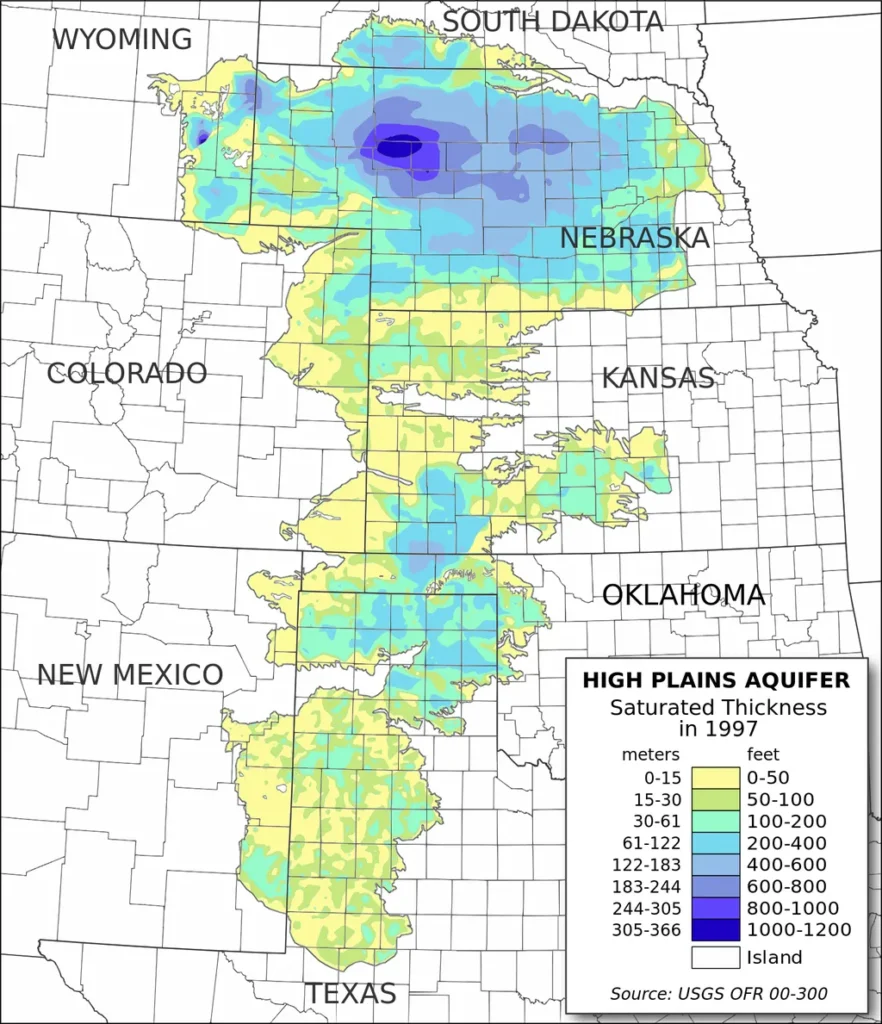
In the heart of the Texas High Plains, a critical battle is unfolding beneath the surface. The Ogallala Aquifer, a vital lifeline for agriculture, is being depleted at an alarming rate, primarily due to intensive irrigation practices. A recent study published in *Agricultural Water Management* offers a novel approach to evaluating the trade-offs between cotton yield and groundwater extraction, providing a data-driven framework that could reshape sustainable water management practices in the region and beyond.
The research, led by Akkarapon Chaiyana from the Department of Plant and Soil Science at Texas Tech University, integrates remote sensing and in-situ observations to quantify groundwater extraction (GWE) and crop water productivity (WPc) in irrigated cotton fields. By leveraging Landsat imagery and climatic data, the study developed robust models to map cotton areas and estimate lint yield with remarkable accuracy.
“We aimed to create a comprehensive tool that could help farmers and policymakers make informed decisions about water use,” Chaiyana explained. The study employed the CatBoost model, achieving an impressive overall accuracy of 0.97 and an F1-score of 0.89 in cotton extent mapping. For lint yield estimation, the model combined remote sensing (RS) and climate data, achieving an R² value of 0.55 and an RMSE of approximately 305 kg/ha.
The study categorized trade-offs into four classes: overuse, inefficient, efficient, and low input, based on the median values of WPc and GWE. The results from 2008 to 2023 reveal a concerning trend: much of central and northern Texas High Plains fall under the overuse and inefficiency categories, posing a significant risk to groundwater sustainability.
Looking ahead, the projections through 2030 estimate an increase in groundwater extraction from 2892 to 3439 billion liters. This integrated approach not only highlights the urgent need for sustainable water management but also demonstrates strong potential for broader application in other regions facing similar challenges.
The commercial implications for the agriculture sector are substantial. By providing a data-driven framework, this research could help farmers optimize irrigation practices, reduce water waste, and improve crop yields. Policymakers, too, can use these insights to develop regulations that balance agricultural productivity with groundwater conservation.
“This research is a game-changer,” said a spokesperson from a leading agricultural technology firm. “It offers a practical tool for farmers to make data-informed decisions, ultimately leading to more sustainable and profitable farming practices.”
As the agriculture sector grapples with the realities of climate change and water scarcity, innovative solutions like this one are more critical than ever. By bridging the gap between technology and practical application, this study paves the way for a more sustainable future in agriculture.