
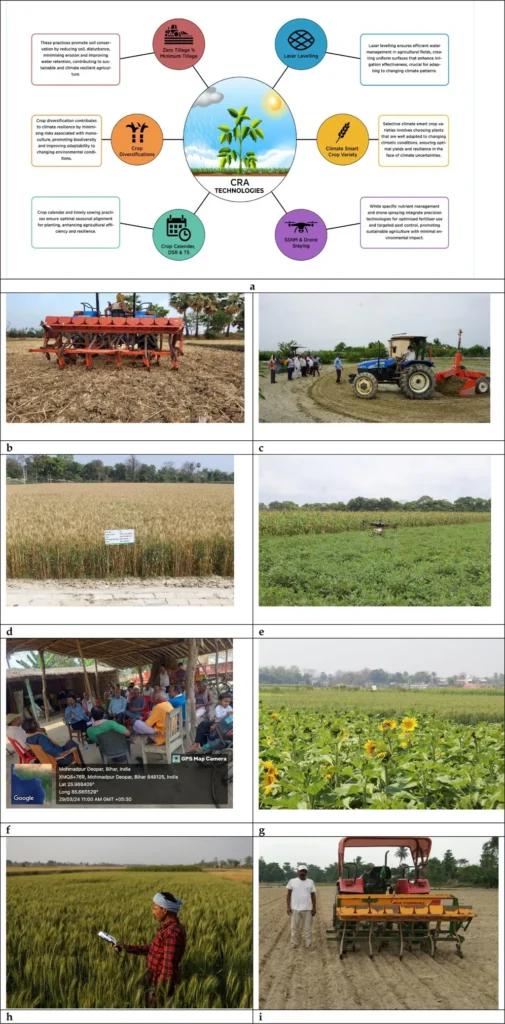
In the heart of Bihar, a recent study has shed light on the challenges faced by farmers in adopting climate-smart technologies, offering valuable insights that could reshape agricultural policies and interventions. Conducted in the districts of Samastipur and Darbhanga, the research, led by Abhinab Borah from the Department of Agricultural Extension Education at Dr. Rajendra Prasad Central Agricultural University, aimed to understand the constraints farmers encounter in both Climate-Smart Villages (CSVs) and non-Climate Smart Villages (non-CSVs).
The study, published in the International Journal of Economic Plants, identified 20 constraints that farmers face, categorizing them into four broad groups: Technical, Economic and Labour, Social and Personal, and Animals and Pests. Farmers from both CSVs and non-CSVs ranked these constraints on a three-point scale, allowing researchers to calculate mean scores and rank the constraints accordingly.
One of the most striking findings was the level of agreement among farmers regarding the severity of these constraints. Using Kendall’s coefficient of concordance (W), the study found that farmers in CSVs exhibited a higher level of agreement (W=0.774) compared to those in non-CSVs (W=0.612). This suggests that CSV interventions may foster a more consistent understanding of challenges among farmers.
“Our findings indicate that climate-smart interventions not only help farmers adapt to changing climatic conditions but also create a shared understanding of the challenges they face,” said Borah. “This shared understanding is crucial for designing targeted interventions that can enhance resilience and sustainability in agriculture.”
The implications of this research are significant for the agriculture sector. By understanding the specific constraints farmers face, policymakers and agricultural support systems can design more effective interventions. This could lead to increased adoption of climate-smart technologies, improved agricultural productivity, and enhanced resilience to climate change.
Moreover, the study highlights the importance of social and personal factors in shaping farmers’ perceptions of constraints. This underscores the need for interventions that not only address technical and economic challenges but also consider the social and personal dimensions of farming.
As the agriculture sector continues to grapple with the impacts of climate change, studies like this one provide valuable insights that can guide future developments. By fostering a more consistent understanding of challenges among farmers and designing targeted interventions, we can enhance the resilience, sustainability, and overall well-being of agricultural communities.
In the words of Borah, “This research is a step towards creating a more resilient and sustainable agriculture sector. It’s about empowering farmers with the knowledge and tools they need to adapt to a changing climate.”