
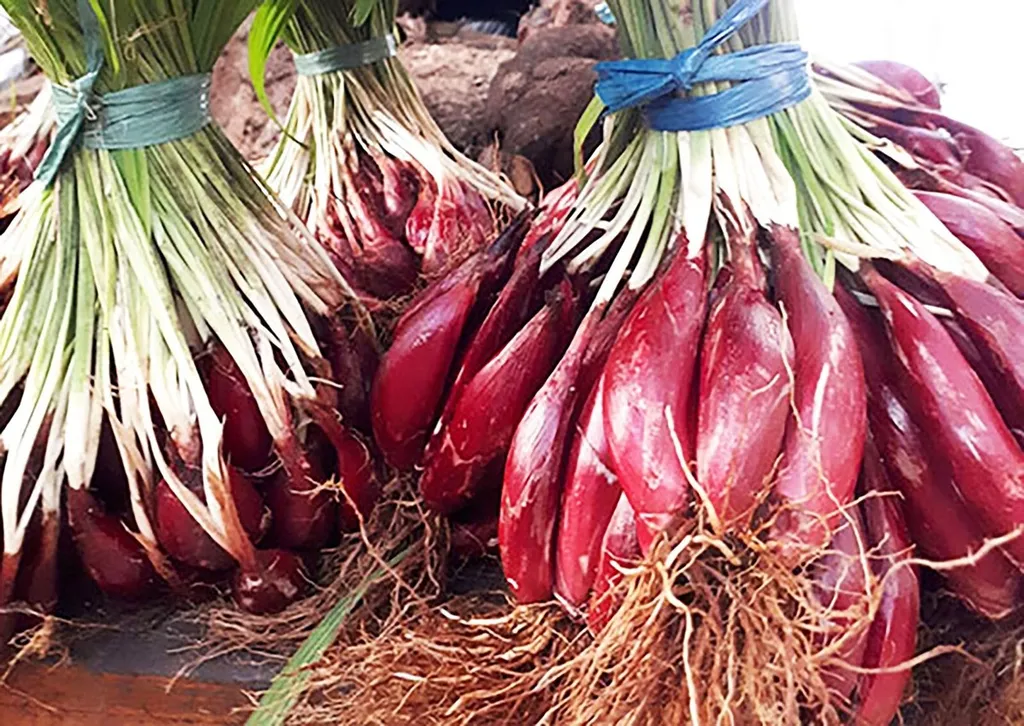
In the heart of South Kalimantan, a humble medicinal plant known as the Dayak onion is revealing secrets that could revolutionize sustainable agriculture. Researchers from Universitas Lambung Mangkurat have discovered that endophytic fungi residing within the Dayak onion exhibit promising antifungal properties, offering a potential solution to devastating plant diseases.
The study, published in the Jurnal Agrotek Tropika, focuses on the endophytic fungus Fusarium solani EnI, which has shown remarkable ability to combat fusarium wilt disease in red onion plants. This research is part of a broader effort to integrate biological control agents into sustainable agricultural practices, reducing reliance on chemical pesticides and promoting environmental health.
Lead author Noorkomala Sari and her team conducted in vitro inhibition tests and greenhouse trials to evaluate the fungus’s efficacy. The results were promising: the endophytic fungus not only inhibited the growth of Aspergillus flavus by 50-68% but also enhanced the growth of red onion plants, increasing their height and weight. “The endophytes contain terpenoid metabolite compounds that are antimicrobial,” Sari explained, highlighting the natural defense mechanisms at play.
The commercial implications for the agriculture sector are significant. Fusarium wilt disease is a major threat to onion crops worldwide, causing substantial economic losses. The discovery of Fusarium solani EnI as a biological control agent could provide farmers with a sustainable and effective tool to protect their crops. This aligns with the growing demand for eco-friendly agricultural practices that minimize environmental impact while maximizing yield.
Beyond its immediate applications, this research opens doors to further exploration of endophytic fungi as biological control agents. “This study is just the beginning,” Sari noted. “There are countless endophytic fungi in various plants that we have yet to explore. Each one could hold the key to combating different plant diseases.”
The findings also underscore the importance of preserving biodiversity. Medicinal plants like the Dayak onion are treasure troves of beneficial microorganisms that could offer solutions to some of the most pressing challenges in agriculture. By studying and harnessing these natural resources, researchers can pave the way for innovative and sustainable farming practices.
As the world grapples with the need for sustainable agriculture, the discovery of Fusarium solani EnI offers a glimmer of hope. It exemplifies how nature’s own defenses can be leveraged to protect our crops, ensuring food security and environmental sustainability. With further research and development, endophytic fungi could become a cornerstone of modern agriculture, shaping the future of farming in ways we are only beginning to imagine.