
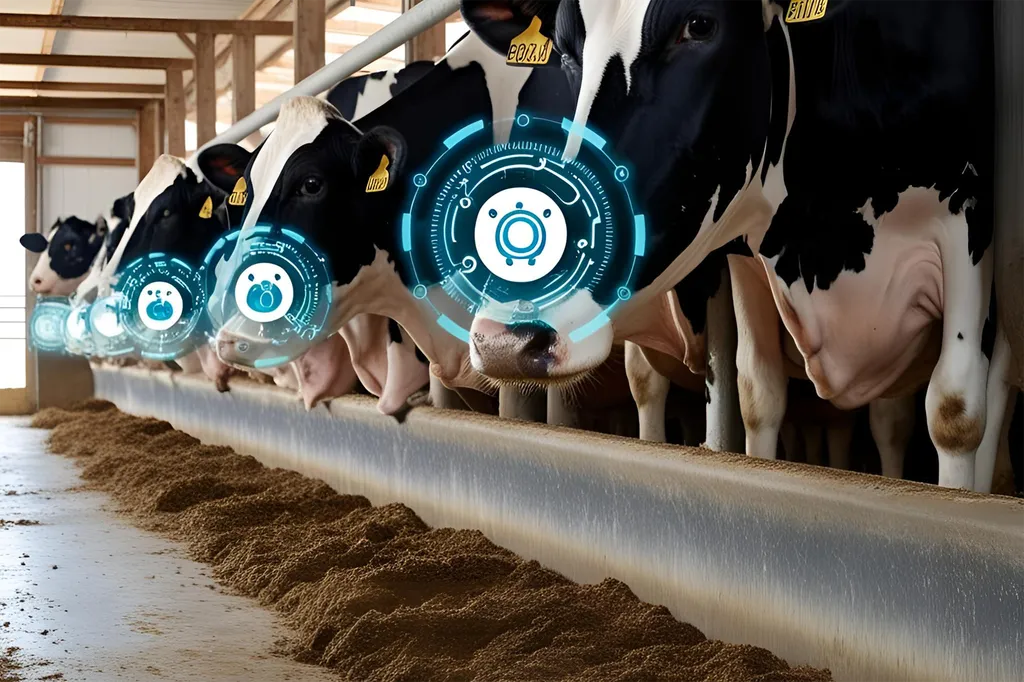
In the heart of Indonesia’s smallholder dairy sector, a groundbreaking study is offering a new lens to view and manage methane emissions. Published in *Frontiers in Sustainable Food Systems*, the research introduces a machine learning framework that could revolutionize how farmers and policymakers approach emissions monitoring and mitigation.
The study, led by Winston Choo from the Singapore American School, focuses on 32 smallholder dairy farms in Lembang, Indonesia. These farms, while vital to the local economy, are significant contributors to the country’s methane emissions, primarily through enteric fermentation and manure management. The challenge, however, lies in the lack of accessible tools for these farmers to monitor and reduce their emissions.
Choo and his team tackled this issue by first clustering the farms using K-means, a method that groups similar farm types together. “By clustering the farms, we could tailor our predictions to specific farm characteristics, making our model more accurate and relevant,” Choo explains. This clustering approach allowed the researchers to understand the unique emission profiles of different farm types.
Next, they built predictive models for each cluster using six different approaches: linear regression, polynomial regression, Random Forest, XGBoost, SVR, and ARIMA. The team then developed stacked ensemble models, integrating the strengths of each approach. These models combined predictions from unclustered, clustered, and a hybrid mix of base predictions, resulting in a robust framework for forecasting methane emissions.
The hybrid stacked model outperformed individual models in cross-validation evaluations, demonstrating high accuracy across all emission types—enteric, manure, and total. “The hybrid model’s stability and accuracy give us confidence that it can be deployed in real-world settings and generalized to other farms,” Choo notes.
The implications of this research are profound for the agriculture sector. By providing accurate, tailored predictions of methane emissions, farmers can make informed decisions about mitigation strategies. Policymakers, too, can use this data to develop targeted, climate-smart policies that support sustainable agriculture.
Moreover, the study highlights the potential of machine learning in addressing complex environmental challenges. As Choo puts it, “This framework is not just about predicting emissions; it’s about empowering farmers and policymakers with the tools they need to make a difference.”
The research published in *Frontiers in Sustainable Food Systems* by lead author Winston Choo from the Singapore American School, offers a promising path forward for the smallholder dairy sector and beyond. By harnessing the power of machine learning and clustering, we can pave the way for a more sustainable and climate-resilient future.