
In the heart of Japan, a quiet agricultural revolution is underway, promising to reshape global farming practices and empower small-scale producers. From automated vertical farms to soil-free film farming, these innovations are set to reduce land, water, and labour use, potentially transforming the way we grow food.
At Techno Farm Keihanna in Kyoto Prefecture, technology is already demonstrating its prowess. Here, 30,000 heads of lettuce are harvested daily with minimal human intervention. The farm’s automated systems, honed through years of trial and error since 2018, have achieved stable production levels. Factory manager Matsumura Tatsuya attributes this success to their persistent efforts, highlighting the strength of their accumulated experience. As automation becomes more efficient and costs decrease, experts like Terao Tasuku from Tokyu Land Corporation envision these technologies reaching developing countries, offering a lifeline to small farmers and enhancing global food security.
Meanwhile, in Kanagawa Prefecture, Mebiol Inc.’s CEO Yoshioka Hiroshi is championing a different kind of innovation. His company has developed the IMEC film, a soil substitute that also blocks harmful microbes. This technology not only improves crop quality but also opens up new possibilities for farmers, particularly women. Yoshioka believes that by simplifying farming processes and reducing physical labour, the IMEC film can contribute to improving women’s status in agricultural communities.
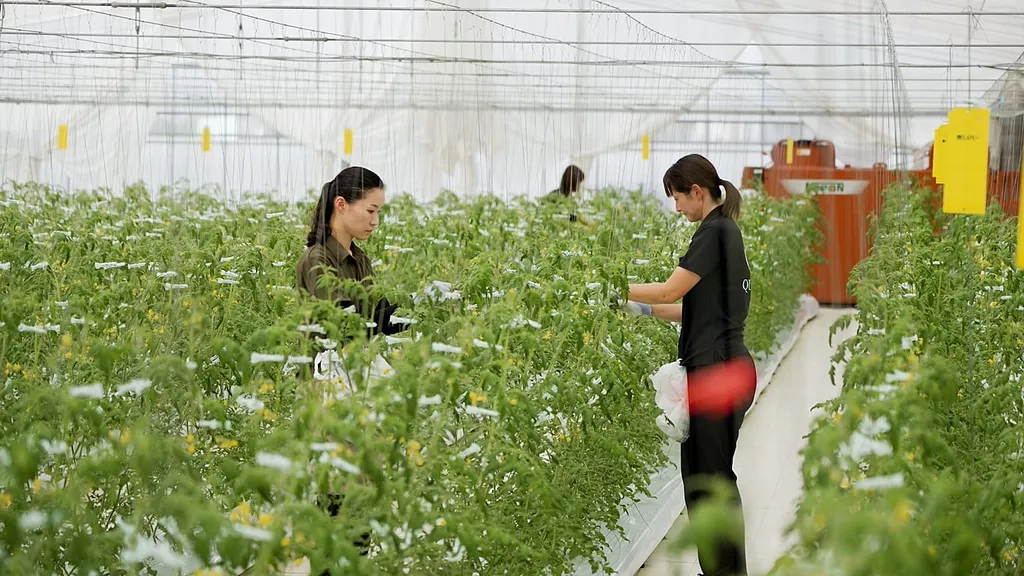
The impact of these technologies is already evident at QUON farm in Hyogo Prefecture. Farm manager Fujimoto Shizuka uses the IMEC film to grow sweeter tomatoes and has created a training program for women farmers. Her work exemplifies how innovation and inclusion can go hand in hand, empowering women and enhancing agricultural productivity.
As these technologies continue to evolve and become more accessible, they hold the potential to revolutionise global agriculture. By reducing resource use and labour demands, they could help small farmers compete in an increasingly challenging market. Moreover, by improving crop quality and opening up new opportunities for women, they could contribute to more sustainable and equitable food systems. The agricultural revolution is not just about growing food; it’s about empowering people and fostering a more resilient global community.