
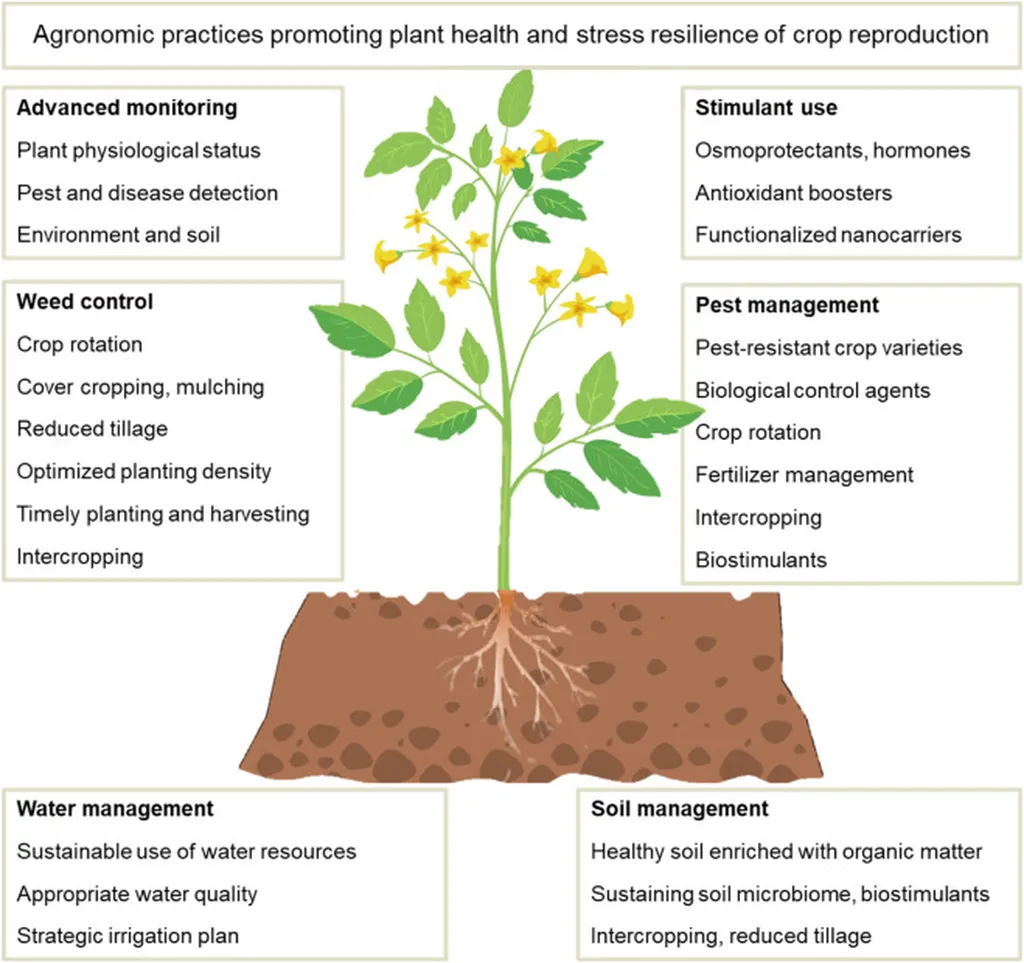
In the face of climate change, scientists are racing to develop strategies to protect and enhance crop productivity, ensuring food security for a growing global population. A recent study published in the *International Journal of Bio-Resource and Stress Management* offers a promising approach to this pressing challenge. Led by Ratikanta Maiti of Vibha Seeds in Hyderabad, India, the research outlines a novel strategy to improve crop resilience against abiotic stresses such as drought, salinity, and flooding—factors that threaten sustainable agriculture and food production worldwide.
The study highlights the urgent need for innovative solutions as global warming exacerbates environmental stresses on crops. Traditional breeding methods have often resulted in cultivars with high stress tolerance but poor agronomic traits, limiting their practical application in farming. Maiti and his team propose a new strategy that focuses on developing efficient, cost-effective techniques to identify and select stress-tolerant crop lines. This approach includes standardization and testing of new technologies, screening pipeline hybrids, and confirming their performance under real-world stress conditions before transferring the technology from the lab to the field.
“Our goal is to bridge the gap between scientific research and practical agriculture,” Maiti explained. “By adopting a systematic approach, we can develop crops that not only tolerate environmental stresses but also maintain high yield and quality, benefiting farmers and the agriculture sector as a whole.”
The commercial implications of this research are significant. As climate change continues to disrupt traditional farming practices, the demand for stress-tolerant crops is expected to rise. Maiti’s strategy could revolutionize crop breeding programs, enabling the development of high-yielding, resilient varieties that thrive in challenging environments. This would not only enhance food security but also boost the economic prospects of farmers, particularly in regions prone to drought, salinity, and flooding.
The study’s findings could also pave the way for further advancements in agritech. By integrating cutting-edge technologies with traditional breeding methods, researchers may uncover new avenues for improving crop resilience and productivity. The focus on transferring technology from the lab to the land ensures that the solutions developed are practical and accessible to farmers, fostering a more sustainable and productive agricultural sector.
As the world grapples with the impacts of climate change, innovative research like Maiti’s offers hope for a more resilient future. By addressing the challenges of abiotic stresses head-on, scientists are laying the groundwork for a sustainable agricultural system that can meet the demands of a growing population while protecting the environment. The journey from lab to land is a critical step in this process, and Maiti’s work exemplifies the potential of collaborative efforts to drive meaningful change in the agriculture sector.