
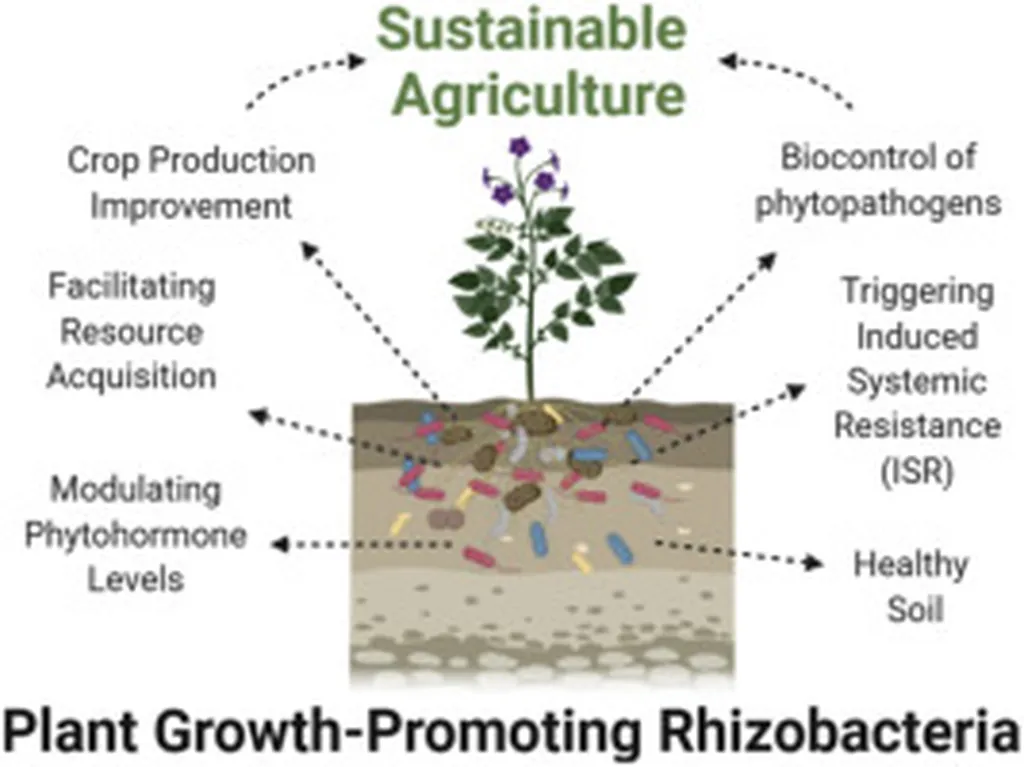
In the quest for sustainable agriculture, scientists are delving deep into the microbial world to uncover secrets that could revolutionize plant growth and productivity. A recent study published in *Current Research in Microbial Sciences* has shed light on the genetic basis of plant growth-promoting traits in Bacillus species, offering promising avenues for the development of biofertilizers.
Bacillus species are renowned for their adaptability and extensive biosynthetic capabilities, making them prime candidates for plant growth-promoting bacteria (PGPB). However, the genetic mechanisms underlying their beneficial effects have remained largely unexplored—until now. Esmeralda Dushku, a researcher at the Veterinary Research Institute of Thessaloniki, and her team have conducted a comparative genomic analysis of three B. pumilus and one B. pseudomycoides strains, isolated from the maize rhizosphere. Their findings provide a deeper understanding of the molecular mechanisms behind the plant growth-promoting traits (PGPTs) of these bacteria.
The study revealed that all strains exhibited multiple PGP-traits, including phosphate solubilization, phytohormone and siderophore production, growth in nitrogen-free medium, stress tolerance, and biofilm formation. “These traits are crucial for enhancing plant growth and resilience under various environmental conditions,” Dushku explained. The researchers found that plant-associated strains have higher genetic similarity, emphasizing niche-specific evolution.
One of the key findings was the presence of alternative sigma factors (SigB, SigM, SigW) in B. pumilus strains, which enable enhanced salt tolerance. In contrast, B. pseudomycoides lacked this system and relied on conventional osmoprotective strategies. This discovery highlights the strain- and species-specific adaptations that contribute to their effectiveness as plant growth promoters.
The study also uncovered differences in the pathways used for auxin biosynthesis, a crucial phytohormone for plant growth. The strains utilized different tryptophan-dependent pathways (IAN, IAM, or IPyA), and variations in phosphate solubilization ability were attributed to genetic differences affecting acid metabolism and phosphatase activity. Iron uptake via bacillibactin-siderophores was exclusive to B. pumilus, with the B. pseudomycoides strain lacking the bsaA gene within the bacillibactin biosynthetic gene cluster.
These insights into the genetic basis of PGP traits in Bacillus species pave the way for the development of tailored bioinoculants. “Understanding these genetic mechanisms allows us to design more effective and sustainable agricultural practices,” Dushku noted. The potential commercial impacts for the agriculture sector are significant, as these findings could lead to the development of biofertilizers that enhance crop productivity and resilience, reducing the need for chemical fertilizers and promoting sustainable farming practices.
As the world grapples with the challenges of climate change and food security, the role of plant growth-promoting bacteria in sustainable agriculture cannot be overstated. This research not only advances our understanding of the molecular mechanisms behind these beneficial traits but also opens up new possibilities for the development of innovative agricultural solutions. With further research and development, Bacillus-based bioinoculants could become a cornerstone of sustainable agriculture, helping to feed a growing global population while minimizing environmental impact.
The study was published in *Current Research in Microbial Sciences* and was led by Esmeralda Dushku at the Veterinary Research Institute of Thessaloniki, Hellenic Agricultural Organisation-DEMETER, Campus of Thermi, Thermi 570 01, Greece.