
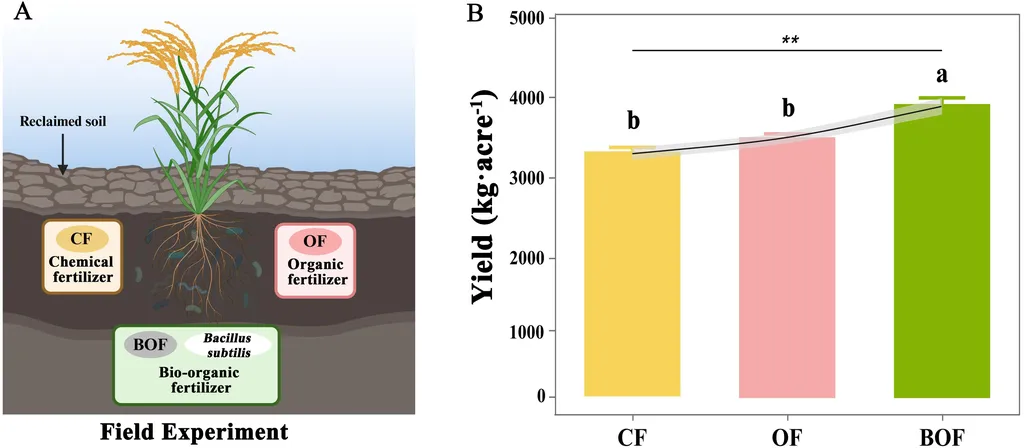
In the quest for sustainable agriculture, a groundbreaking study has shed light on the transformative potential of bio-organic fertilizers in reclaimed soils. Published in *Frontiers in Microbiology*, the research led by Jing Yang from the Anhui Engineering Research Center for Smart Crop Cultivation and Processing Technology, reveals how Bacillus amyloliquefaciens-modified bio-organic fertilizer (BOF) can significantly enhance crop yields and soil quality.
The study, conducted in reclaimed rice soil, compared the effects of chemical fertilizer (CF), organic fertilizer (OF), and BOF on rice yield and rhizosphere microbial community dynamics. The results were striking. BOF treatment increased rice yield by 9.6%, from 7.79 to 8.54 tonnes per hectare compared with CF. This improvement was accompanied by a notable alleviation of soil acidification, with the pH rising from 6.10 to 6.65. Organic matter accumulation saw a 15.7% increase, while available phosphorus and potassium rose by 24.5% and 14.4%, respectively.
But the real revelation lies in the microbial world. High-throughput sequencing uncovered that BOF application markedly altered rhizosphere bacterial communities, enriching sulfur-oxidizing taxa and beneficial plant-associated genera like Sphingomonas. “The significant positive correlation between the abundance of B. amyloliquefaciens and Sphingomonas, along with their association with improved soil nutrient status and crop performance, provides a mechanistic foundation for designing targeted microbial formulations,” explained Yang.
The study also highlighted the enrichment of metabolic pathways such as the citric acid cycle and amino acid biosynthesis, which promote nutrient mobilization and microbial interactions. These findings offer new insights into the synergistic interactions between introduced bacteria and native bacterial communities, paving the way for more sustainable rice production in improved soils.
The commercial implications for the agriculture sector are substantial. As the global push for sustainable farming practices gains momentum, bio-organic fertilizers like BOF could become a game-changer. They not only enhance crop yields but also improve soil health, reducing the need for chemical inputs and mitigating environmental degradation.
This research could shape future developments in agritech, encouraging the development of targeted microbial formulations that harness the power of beneficial bacteria. As Yang noted, “Understanding these microbial mechanisms is crucial for designing effective and sustainable agricultural practices.”
In an era where food security and environmental sustainability are paramount, this study offers a promising path forward. By leveraging the intricate relationships between soil microbes and plants, we can cultivate healthier soils and more productive crops, ensuring a sustainable future for agriculture.