
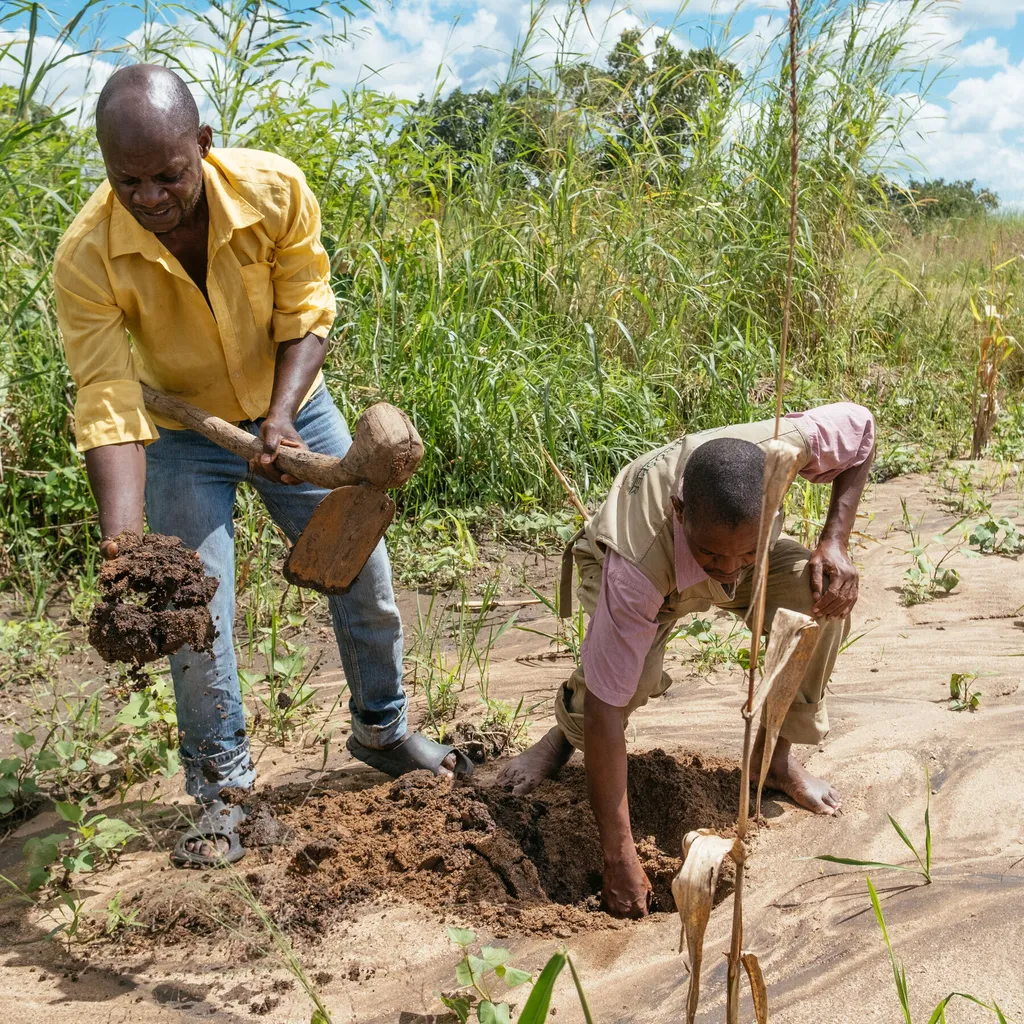
In the heart of Malawi, smallholder farmers are grappling with the stark reality of farmland degradation, a challenge that threatens their livelihoods and the nation’s food security. A recent study published in *Frontiers in Sustainable Food Systems* sheds light on the complex interplay between farmers’ environmental attitudes and their actions, offering valuable insights for the agriculture sector.
The research, led by Austin Tibu from the Department of International Development and Environment at the Norwegian University of Life Sciences, explores how smallholder farmers in Kasungu district perceive farmland degradation and their willingness to engage in restoration efforts. The findings reveal a stark contrast between awareness and action, with 90% of respondents acknowledging the threat of degradation, yet only 44% actively practicing water conservation.
This discrepancy highlights the intricate web of factors influencing farmers’ decision-making processes. “Variations in household livelihood capitals were not necessarily linked to respondents’ perceptions of farmland degradation or environmental attitudes, except for social capital,” Tibu explains. This underscores the need for tailored, context-specific approaches to encourage farmland restoration.
The study employed the New Ecological Paradigm (NEP) index, adapted to local knowledge systems, to capture environmental attitudes. However, the ambiguous results call for caution when applying foreign research instruments to local contexts, emphasizing the importance of ‘epistemic humility.’
The commercial implications of this research are significant. For the agriculture sector, understanding the nuances of smallholder perceptions and attitudes can inform more effective extension services and project designs. By acknowledging the complex linkages among structural conditions, perceptions, attitudes, and behaviors, stakeholders can better support farmers in their restoration efforts.
As the world grapples with the challenges of climate change and food security, this study offers a timely reminder of the need for nuanced, context-sensitive approaches. It challenges the agriculture sector to look beyond one-size-fits-all solutions and to engage with farmers as active participants in the restoration process. In doing so, it paves the way for more sustainable and productive food systems, not just in Malawi, but around the world.
The research, led by Austin Tibu from the Department of International Development and Environment at the Norwegian University of Life Sciences, was published in *Frontiers in Sustainable Food Systems*.