
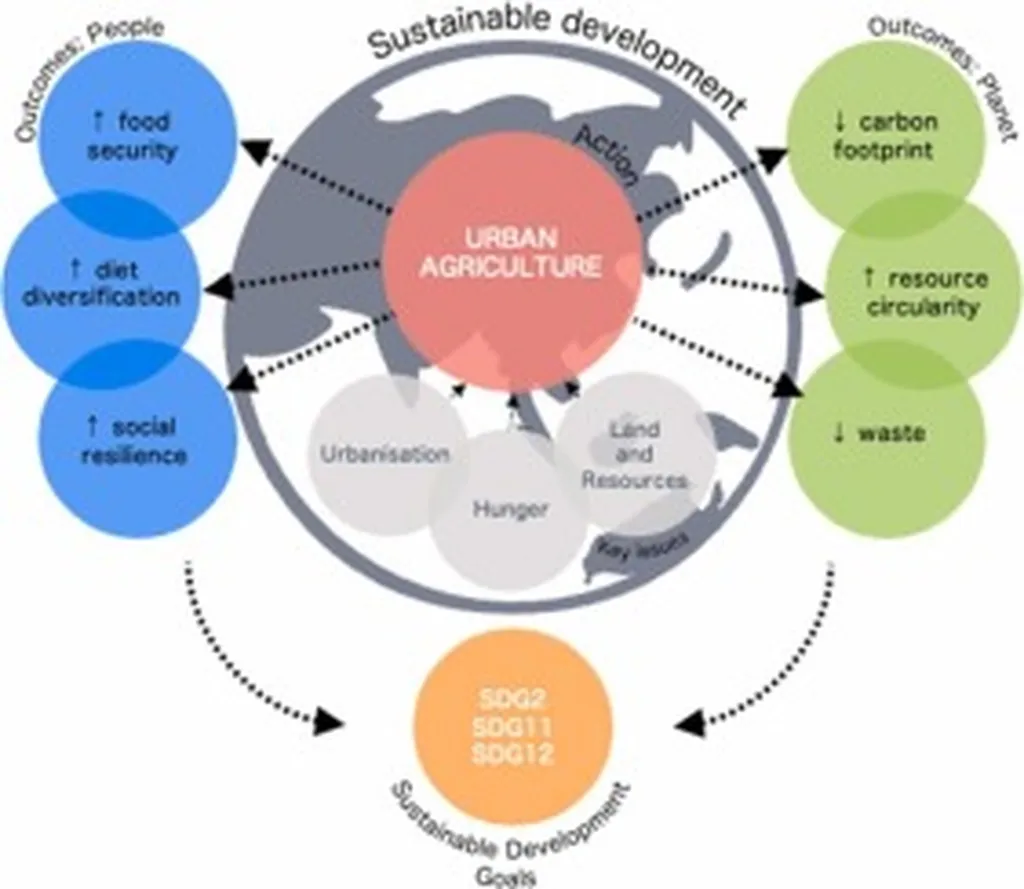
In the heart of bustling cities, a quiet revolution is taking root—urban agriculture (UA) is transforming how we grow food, engage communities, and address environmental challenges. A recent study published in the *Journal of Agriculture, Food Systems, and Community Development* sheds light on the intricate dynamics of collaborative governance that underpin these initiatives, offering valuable insights for the agriculture sector and beyond.
The research, led by Svetla Stoeva of the Institute of Philosophy and Sociology at the Bulgarian Academy of Sciences (IPS-BAS), delves into the roles of various stakeholders—public authorities, civil society organizations (CSOs), non-governmental organizations (NGOs), private businesses, and practitioners—in shaping urban agriculture. Stoeva and her team analyzed 14 case studies across Europe, examining six types of UA initiatives: social farms, urban farms, community parks, community gardens, do-it-yourself gardens, and zero-acreage farms.
The findings reveal a complex web of interactions where each stakeholder plays a crucial role. Public authorities provide the necessary regulatory frameworks and resources, while NGOs and CSOs act as bridges, facilitating community engagement and advocacy. Private businesses bring innovation and investment, and practitioners contribute local knowledge and labor. “Effective collaboration depends on inclusivity, shared responsibility, flexibility, and social cohesion,” Stoeva emphasizes. This collaborative approach not only enhances the adaptability and sustainability of UA initiatives but also fosters resilience in urban food systems.
The study highlights several collaborative mechanisms that drive success, such as participatory decision-making, resource-sharing, and dynamic feedback loops. These mechanisms ensure that UA initiatives remain responsive to local needs and challenges. However, the research also uncovers significant challenges, particularly power imbalances that can marginalize certain stakeholders. “The dominance of public authorities and businesses over other stakeholders can undermine inclusivity and equitable outcomes,” Stoeva notes. Addressing these imbalances is crucial for fostering balanced stakeholder interactions and participatory governance.
For the agriculture sector, the implications are profound. Urban agriculture presents a unique opportunity to integrate sustainable practices into urban planning, creating new markets and revenue streams for farmers and agribusinesses. By collaborating with public authorities, NGOs, and community groups, private businesses can tap into innovative solutions that enhance food security and environmental sustainability. The study’s findings suggest that future developments in UA will hinge on adaptive governance models that prioritize inclusivity and equitable participation.
As cities continue to grow, the role of urban agriculture in sustainable urban development becomes increasingly vital. Stoeva’s research offers a roadmap for building resilient urban food systems, emphasizing the need for adaptive governance and balanced stakeholder engagement. By embracing these principles, the agriculture sector can contribute to a more sustainable and equitable future, one urban farm at a time.