
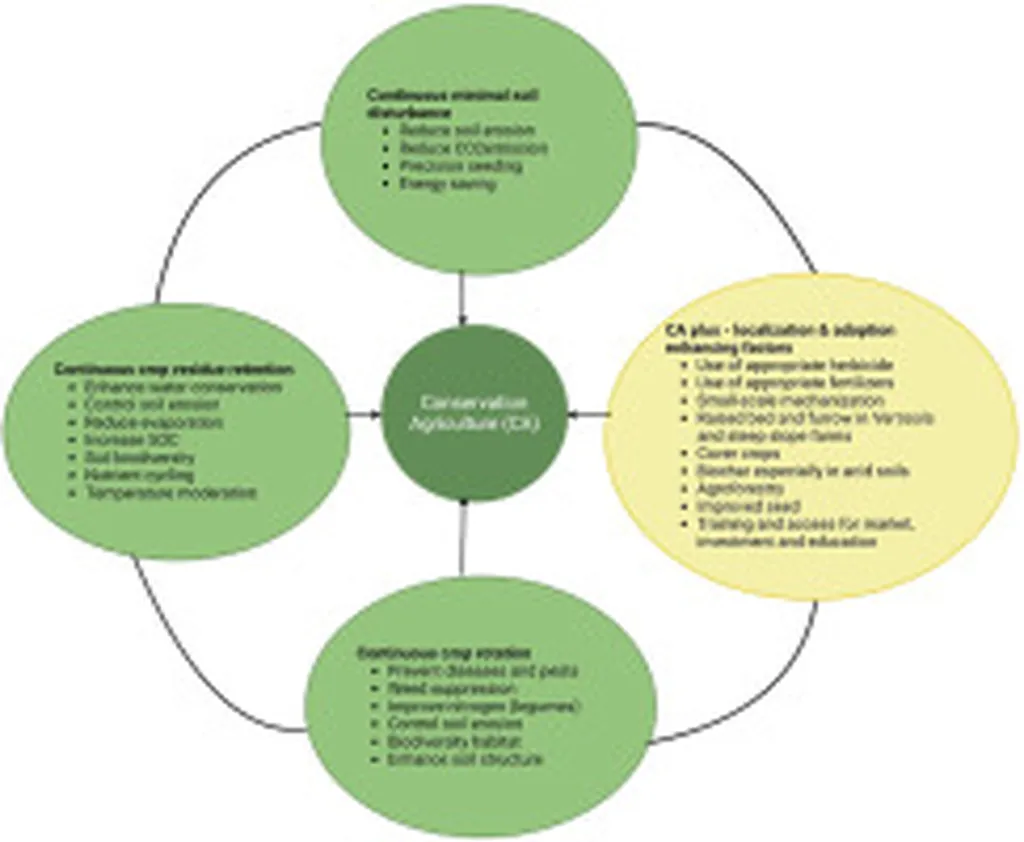
In the heart of Zimbabwe’s agricultural landscape, a pressing question looms: Can input subsidies truly drive the adoption of conservation agriculture, or are they merely a temporary crutch? A recent study published in *Cogent Food & Agriculture* delves into this conundrum, offering insights that could reshape agricultural policies and practices across the continent.
The study, led by Freddy Ruzhani from the Department of Agricultural Economics and Development at Manicaland State University of Applied Sciences, focuses on the Pfumvudza initiative, a climate-smart agriculture program introduced by the Zimbabwean government. Pfumvudza aims to promote conservation agriculture, a practice that enhances agricultural resilience in the face of climate change. However, the program’s reliance on input subsidies raises questions about its long-term sustainability and effectiveness.
Ruzhani and his team employed an endogenous switching probit model to analyze data collected from 408 smallholder farmers in Mashonaland East province. This sophisticated statistical approach allowed them to address unobservable factors and endogeneity, providing a clearer picture of farmers’ willingness to adopt Pfumvudza without subsidies.
The findings are nuanced and revealing. “Input subsidies do not significantly impact the willingness to adopt the Pfumvudza climate-smart concept for the entire sample without extrinsic incentivization,” Ruzhani explains. However, the study also found that subsidies positively influence communal farmers while negatively affecting A1 and old resettlement farmers. This disparity underscores the complexity of agricultural adoption behaviors and the need for tailored interventions.
The study highlights several key factors that positively influence adoption willingness, including the frequency of extension access, land use model, and household perception of the Pfumvudza concept. Conversely, livestock ownership and involvement in tobacco or cotton production have negative effects. These findings suggest that policymakers must move beyond subsidies to drive adoption. Instead, they should focus on increasing awareness of Pfumvudza’s benefits and addressing the specific needs and contexts of different farmer groups.
The commercial implications of this research are significant. For the agriculture sector, understanding the drivers and barriers to adoption of conservation agriculture can lead to more effective and efficient interventions. By tailoring support mechanisms to local contexts, policymakers and agribusinesses can enhance the adoption of climate-smart practices, ultimately improving agricultural resilience and productivity.
As Ruzhani notes, “The motivation to adopt Pfumvudza lies in its perceived benefits. Therefore, efforts should focus on increasing awareness of the Pfumvudza benefits while demystifying the negatives.” This approach not only promotes sustainable agricultural practices but also fosters a more resilient and productive agricultural sector.
The study’s findings could shape future developments in the field, encouraging a shift towards more nuanced and context-specific interventions. By recognizing the diverse needs and contexts of smallholder farmers, policymakers and agribusinesses can drive the adoption of conservation agriculture, ultimately enhancing agricultural resilience and productivity in the face of climate change.