
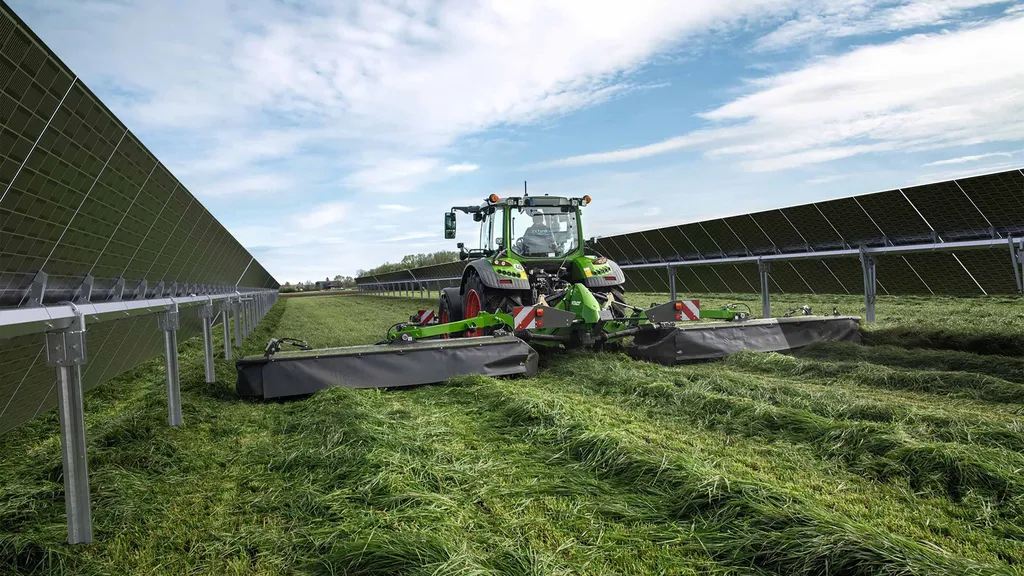
In the quest to harmonize food production with renewable energy generation, a groundbreaking study published in *Solar Compass* offers a strategic decision-making model for selecting crops in Agri-Photovoltaic (Agri-PV) systems. This innovative framework, developed by lead author Kedar Mehta from the Institute of New Energy Systems at Technische Hochschule Ingolstadt, Germany, synthesizes insights from 117 research articles and case studies across 25 countries. The model aims to address a critical gap in the Agri-PV sector: the lack of structured guidance for crop selection, which is pivotal for the success of dual-use farming systems.
Agri-PV, known for its dual land use, integrates solar energy generation with agricultural production, optimizing land use and enhancing food and energy security. However, the challenge lies in selecting crops that thrive under the partially shaded conditions created by solar panels. Factors such as shading tolerance, water requirements, and economic viability vary significantly across different geographical and climatic conditions, making crop selection a complex endeavor.
Mehta’s decision support model categorizes crops into 12 main typologies, evaluating key parameters such as water use, shading adaptability, crop yield, economic potential, and space requirements. “This model provides a practical framework for policymakers, farmers, and energy planners to enhance the sustainability and efficiency of Agri-PV projects,” Mehta explains. By leveraging insights from successful international implementations, the model offers a structured approach to decision-making, ensuring that crop selection aligns with regional climate conditions and PV system design.
The commercial implications for the agriculture sector are substantial. High-value crops that require less space and exhibit higher shade tolerance are particularly suitable for small-scale or decentralized Agri-PV systems. This opens up new avenues for farmers to diversify their income streams by integrating solar energy generation with traditional farming practices. Moreover, the model’s emphasis on economic viability ensures that Agri-PV projects are not only environmentally sustainable but also financially rewarding.
Looking ahead, the study suggests that future research should focus on advanced modeling techniques, AI-driven optimization, and real-world pilot studies to further refine decision-making in Agri-PV deployment. “Advanced modeling and AI can help optimize crop selection and PV system design, maximizing the synergies between energy and food production,” Mehta adds.
This research contributes significantly to the growing body of knowledge on Agri-PV systems by providing a novel crop suitability matrix. As the world grapples with the challenges of climate change and resource scarcity, the integration of food and energy production offers a promising path towards sustainable land use. By offering a structured decision-making framework, this study paves the way for more informed and strategic Agri-PV implementations, ultimately benefiting farmers, policymakers, and energy planners alike.