
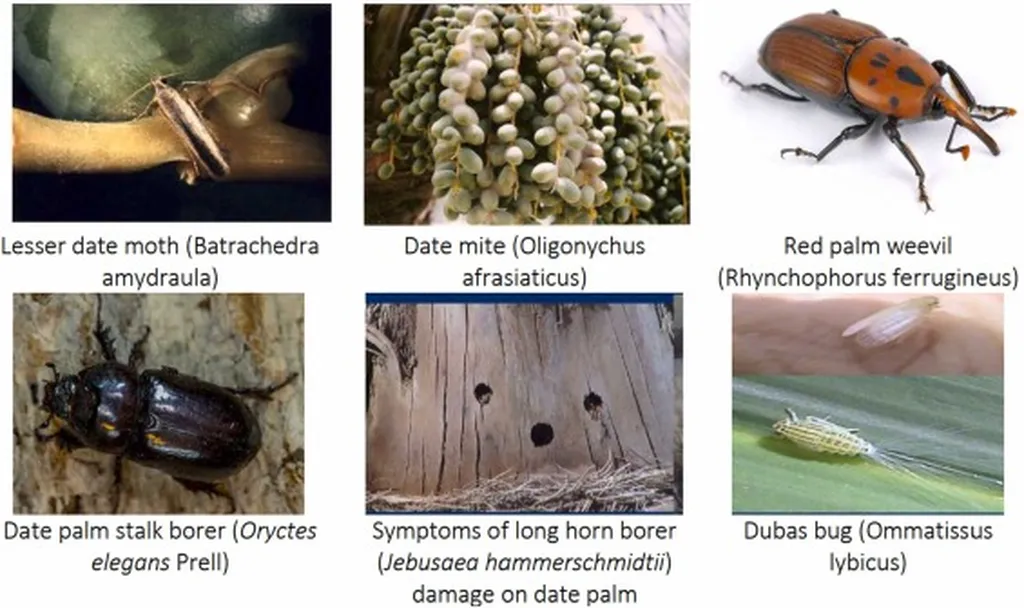
In the heart of Algeria’s Sahara, a delicate dance between agriculture and ecology is unfolding, and the latest research is shedding light on how this balance is being tipped by agricultural intensification. A study published in the ‘Biodiversity Data Journal’ has uncovered the nuanced impacts of agricultural intensification on insect diversity and abundance in date palm orchards, offering valuable insights for the agriculture sector.
The research, led by Wahiba Boukhelouf from the Department of Agronomy at the University of Mohamed Khider, reveals that moderate agricultural intensification can actually boost insect diversity and abundance in date palm groves. This finding challenges the common perception that increased agricultural intensity always leads to a decline in biodiversity.
Over the course of a year, Boukhelouf and her team collected and examined over 5,600 insect specimens, representing 267 species. They found that moderately managed palm groves harbored the highest diversity and abundance of insects, while highly intensified groves came in second, and non-intensified groves had the lowest.
“This was a surprising finding,” Boukhelouf noted. “We expected to see a straightforward decline in insect diversity with increased agricultural intensity. But what we found was more nuanced.”
The study also revealed that different insect groups respond differently to agricultural intensification. For instance, Diptera (flies) and Hymenoptera (bees, wasps, and ants) were found to be particularly sensitive to changes in agricultural practices.
So, what does this mean for the agriculture sector? For one, it highlights the importance of striking a balance in agricultural intensification. “Our findings suggest that a moderate level of intensification can actually benefit insect diversity,” Boukhelouf explained. “This could have significant implications for ecosystem services, such as pollination and pest control, which are vital for agricultural productivity.”
Moreover, the research underscores the need for careful management of chemical inputs. “While agricultural intensification can boost yields, it’s crucial to use chemicals judiciously to preserve insect diversity and the ecosystem services they provide,” Boukhelouf added.
Looking ahead, this research could shape future developments in sustainable agriculture. It suggests that instead of focusing solely on maximizing yields, farmers might benefit from adopting a more balanced approach that also considers the needs of the ecosystem. This could involve integrating natural habitats into agricultural landscapes, reducing chemical inputs, and promoting practices that support insect diversity.
In the words of Boukhelouf, “The future of agriculture lies in finding a balance between productivity and sustainability. Our research is a step towards understanding how we can achieve this balance in date palm groves.”