
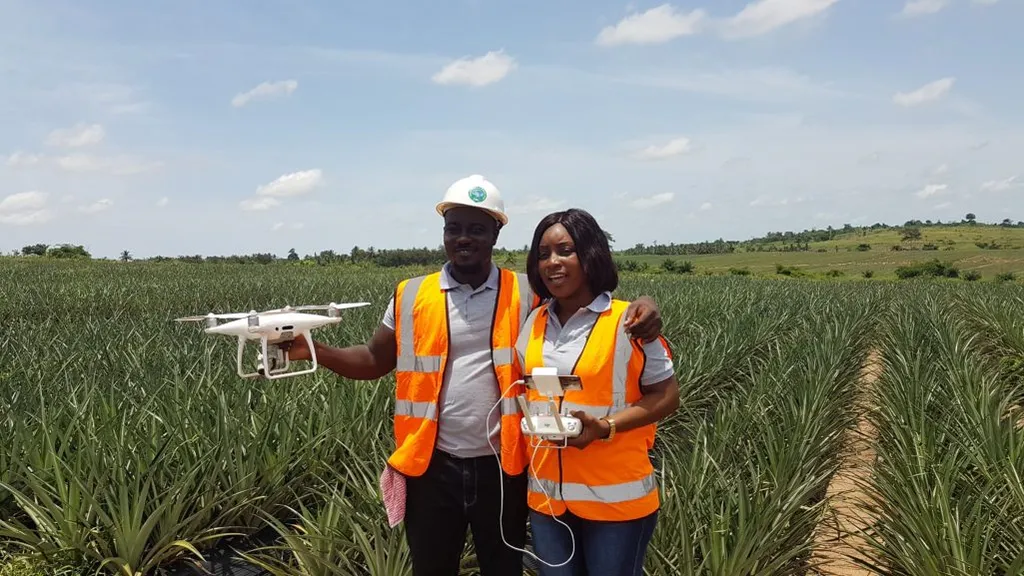
On Farmers’ Day, celebrated on December 5, 2025, Engineer Smaila Abubakar, the Chief Executive Officer of Auto Hydro Plant Limited (AHP), proposed a strategic shift to encourage Ghanaian youth to embrace farming. Speaking on GBC Radio Central Morning Show, he advocated for the integration of technological innovations to alleviate manual labour in farming practices, making the sector more appealing to the younger generation.
Abubakar revealed that AHP has developed a seed planter, a precision agricultural implement designed to sow seeds efficiently and uniformly across fields. This device, he explained, excavates the ground, sows the required seeds, and covers the hole dug, significantly reducing manual labour. “With this, one person can plant large fields,” he emphasized, highlighting the potential of technology to revolutionize farming.
In addition to the seed planter, AHP has developed the Solar Greentech Poultry Cages, which are already operational in Ghana. These enclosures, according to Abubakar, are more resilient than Chinese battery cages and can guarantee an egg-laying rate exceeding 90 percent. These innovations, he argued, are crucial in making farming more appealing and less labor-intensive for the youth.
Prof. Julius Hagan, an animal scientist from the University of Cape Coast’s School of Agriculture, commended Abubakar’s innovative endeavours. He emphasized that the era of farming with hoes and cutlasses is outdated and perceived by the youth as punitive rather than appreciating the commercial aspect of agriculture. To promote agriculture among the youth, Hagan announced an Agriculture Quiz Competition for select Senior High Schools in the Central Region as part of the School of Agriculture’s 50th Anniversary Celebration. The competition aims to elevate agriculture’s status to that of the National Science and Maths Quiz, attracting more youthful students to pursue agriculture studies.
Hagan also petitioned the government to entrust the UCC School of Agriculture with training and supervising SHS, in line with the government’s plan to implement the school agriculture policy. He emphasized that initiating a government policy is not the challenge; rather, it is ensuring sustainability. “Let us oversee, at the very least, all schools within the Central Region to guarantee the program’s longevity,” he stated.
A retired educator and agriculture enthusiast, Mr Issah Otoo, also on the panel, emphasized that improved farming methods, enhanced seeds, education on reducing or completely banning chemical usage, especially in home gardening, and the inclusion of incentive packages can have a positive impact on youth participation in farming. He commended the UCC School of Agriculture initiative, describing it as a game-changer for Ghanaians.
Otoo suggested structuring the agriculture competition to involve basic schools to “catch them young before transitioning into SHS.” He advocated for healthy cultural and management practices such as weed control, irrigation, or watering instead of herbicides and inappropriate fertilizer application. He further suggested more training in non-traditional farming, such as mushroom, bee, grasscutter, and snail farming.
The discussions on GBC Radio Central Morning Show highlighted the critical role of technology and innovation in revolutionizing Ghana’s agricultural sector and making it more appealing to the youth. The proposed strategies and initiatives, if successfully implemented, could significantly enhance youth participation in farming, ensuring the country’s food security and rural economic growth.