
In a significant stride for nanotechnology, researchers have unveiled a comprehensive review of magnetic nanoparticles (MNPs) and their burgeoning applications in life sciences, with a particular spotlight on agriculture. Published in *ChemistryOpen*, the study led by Kishore Chand from the Department of Chemical and Materials Engineering at the University of Dayton, delves into the synthesis and multifunctional properties of MNPs, offering a glimpse into their transformative potential across various sectors.
Magnetic nanoparticles, known for their superparamagnetic properties and tunable surface chemistries, are emerging as a cornerstone in modern scientific research. The review meticulously examines recent advancements in MNP synthesis, encompassing chemical, physical, and environmentally friendly methods. These innovations have led to improved control over size, morphology, and composition, enhancing their performance and sustainability.
“One of the most exciting aspects of this research is the versatility of MNPs,” Chand remarks. “Their unique properties allow them to be tailored for specific applications, from biomedicine to agriculture, making them a truly multifunctional material.”
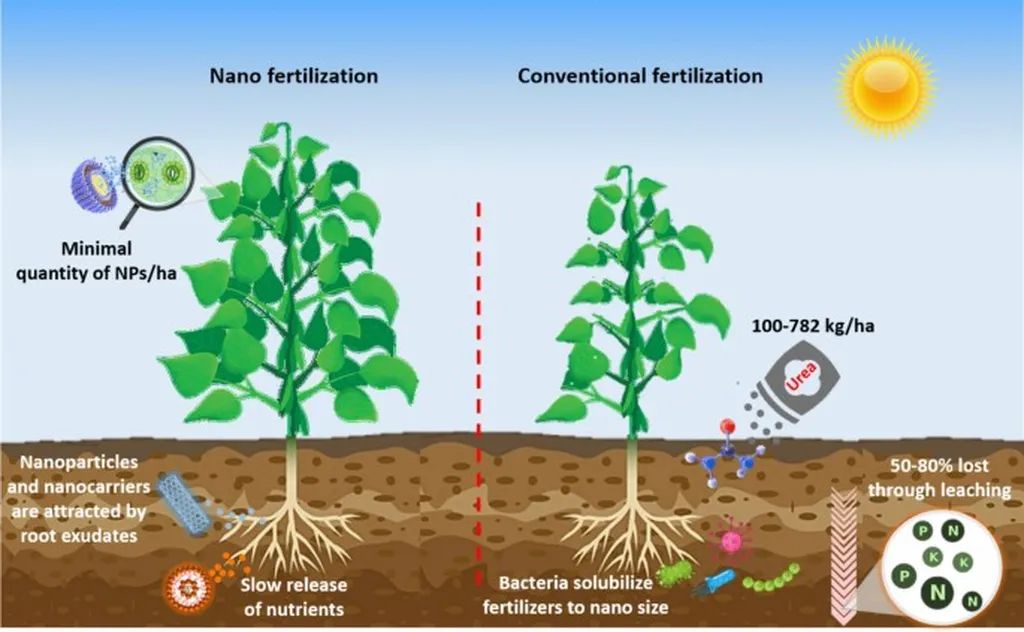
In the realm of agriculture, the study highlights the promising use of iron oxide MNPs (Fe3O4) as nanofertilizers and growth promoters. These nanoparticles have demonstrated the ability to enhance seed germination, chlorophyll content, and root development in crops such as maize and tomatoes, all without exhibiting phytotoxicity. This breakthrough could revolutionize the agricultural sector by improving crop yields and sustainability.
The review also explores various architectures of MNPs, including single-core, core–shell, hybrid composites, and stimuli-responsive systems. These architectures are crucial for applications requiring stability, scalability, and functionalization potential. In biomedicine, MNPs show promise in targeted drug delivery, magnetic hyperthermia, and magnetic resonance imaging contrast enhancement, where biocompatibility is paramount.
Despite these promising results, challenges remain in large-scale production, reproducibility, and regulatory acceptance. However, the review underscores the pivotal role of MNPs in advancing nanotechnology-driven solutions across the life sciences. Their evolving synthesis techniques, multifunctional properties, and cross-sector applications position MNPs as key enablers of next-generation technologies in diagnostics, therapeutics, environmental monitoring, and sustainable agriculture.
As the agricultural sector grapples with the need for sustainable and efficient practices, the integration of MNPs could herald a new era of innovation. By improving crop yields and reducing environmental impact, these nanoparticles have the potential to address some of the most pressing challenges in modern agriculture.
The study not only highlights the current state of MNP research but also paves the way for future developments. As Kishore Chand and his team continue to push the boundaries of nanotechnology, the agricultural sector stands to benefit immensely from these advancements. The review published in *ChemistryOpen* serves as a testament to the transformative potential of magnetic nanoparticles, offering a glimpse into a future where nanotechnology plays a central role in shaping the life sciences.