
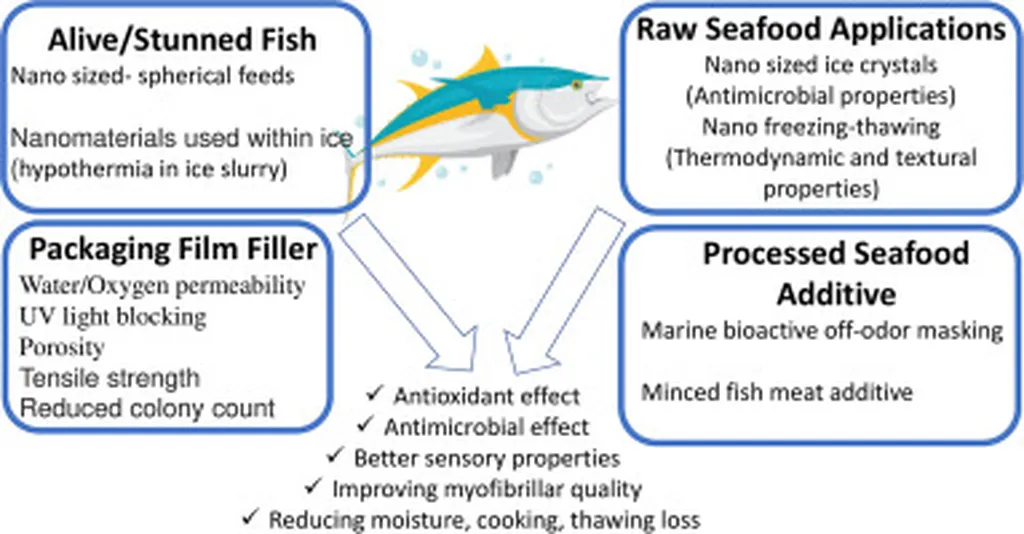
In the quest to extend the shelf life of fresh seafood, researchers have made a significant stride by combining biopolymers with advanced nanotechnology. A recent study published in *Applied Food Research* demonstrates a novel approach to preserving shrimp using alginate-based edible coatings infused with thymol nanoemulsions (NE) and nanostructured lipid carriers (NLCs). This breakthrough could revolutionize the seafood industry by enhancing product quality and reducing waste.
The research, led by Maryam Dastaran from the Department of Food Science and Technology at Islamic Azad University in Yasuj, Iran, explored the impact of these coatings on the physicochemical, microbial, and sensory properties of white shrimp stored at 4°C over a 10-day period. The findings revealed that the alginate coating enriched with thymol-loaded NLCs outperformed other formulations, including thymol-NE, in inhibiting microbial growth and delaying chemical spoilage.
“Our study showed that the NLC-based coating was the most effective in inhibiting microbial growth, reducing the total viable count to 8.4 Log CFU/g compared to 9.9 Log CFU/g in the control on day 10,” Dastaran explained. This significant reduction in microbial activity not only extends the shelf life of shrimp but also enhances food safety, a critical concern for consumers and retailers alike.
The NLC-based coating also demonstrated superior performance in preserving the sensory and physical qualities of the shrimp. It minimized weight loss, color change, and texture softening, while significantly inhibiting melanosis development. This means that shrimp treated with this coating retain their fresh appearance and texture for a longer period, making them more appealing to consumers.
The commercial implications of this research are substantial. For the agriculture and seafood sectors, this technology offers a natural and effective way to extend the shelf life of perishable products, reducing food waste and improving profitability. “By extending the shelf life of shrimp from 4 days to 10 days, this coating technology can significantly reduce losses and enhance the overall quality of seafood products,” Dastaran noted.
The use of alginate-based edible coatings with thymol-NE/NLCs represents a promising preservation strategy that could be applied to a wide range of perishable foods. This innovation not only addresses the immediate need for better preservation methods but also aligns with the growing consumer demand for natural and sustainable food solutions.
As the food industry continues to evolve, the integration of nanotechnology with biopolymers offers a glimpse into the future of food preservation. This research paves the way for further developments in active packaging and shelf-life extension, ultimately benefiting both producers and consumers. With the potential to reduce food waste and enhance product quality, this novel approach could become a cornerstone of modern food preservation techniques.