
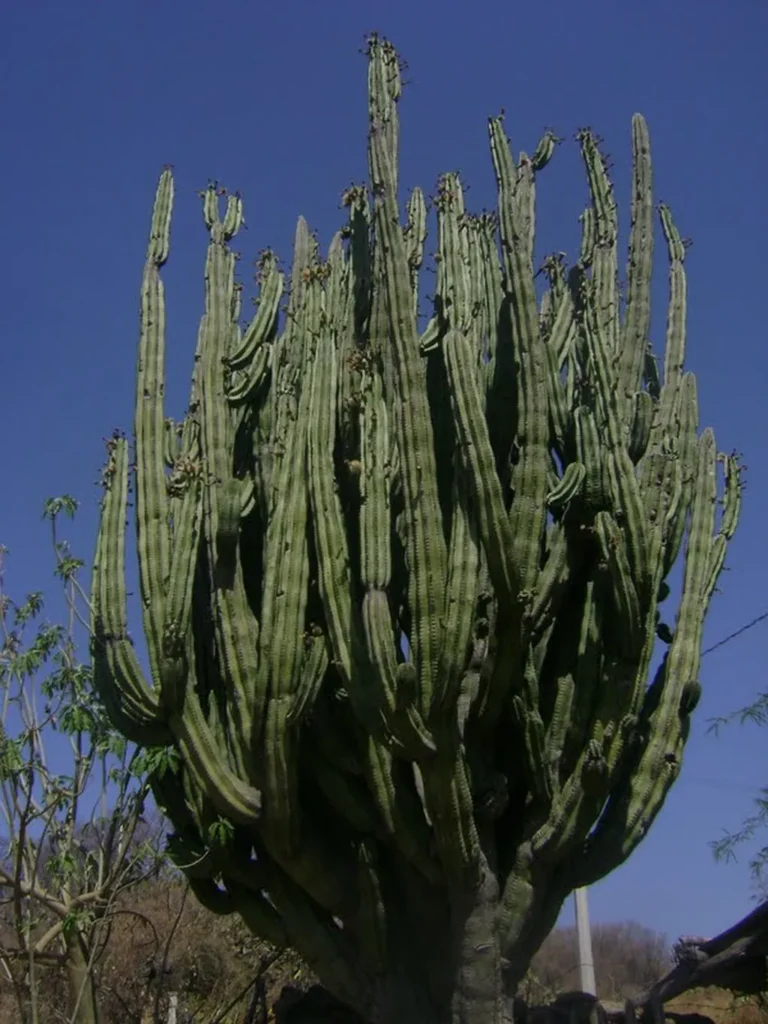
In the heart of Mexico’s arid and semi-arid regions, a cactus known as Stenocereus queretaroensis, or pitayo, plays a vital role in local ecosystems and economies. This cactus, traditionally growing wild, is not just a resilient plant but a cultural and economic cornerstone. However, its cultivation remains understudied, leaving a gap in our understanding of how to optimize its growth and harvest. A new dataset published in *Data in Brief* aims to change that by providing a comprehensive, multimodal view of the plant’s physiology and growth stages.
The dataset, led by C.A. Rivera-Romero from the Universidad Autónoma de Zacatecas, combines high-resolution multispectral imaging with field spectrometry to capture detailed reflectance data across multiple phenological stages. This approach allows for a nuanced understanding of the plant’s development cycle, from vegetative growth to fruiting. “By integrating multispectral images and spectral signatures, we can provide a complete representation of the plant’s development, which is crucial for precision agriculture and remote sensing,” Rivera-Romero explains.
The dataset includes multispectral images that offer spatial information on canopy and structural characteristics, as well as field spectral signatures with detailed reflectance values for each sampled plant. Metadata describing phenological stages, acquisition dates, environmental conditions, and equipment settings are also included. This structured resource is ready for computational analysis, making it a valuable tool for researchers and developers.
One of the most exciting aspects of this dataset is its potential to train and validate machine learning and computer vision models. These models could be used for automated phenological stage classification, harvest time estimation, and the development of species-specific vegetation indices. “This dataset can serve as a benchmark for comparing methods, validating algorithms, and supporting reproducible workflows in precision agriculture and remote sensing,” Rivera-Romero adds.
The implications for the agriculture sector are significant. By understanding the growth stages and physiological characteristics of Stenocereus queretaroensis, farmers and agritech companies can develop more effective cultivation strategies. This could lead to increased yields, improved resource management, and enhanced economic opportunities for local communities.
Beyond Stenocereus queretaroensis, the methodology documented in this dataset can be replicated or adapted for other climate-resilient crops, particularly those cultivated in arid and semi-arid regions. This could enable comparative analyses across species and provide a reference for extending multimodal sensing approaches to underrepresented plants of ecological and economic importance.
As the world faces increasing challenges from climate change, the need for resilient crops and sustainable agricultural practices becomes ever more pressing. This dataset, published in *Data in Brief* and led by Rivera-Romero from the Universidad Autónoma de Zacatecas, offers a promising step forward in this direction. By providing a comprehensive, multimodal view of Stenocereus queretaroensis, it paves the way for innovative solutions that can benefit both the environment and the agriculture sector.