
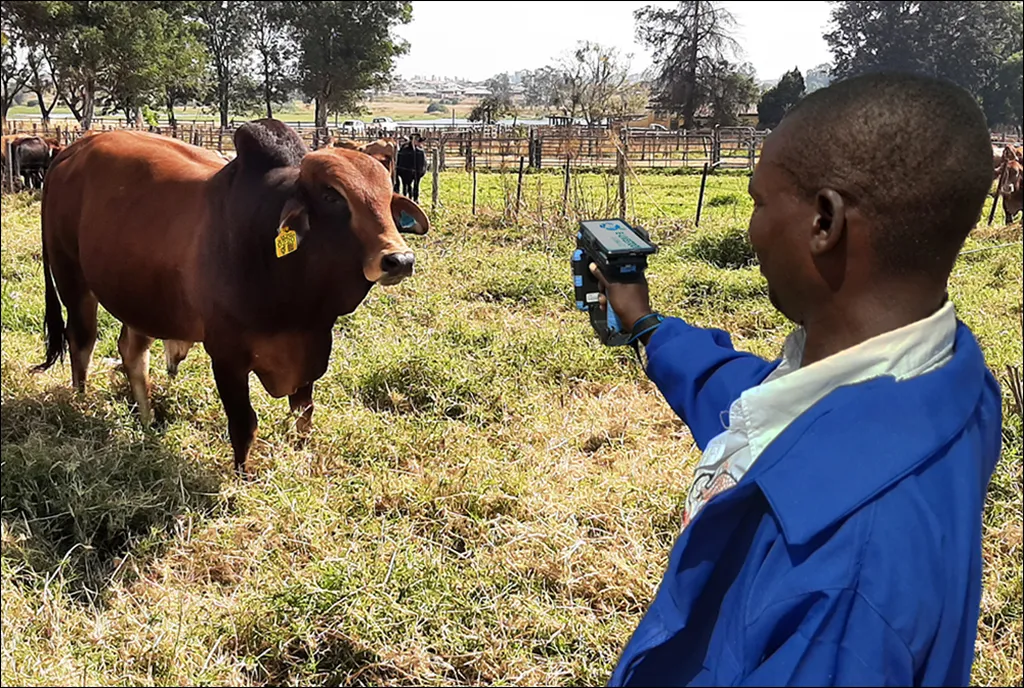
In the vast expanse of Sub-Saharan Africa, where agriculture is the lifeblood of many families, livestock—particularly cattle—play a pivotal role in sustaining livelihoods and economies. Yet, the specter of animal disease outbreaks looms large, threatening not only the well-being of these communities but also the stability of food security and economic prosperity. A recent systematic review published in *Scientific African* sheds light on the advancements in animal traceability systems, offering a beacon of hope for mitigating these risks and enhancing the agricultural sector’s resilience.
The study, led by Tshepiso Larona Mokgetse from the Department of Computing and Informatics at Botswana International University of Science & Technology, delves into the technologies, benefits, and challenges of animal traceability systems. By analyzing 50 articles spanning from 2006 to 2025, the research provides a comprehensive overview of the current landscape and identifies critical gaps that need to be addressed.
Radio Frequency Identification (RFID) technology emerges as the most commonly used tool in animal traceability, accounting for 38.4% of the reviewed studies. However, the research underscores that while RFID shows promise, it is not without its limitations. “RFID is a powerful tool, but it needs improvement to fully realize its potential,” Mokgetse notes. This realization has spurred researchers to explore combinations of RFID with other cutting-edge technologies, such as machine learning (15.4%) and blockchain (7.7%), to create more robust and efficient traceability systems.
The study introduces a novel classification framework that categorizes traceability innovations across four dimensions: systems, frameworks, benefits, and challenges. This integrated conceptual framework offers a clearer understanding of how different technologies interact within traceability ecosystems, highlighting the gaps between technological potential and practical adoption.
One of the most striking findings of the review is the lack of research on stakeholder experiences and perspectives, including those of regulators, farmers, the government, and consumers. This oversight is a significant hurdle in the path toward practical adoption and effective implementation of traceability technologies. “Understanding the needs and challenges of all stakeholders is crucial for the successful deployment of these technologies,” Mokgetse emphasizes.
The commercial impacts of these advancements are profound. Effective animal traceability systems can enhance disease control, improve livestock management, and ensure the safety and quality of animal products. This, in turn, can boost the agricultural sector’s productivity and profitability, benefiting farmers, businesses, and consumers alike. Moreover, the integration of technologies like machine learning and blockchain can provide real-time data and transparency, fostering trust and collaboration across the supply chain.
As the agricultural sector continues to evolve, the insights from this systematic review will be instrumental in shaping future developments. By addressing the identified gaps and leveraging the strengths of various technologies, stakeholders can work together to build more resilient and efficient traceability systems. This collaborative effort will not only mitigate the risks posed by animal disease outbreaks but also pave the way for a more sustainable and prosperous future for the agricultural sector.